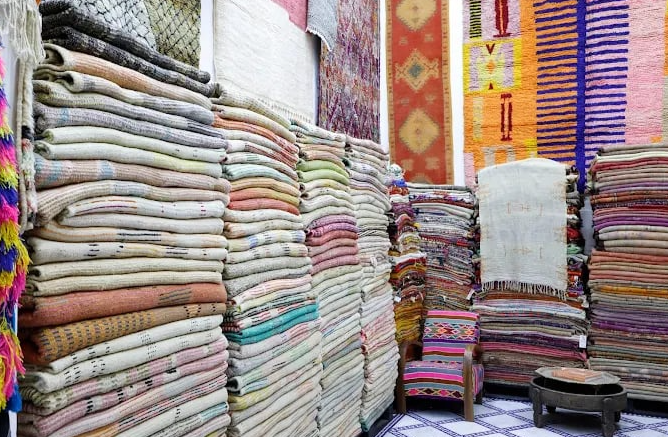
If you have ever walked into a room anchored by a beautifully woven Moroccan rug and felt something shift in the atmosphere, you are not imagining things. A genuine Moroccan rug does something that most floor coverings simply can not: it brings warmth, texture, story, and handcrafted soul into your space all at once.
Whether you are furnishing a modern loft in New York, a farmhouse in Tennessee, or a coastal home in California, the right Moroccan rug has the power to pull everything together. But here’s the truth: the rug market in 2026 is flooded with machine-made imitations, misleading descriptions, and price tags that don’t always reflect real value. That’s exactly why this guide exists.
At Musmus Rugs, we’ve spent years curating authentic handwoven pieces directly from Moroccan artisans. We know what makes a rug worth buying, what warning signs to avoid, and how to match the right style to the right room. By the time you finish reading this guide, you’ll have everything you need to make a confident, well-informed purchase.
What Makes a Moroccan Rug Different From Every Other Rug
The Origin and Craft Behind Each Piece
A genuine Moroccan rug is woven or knotted by artisans, primarily Berber women, across regions like the Atlas Mountains, Beni Ourain, Azilal, and Beni M’Guild. These rugs aren’t factory-produced. They carry asymmetrical patterns, slight color variations, and irregular edges that aren’t flaws, they are proof of handwork.
Compared to a machine-made Persian-style rug you’d find at a big-box retailer, a handwoven Moroccan area rug has a completely different feel underfoot and a completely different lifespan. Machine-made rugs can start showing wear within three to five years. A well-maintained, authentic Moroccan rug can last decades.
The Visual Language of Berber Weaving
Most people immediately recognize the diamond motifs, cross-hatch patterns, and abstract tribal symbols that define Moroccan rug design. But what many buyers don’t realize is that these symbols were once used to tell stories and convey blessings. A Beni Ourain rug, for example, uses a sparse field of black or brown diamond shapes on an ivory background, a pattern that’s become enormously popular in minimalist and Scandinavian-style interiors across the U.S.
That crossover appeal is part of why Moroccan rugs work in so many American homes. They’re simultaneously ancient and modern.
The Main Types of Moroccan Rugs You’ll Come Across
Beni Ourain Rugs
If you have scrolled through any interior design feed lately, you’ve seen a Beni Ourain rug. These are the plush, shaggy, off-white or cream-colored pieces with sparse geometric markings. They are woven from natural undyed wool by the Beniourain tribe of the Middle Atlas Mountains.
They are a natural fit for living rooms, bedrooms, and home offices where you want a soft, neutral anchor. An 8×10 Beni Ourain from Musmus Rugs, for example, works exceptionally well under a low-profile coffee table or as a bedroom focal piece.
Azilal Rugs
Azilal rugs are the more colorful cousins of the Beni Ourain. They are woven with multicolored patterns often incorporating reds, pinks, yellows, and blues against a white or cream base. The designs are more spontaneous and expressive, which makes each rug genuinely one of a kind.
If you want a Moroccan area rug that adds a pop of color to a neutral room without committing to a bold solid color, an Azilal is a practical and beautiful choice.
Boucherouite Rugs
Made from recycled textile scraps — think cut-up clothing, cotton strips, and synthetic fibers Boucherouite rugs are technically a different category but are deeply embedded in Moroccan weaving tradition. They’re typically bright, abstract, and unpredictable in color.
These are a great choice for bohemian spaces, children’s rooms, or anywhere you want maximum personality at a lower price point.
Kilim Rugs
A Moroccan kilim rug is flat-woven, meaning it has no pile. It’s thinner, lighter, and easier to clean than pile rugs, which makes it a practical option for high-traffic areas like hallways, entryways, and dining rooms. The patterns are typically bold geometric zigzags, diamonds, and stripes in earthy or vibrant tones.
Mrirt and Taznakht Rugs
Less discussed but equally beautiful, Mrirt rugs are known for their dense, high-pile wool and rich color palette. Taznakht rugs from the southern region of Morocco feature bold tribal patterns in warm reds, oranges, and browns — a great option for anyone who wants something distinct from the now-ubiquitous Beni Ourain aesthetic.
Moroccan Rug Materials — What You Are Actually Buying
Wool
The vast majority of authentic Moroccan handmade rugs are made from natural sheep wool. This is a good thing. Wool is naturally resilient, soft, and has lanolin, a natural oil that repels dirt and stains to some degree. High-quality Beni Ourain and Azilal rugs use this wool, and it’s the reason they hold up so well over time.
Wool rugs do shed when new, especially high-pile varieties. This is completely normal and typically settles within the first few weeks of use.
Cotton
Cotton is used primarily in flat-woven kilim-style pieces and as the foundation (warp and weft structure) in many pile rugs. It’s durable, holds dye well, and tends to be lighter in weight. If you need a Moroccan area rug for a bathroom or kitchen where moisture is a concern, a cotton-blend flatweave might actually serve you better than a thick wool pile.
Recycled Textiles
As mentioned with Boucherouite, recycled fabric rugs are a sustainable and affordable entry point into Moroccan weaving. They’re not as long-lasting as wool, but they’re visually dynamic and carry a certain charm.
Moroccan Rug Sizes — Getting It Right the First Time
One of the most common regrets buyers share is choosing the wrong rug size. Here’s a practical breakdown.
| Room | Recommended Size | Notes |
| Living Room (standard sofa arrangement) | 8×10 or 9×12 | Front legs of furniture on rug |
| Bedroom (queen bed) | 8×10 | Extends 18–24 inches on each side |
| Bedroom (king bed) | 9×12 | Provides generous surround |
| Dining Room | 8×10 minimum | Chairs stay on the rug when pulled out |
| Entryway / Hallway | 2.5×8 or 2.5×10 runner | Match the hall width |
| Home Office | 5×8 | Anchors desk and chair |
| Children’s Room | 5×8 or 6×9 | Durable, easy to spot clean |
When in doubt, size up. A common mistake is choosing a rug that’s too small; it makes furniture look like it’s floating rather than grounded.
How to Compare Moroccan Rug Quality Before You Buy
Hand-Knotted vs. Hand-Tufted vs. Machine-Made
This is the most important distinction most buyers overlook.
A hand-knotted Moroccan rug is the gold standard. Each knot is tied individually by a weaver, row by row. This is labor-intensive — a medium-sized rug can take weeks or even months to complete. The result is a piece that holds its structure, maintains its pile density over decades, and actually increases in character with age.
A hand-tufted rug is made using a handheld tool that punches yarn into a backing. It’s faster and cheaper to produce, and while it can look similar initially, it doesn’t have the same durability or longevity. You’ll typically see a canvas or latex backing on hand-tufted rugs — a quick way to tell them apart.
A machine-made rug — regardless of whether it has a “Moroccan pattern” or “Moroccan style” label — is produced on a power loom. It can look attractive in photos, but won’t have the texture, depth, or character of a genuine piece.
At Musmus Rugs, we’re transparent about this. Every product listing clearly identifies whether a rug is hand-knotted, hand-woven, or flat-woven, so you know what you’re getting.
Knot Density
In hand-knotted rugs, knot density (measured in knots per square inch, or KPSI) directly affects how fine and detailed the pattern is. For Moroccan tribal rugs, a lower KPSI is actually authentic — Beni Ourain rugs, for instance, have a relatively low knot count compared to fine Persian rugs, but that’s by design. What matters is whether the knots are tight and even.
Pile Height
High-pile rugs are plush and luxurious but they’re harder to vacuum and aren’t ideal for high-traffic zones. Low-pile and flatwoven options are more practical for entryways, kitchens, and dining areas.
Moroccan Rug Pricing — What’s a Fair Range in 2026
Pricing for Moroccan rugs in the U.S. market varies significantly depending on size, construction method, and whether the piece is vintage or new.
| Type | Size | Estimated Price Range |
| Machine-made moroccan pattern | 5×8 | $80 — $250 |
| Hand-tufted moroccan style | 5×8 | $200 — $500 |
| Authentic handwoven (new) | 5×8 | $350 — $900 |
| Authentic hand-knotted (new) | 8×10 | $800 — $2,500 |
| Vintage Moroccan rug | 5×8 | $400 — $1,500+ |
| Vintage Moroccan rug | 9×12 | $1,500 — $5,000+ |
A $150 “Moroccan rug” from a fast-furniture retailer and a $900 handwoven piece from Musmus Rugs aren’t in the same category. One is a printed pattern on a machine-made base. The other is a functional piece of folk art.
Vintage vs. New Moroccan Rugs — Which Should You Choose
This is genuinely a personal decision, but here’s how to think about it.
Vintage Moroccan rugs have a patina that you simply can’t replicate. The colors have softened naturally, the wool has developed a beautiful low luster, and the pattern carries a sense of lived history. If authenticity and uniqueness matter most to you, vintage is hard to argue against.
New Moroccan rugs offer more consistency in sizing and condition. You know exactly what you’re getting, and there’s no guesswork about prior use or damage. For families with young children or pets, a new rug is often the more practical choice.
A real comparison: a vintage 6×9 Beni Ourain from the 1980s — ivory ground, hand-knotted high pile, softened by decades of use — will feel dramatically different underfoot than a new piece of the same type. Neither is better. They’re different experiences.
Moroccan Rug Placement Ideas for American Homes
Living Room
The most popular placement. A Moroccan area rug in a living room serves as the visual anchor for your seating arrangement. For a standard sofa-and-two-chairs layout, an 8×10 or 9×12 works best with the front legs of all seating pieces resting on the rug.
A Beni Ourain in a modern neutral living room creates a cozy contrast. An Azilal works beautifully in a more eclectic or maximalist space.
Bedroom
Under a king or queen bed, a Moroccan rug adds immediate warmth — especially when your feet hit the floor in the morning. A 9×12 under a king bed, positioned so 18–24 inches extend on either side and at the foot, is the classic approach.
Dining Room
This is where a flat-woven kilim or a low-pile Moroccan rug makes the most practical sense. You need something that chairs slide over easily and that can handle the inevitable food and drink spills that come with regular use.
Home Office
A 5×8 rug under your desk and chair anchors the workspace and adds acoustic softening — something people rarely think about until they’re on their fourth video call of the day.
Moroccan Rug Care — How to Keep It Looking Its Best
Routine Maintenance
Vacuum your Moroccan rug regularly using a low-suction setting with no rotating brush attachment — a rotating beater bar can pull at the fibers and accelerate wear. For high-pile rugs, vacuuming from the sides (rather than going against the pile) preserves the texture longer.
Rotate your rug every six months, especially if one part of it receives more sunlight or foot traffic than another.
Dealing With Spills
Act quickly. Blot — don’t rub — with a clean white cloth. For wool rugs, avoid soaking them with water, and never use harsh chemical cleaners. A mild solution of cold water and a small amount of gentle wool wash is usually sufficient for most spills.
For deeper stains, or if you’ve had the rug for several years without professional cleaning, it’s worth taking it to a rug cleaning specialist rather than attempting a DIY deep clean.
Padding and Protection
A quality rug pad does three things: it keeps the rug from sliding, it protects both the rug and your floor, and it adds a layer of cushioning that makes the rug feel more luxurious underfoot. For Moroccan rugs, particularly the thicker, high-pile varieties, a natural rubber or felt-and-rubber combination pad is the best choice.
Red Flags When Shopping for a Moroccan Rug Online
The U.S. market is full of rugs that are marketed with words like “Moroccan-inspired,” “tribal style,” or “boho Moroccan” but have no actual connection to Moroccan craft traditions. Here’s what to watch for.
First, if the rug description doesn’t mention where it was made or how it was made, that’s intentional vagueness. A genuine Moroccan rug should be identified as handwoven or hand-knotted in Morocco, with some indication of the region or tribe.
Second, price is a realistic signal. A hand-knotted 8×10 Moroccan rug that retails for $120 is not hand-knotted. The labor cost alone for genuine handwork makes that price impossible.
Third, look at the back of the rug. A hand-knotted rug will show individual knots on the reverse — the pattern is visible from both sides, though less refined. A machine-made rug will have a smooth, uniform backing that looks almost printed.
At Musmus Rugs, every piece we carry comes with clear provenance information, production method disclosure, and honest photography that shows the texture, weave, and reverse.
Frequently Asked Questions About Moroccan Rugs
Q: What’s the difference between a Moroccan rug and a Persian rug?
A: Both are handwoven pile rugs with deep cultural roots, but they come from different traditions and have a different aesthetics. Persian rugs — from Iran — typically feature fine, intricate floral or medallion patterns with very high knot density. Moroccan rugs, particularly Berber pieces, tend toward bold geometric abstraction with a rougher, more tribal character. Persian rugs are often more expensive for the same size due to higher knot counts. A Moroccan rug tends to feel more organic and casual; a Persian rug tends to feel more formal and precise.
Q: Are Moroccan rugs good for high-traffic areas?
A: It depends on the pile type. A low-pile or flat-woven kilim-style Moroccan rug handles traffic well. A high-pile Beni Ourain or Mrirt is better suited for lower-traffic zones like bedrooms or a formal living area. If you want the Moroccan look in a busy entryway or hallway, a flatweave is the practical choice.
Q: How do I know if a Moroccan rug is authentic?
A: Look for these markers — minor irregularities in the pattern (intentional in handwork), uneven edges, natural undyed or vegetable-dyed colors, knots visible on the back, and a description that identifies the rug’s regional origin and method of production. Machine-made or mass-produced pieces will typically have perfectly uniform patterns, machine-finished edges, and synthetic fiber backings.
Q: Can I use a Moroccan rug in a bathroom?
A: A small flat-woven cotton-based Moroccan rug can work in a bathroom, but a thick wool pile rug isn’t ideal — wool absorbs moisture and can develop mold or mildew if it stays damp. If you want the aesthetic in a bathroom, look for a small cotton kilim that can be laundered if needed.
Q: How long do Moroccan rugs last?
A: A genuine hand-knotted Moroccan wool rug — properly cared for — can last 50 to 100 years. Many vintage pieces in circulation today are from the 1960s, 1970s, and 1980s and are still in beautiful condition. Machine-made pieces have a lifespan of roughly 5 to 10 years under normal use.
Q: Does Musmus Rugs ship across the U.S.?
A: Yes. Musmus Rugs ships nationwide, with standard and expedited shipping options. Larger rugs are shipped rolled and carefully packaged to prevent damage in transit.
Q: What rug pad should I use under a Moroccan rug?
A: A natural rubber or felt-and-rubber pad is the best all-around choice. It grips both the rug and the floor without damaging hardwood or tile surfaces. Avoid PVC pads, as they can leave residue on hardwood floors over time.
Q: Can I negotiate the price on vintage Moroccan rugs?
A: For vintage pieces, there’s often some flexibility — this is especially true when purchasing multiple items. At Musmus Rugs, you can reach out directly for inquiries on vintage inventory or bulk purchases.
Why Musmus Rugs
There are a lot of places to buy a Moroccan rug in the U.S., and the truth is that not all of them are selling what they say they’re selling. At Musmus Rugs, we source directly from Moroccan artisan cooperatives and independent weavers, which means the people who made your rug received fair compensation for their work and you receive a piece with genuine provenance.
We carry a curated selection of Beni Ourain, Azilal, Boucherouite, kilim, and vintage Moroccan rugs in a range of sizes, and we provide detailed product descriptions so you’re never guessing about construction, origin, or materials.
Whether you’re buying your first Moroccan area rug or you’re an experienced collector adding to a growing collection, we’re here to help you find the right piece.
The Bottom Line
A Moroccan rug is one of the few home purchases that genuinely holds its value and in many cases, increases in beauty over time. Choosing the right one comes down to understanding what type of construction you’re buying, what materials are involved, whether the size works for your space, and whether the seller is being straight with you about what they’re offering.
This guide covers the full picture: from the difference between a Beni Ourain and an Azilal to how to spot a machine-made imitation at twenty paces. Use it as your starting point, take your time, and don’t let aggressive pricing pressure you into a piece that isn’t right for your home.
When you’re ready to shop, Musmus Rugs has the inventory, the transparency, and the customer service to make the process easy and the result something you’ll be proud of for years.