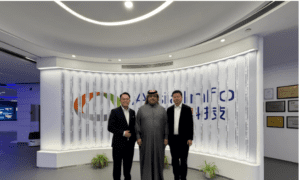
Doha, Qatar — March 9, 2026 — In a move poised to reshape the landscape of artificial intelligence infrastructure, Asprofin Bank has committed to financing the construction of a high-density nanocenter for the Al Thani Royal Family. The facility, developed by Wow Global Technologies, is designed to deliver cutting-edge computing capabilities in a compact, modular format, enabling AI, edge computing, and secure data processing across multiple regions.
This initiative represents a shift away from traditional hyperscale data centers toward a distributed network of smaller, more efficient facilities. By combining high-performance computing with advanced modular construction, the nanocenter is intended to serve as a model for the future of AI infrastructure in Qatar and beyond.
Compact Design, Maximum Performance
Historically, AI and cloud computing have relied on massive, multi-block campuses to achieve the necessary processing power. The nanocenter concept, however, focuses on density and efficiency, using prefabricated modules produced in controlled manufacturing environments.
The construction approach allows for rapid on-site assembly while minimizing variability, delivering a facility capable of housing over 1,000 GPU servers within a footprint similar to that of a large retail store. This strategy not only reduces construction time but also enables deployment in areas where traditional data center space is limited.
DK Wei Chen, Vice President of Datacenter Infrastructure at Asprofin Bank, highlighted the project’s engineering focus:
“Our goal is to build infrastructure that maximizes computing performance in a minimal footprint. These nanocenters are engineered for high-density AI workloads while maintaining security, resilience, and operational efficiency.”
Future-Proof Cybersecurity
Security is a cornerstone of the nanocenter design. The facility incorporates post-quantum cryptography readiness to protect against future threats from quantum computing. In addition, it uses a zero-trust model, where no device, user, or process is automatically trusted.

Sensitive workloads, including government and sovereign data, are isolated from commercial operations both physically and logically. Separate environments for testing and development further reduce the risk of cross-system vulnerabilities. These measures help counter modern cybersecurity challenges, such as “harvest now, decrypt later” attacks, where encrypted data could be intercepted today and decrypted in the future.
Advanced Cooling and Resilience
High-density computing generates significant heat, and the nanocenter uses advanced liquid-based cooling systems to maintain stable operations. Elevated inlet water temperatures and rapid heat exchange cycles optimize thermal management while improving energy efficiency.
The facility is also designed to endure harsh environmental conditions, including high seismic activity, dust storms, and high temperatures. Reinforced structures, fire-resistant materials, and water intrusion safeguards ensure continuous operations under diverse circumstances.
Santosh Banerjee, Development Head at Asprofin Bank India, emphasized the precision engineering required:
“Every component, from cooling systems to power delivery, must perform flawlessly under extreme conditions. This is engineering at the highest level.”
Distributed Infrastructure for Global Access
By reducing the size and complexity of deployment, nanocenters can be located closer to where data is generated, reducing latency and enhancing data sovereignty. This distributed model makes advanced AI capabilities accessible to regions that might not be able to support traditional hyperscale data centers.
Malak Gardaoui, Business Development Head for MENA at Asprofin Bank, explained:
“Construction is just the beginning. Each deployment must demonstrate reliability, efficiency, and security to serve as a blueprint for future rollout across multiple countries.”
Sustainability and Energy Efficiency
Energy efficiency is a core priority. The nanocenter design incorporates intelligent power management, thermal optimization, and real-time energy monitoring to reduce operational energy use. These measures support Qatar’s broader goals of sustainable digital growth, ensuring that high-performance computing does not come at the expense of environmental responsibility.
Strategic Implications for Finance and Technology
Asprofin Bank’s investment reflects a growing trend in which financial institutions play an active role in shaping technology infrastructure. By funding high-density, modular facilities with integrated cybersecurity and sustainability measures, Asprofin Bank positions itself at the intersection of finance, digital innovation, and national strategy.
As AI adoption accelerates globally, efficient, secure, and adaptable infrastructure will be critical to economic competitiveness. Projects like this signal a shift from simply building bigger facilities to creating smarter, more versatile ones capable of meeting the demands of next-generation computing.
About Asprofin Bank
Asprofin Bank is an international private banking institution serving high-net-worth individuals, corporations, and institutional clients worldwide. Regulated by the Financial Services Unit of the Commonwealth of Dominica, the bank emphasizes compliance, confidentiality, and tailored financial solutions.
Its services include private banking, trade finance, structured investment solutions, and project financing. In recent years, Asprofin Bank has expanded into technology-driven sectors, including digital infrastructure, data security, and fintech, reflecting the growing convergence of finance and advanced computing.