If you have been very active in the blockchain space for a while and probably have some flair for the advertising industry either as a publisher or a content creator, chances are that you probably would have heard of SaTT. A fast-rising blockchain advertising company that has been in the airwave with its innovative blockchain products.
We recently had an interview with the Atayen CEO where he talked extensively about SaTT, a product developed by Atayen Inc., a company that has over 10 years of experience developing Facebook business applications for companies and enterprises.
Great to have the CEO of SaTT here with us today, please tell us your name and about yourself?
Hello, My name is Gauthier Bros, I am the CEO of Atayen, Inc. For the past couple of years, I have been heavily involved in the Technology and IT space developing business applications and products that help enterprises to scale up business operations, sales, and marketing on facebook.
Since 2010, we have successfully developed apps used by more than 4M+ Facebook pages like the contact form, iframe apps, and store. Technology is revolutionary, it’s a constantly changing space, one must have to keep up with the pace to stay relevant.
Soon, we wanted to find or develop a relevant advertising solution allowing users to have visibility to their rewards based on social transactions. Indeed, the current solutions on the market did not address the exact user needs and many widely accepted challenges prevailed such as the delay of payments, fraud, centralization etc.
As we progressed on our research, we came across blockchain technology and discovered the possibilities offered by Ethereum smart contract, paving way to the idea of a decentralised advertising solution. The SaTT token which stands for “smart advertising transaction token” was born thereafter.
That’s interesting to know Mr. Bros, please can you tell us more about SaTT?
SaTT is a cryptocurrency designed for the ad industry ruled by a smart contract.
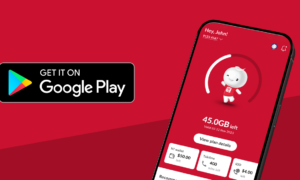
We started SaTT in 2017 and we have already gone a long way with the project development. We have launched an in-house wallet, a blockchain Dex and a DApp. Recently we launched the SaTT dApp which allows advertisers to create ad campaigns and publishers to create monetizable content with the SaTT network.
Bringing this list of products under SaTT, our aim is to lead the advertising industry on the road to blockchain decentralization and use case; leveraging on all the advantages blockchain and Atayen technology can offer.
What Solutions are you bringing to the blockchain market and what is the level of demand for SaTT Solutions?
As we started coding the smart-contract, we found that tools for cryptocurrency exchanges, stocks, and other fintech institutions are designed by geeks for geeks. From that, we decided that the first step to disrupt the market will be to provide easy-to-use tools for mass adoption.
People needed an easy to use crypto wallet, so we started with that. Our SaTT easy to use wallet connected with Facebook, Google, or Telegram. Pay or get paid became as easy as sending an email address, no more public addresses, or gas set up fees. All of this would make it easier for people to understand and interact with cryptocurrencies and the SaTT.
Before we started working on SaTT, we had thought out the benefits that a decentralized advertising network would bring to the traditional ad space. The frequent server breakdown due to heavy centralization, inefficient billing system, exorbitant fees, and difficulties in measuring metrics of ad performance in a more accurate way. What we did was to bundle the solution into SaTT.
Finally, our open environment remains one of our main advantages.
Any third party will be able to develop a solution on any other social network such as Tik Tok or Linkedin, thanks to the statistics generated by our oracles.
What specific Products and features make SaTT unique from other blockchain applications?
We understand the complexity of blockchain and what an average user thinks of the technology. Sometimes they perceive blockchain as having a very complex structure that might be hard to understand. While we deliver cutting-edge products we also focus on user-friendliness to make sure a non-crypto savvy can use our products seamlessly.
The SaTT wallet for instance is designed to allow transactions using the email address of the receiver. We have had publishers and advertisers who aren’t part of the crypto community finding it useful and easy in utilizing our products.
What is the technology behind the SaTT Platform and at what stage of development is SATT?
As stated before, SaTT is a product of the Atayen company. We are leveraging the capabilities of the blockchain technology and the oracle smart contract technology in building SaTT products.
The oracle smart contract is an in-house technology developed by Atayen, inc., the oracle certifies the number of views, likes, or shares of a post and the smart-contract calculates how much the advertiser owes to the publisher, and proceeds to the payment automatically.
We recently launched PayBySaTT, an integration of SaTT DApp on Facebook, Twitter, YouTube, and Instagram to facilitate easy payment of ad campaigns using SaTT cryptocurrency. We are also at the ICO stage, preparing for the last and final stage of the fundraising. Though ICO is yet uncompleted, however, the platform is already fully functional and businesses are already advertising through SaTT.
Could you give us a brief walkthrough on how to use SaTT?
SaTT cryptocurrency is the economy that powers the SaTT ecosystem. Advertisers on the SaTT platform will buy SaTT cryptocurrency, then go ahead to create an ad campaign and design their budget in line with their business goals. Publishers opt into these campaigns to create useful content to help the advertisers meet their objectives.
Could you tell us about your team and customer support?
We are 6 members in the core team and over 8 advisors. We have a wide range of other workers actively working on SaTT product development. The SaTT team is characterized by a wide range of experience and expertise in the IT, blockchain, and advertising industry. Important to mention that Mr. Richard Wang, a partner in DraperDragon Fund recently joined the SaTT team to see to the later part of our fundraising.
With the number of years developing business pages for various companies, we perfectly understand the role a satisfied customer plays in the progress of every business. Aside from the effort we put into all the technology we have built, the next unit we have strengthened is our customer support. We put a lot of effort into the frontline to bring excellent service to existing and potential customers.
How Safe is SATT, would you like to talk about your legal and security measures?
SaTT is not a security token but a blockchain utility token, even at that we are careful in following due regulatory procedures. We understand regulation differs according to jurisdictions. We always exclude regions that aren’t ICO-friendly so as not to get into any legal battle with a given jurisdiction.
We have always advised investors to seek due diligence before committing their investment into SaTT. In every step we take, our legal consultant is always there to look at the details.
Do you have more information for our readers?
We are building an infrastructure that answers many of the questions and provides solutions to many of the problems in the advertising industry. We are working hard to roll out more products according to our roadmap.
We are confident about the mainstream adoption of the solutions we offer. Despite the current global pandemic we are hoping for a more viable market that will shoot us towards our hard cap. Should some tokens go unsold, we plan on burning them and then continue with project development, expanding our partner’s network which will help us to scale-up faster in the advertising industry.
Finally, SaTT token will be listed on 2 major exchanges such as KuCoin in less than a week’s time on 24th of September onwards. We look forward to more followers joining hands with us after that.!