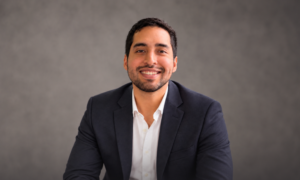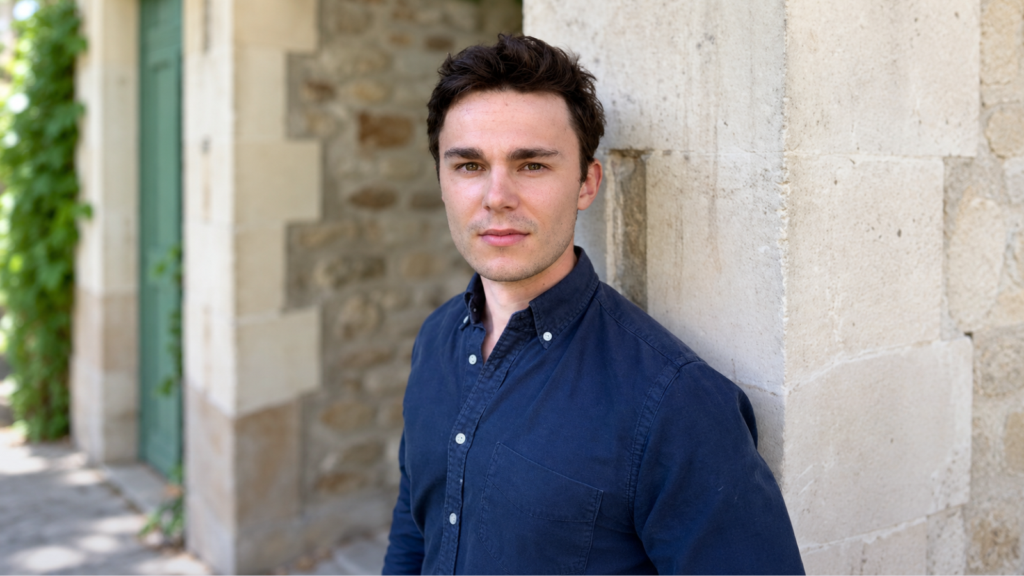
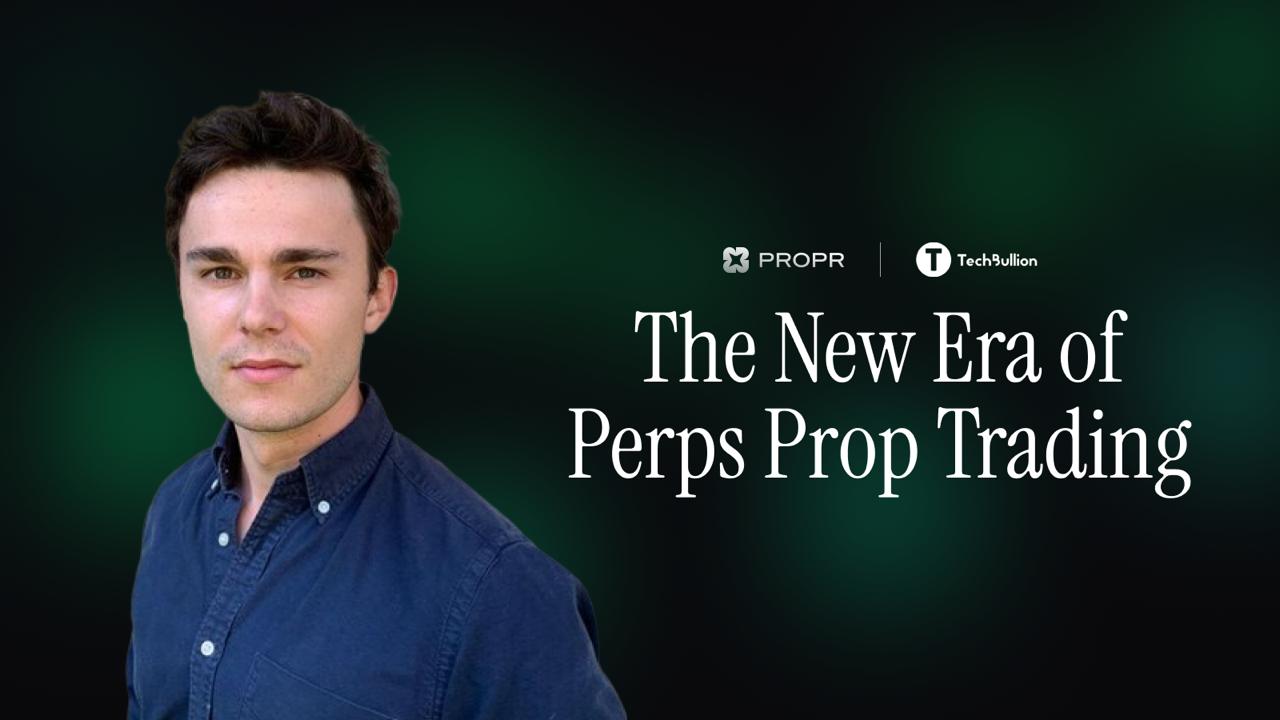
What does proprietary trading look like when funded accounts, risk controls and payouts move onto the blockchain? In this TechBullion interview, Louis Régis, founder and CEO of Propr, introduces an onchain crypto prop firm designed for human traders and AI trading agents.
Régis started his first company at 17 before working in quantitative finance at Credit Suisse and leading the crypto desk at Rothschild & Co Switzerland. His experience in institutional finance and crypto trading informs Propr’s approach: combining institutional risk management with blockchain transparency to offer funded trading capital, instant USDC payouts and verifiable activity.
Developed by XBorg and backed by SwissBorg, Propr operates on Hyperliquid and Lighter, with Polymarket integration planned. The interview examines its trading model and the role transparent infrastructure could play in the future of crypto proprietary trading.
How did your journey from quantitative finance at Credit Suisse and crypto at Rothschild & Co to professional trading influence your decision to build Propr?
I’ve always had a passion for financial engineering and understanding how markets and risk work. I started in quantitative trading at Credit Suisse, then Led the crypto desk at Rothschild & Co before moving into crypto and becoming a top global crypto trader.
I was also an early power user of Hyperliquid, and seeing what they were building made me believe there was a much bigger opportunity around crypto-native trading. Propr came naturally from that, combining my trading background with the infrastructure and the 24/7 trading community I saw emerging onchain.
What specific problem in the prop trading industry convinced you there was an opportunity to build Propr, rather than another conventional trading firm?
The first thing was access to capital. If you’re a very good trader but don’t have $100,000 sitting in your account, it’s still very difficult to scale your edge. Prop trading promised to solve that, but the industry still had a lot of issues around being opaque and unreliable and the model was breaking. A lot of firms don’t actually want traders to win, they bank on failure and make evaluations as hard as possible to pass. On top of that, there was no API access anywhere in the industry
That’s where transparency and onchain infrastructure started to matter. We saw a way to make funding radically more transparent, strip out the friction traders had been putting up with for years, and build on top of Hyperliquid’s own transparency to create infrastructure that works for humans and machines alike.
Why does funded trading benefit from being built onchain, and what becomes possible that would be difficult to achieve with a traditional prop firm?
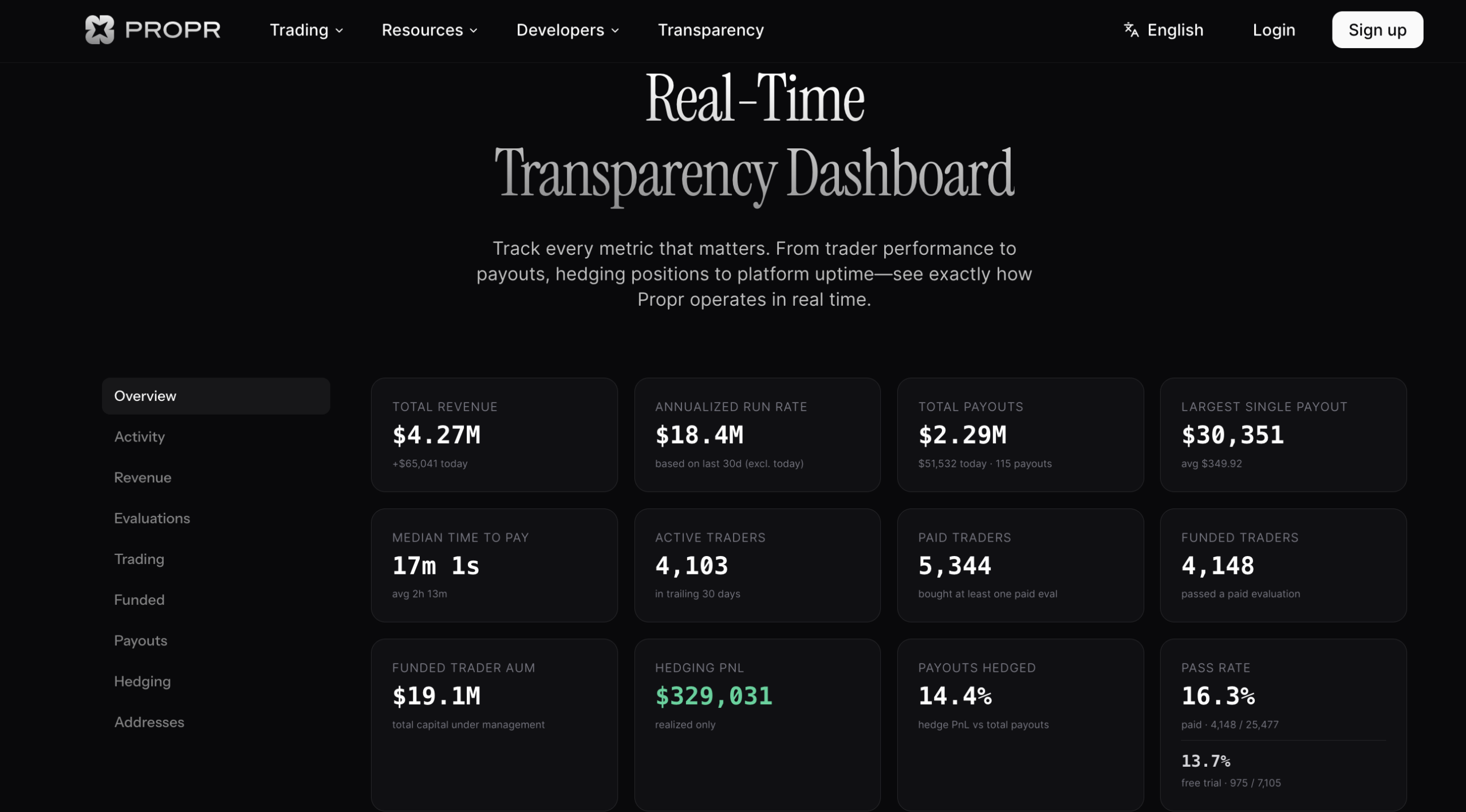
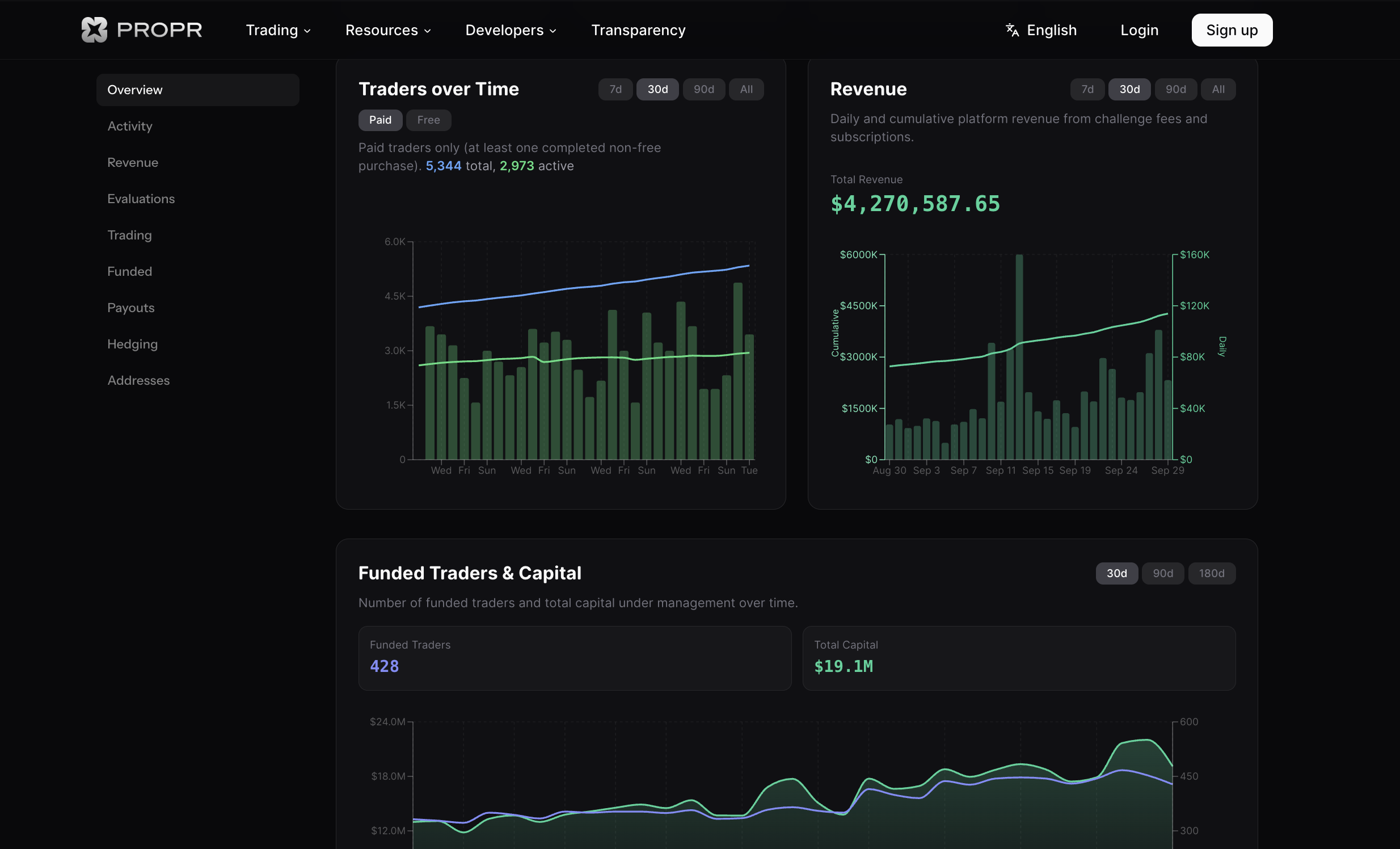
Visibility isn’t a nice-to-have for us, it’s the product. Trust in this industry got broken by firms acting recklessly. Onchain means you can audit the firm’s performance instead of trusting its word. You can see our hedging positions, our payouts, our revenue, our pass rates, all published live. We hedge our own book onchain, which lets anyone check whether we actually have the capital to cover our traders. A payout-to-revenue ratio is a number you’d normally never see from a prop firm, on Propr it’s sitting on the dashboard in real time.
It also lets us move fast on payouts, since everything settles in USDC. And the third piece is agentic AI, which pairs naturally with smart contract infrastructure.
Propr is positioning itself as the leading perps prop firm. Why did you choose Hyperliquid as Propr’s primary venue, and what have you learnt from building directly around its market infrastructure?
Perps prop trading is the new thing in prop trading, and we’re number one in it. Perps are what crypto traders actually trade, 24/7, and that only works with real liquidity. That was the breakthrough on Hyperliquid. For the first time retail traders get execution close to TradFi, with tight spreads and real depth on indices, FX, and tokenized equities, not just crypto majors.
We close the gap with distribution and verifiability. Our funding layer gets embedded inside the tools traders already use, like MMT, and our payouts, hedging, and pass rates are published live.
Hyperliquid was not the end destination, it’s the first proof point. Our thesis is we want to fund traders to trade anywhere. When you’re deploying capital across thousands of funded traders, what moves the needle is exposure and slippage on a large order, not basis points in fees. That’s why we hedge across both Hyperliquid and Lighter now, and we go wherever the fill is best.
Take us through the process from joining Propr to receiving funded capital. What does a trader need to demonstrate before being trusted with the firm’s capital?
You take an evaluation. A $100K account runs a few hundred dollars, which gives someone with a few hundred dollars the purchasing power of someone with $100K. Pass it and you get a funded account, up to $100K per account and up to $300K in aggregate. We only hold traders to two rules, both tied to risk: max drawdown and daily drawdown.
No consistency requirements, no arbitrary time limits, no position caps. Right now we have about 16% pass rate on paid evaluations, which tells you the bar is real.
Propr has seen rapid revenue growth in just a few months. What are the underlying economics of the business, and how do you make the model sustainable as it scales?
We’re at $4.2M in total revenue now, on a $18.5M annualized run rate, and every dollar of that is on the transparency dashboard. Anyone can check the payout-to-revenue ratio for themselves. We mirror the signal of traders who’ve passed evaluation against published risk criteria and deploy it ourselves, so our best traders’ performance offsets the payouts we owe. That’s a different incentive from a firm that profits when people fail.
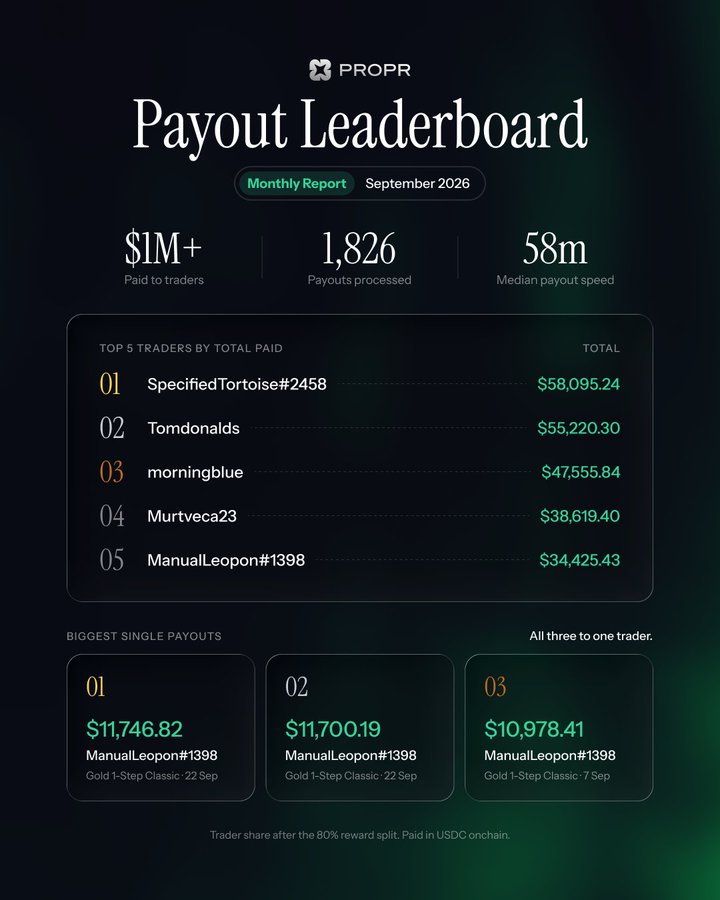
Propr reports over $2M paid to traders. How have instant USDC payouts changed the experience compared with traditional payout systems?
Traditional prop firms can sit on a payout, dispute it, or deny it outright, and traders have no recourse. You’re trusting a black box. We pay on demand in USDC, and the median payout right now settles in under an hour.
This allows traders to scale faster. They can buy more funded account challenges with us or catch a live setup they’ve been eyeing. At another firm, they’d still be waiting for their payout.
Why did you remove conventional requirements such as arbitrary time limits and consistency rules, and what did you replace them with?
Trading is already difficult and our goal isn’t to trip up traders with unnecessary rules. We stripped it down to the two things that actually matter, max drawdown and daily drawdown. If you manage risk inside those bounds, how and when you trade is up to you.
We actually hedge our best traders’ positions onchain so we aren’t worried about their success on our platform.
What are you seeing in crypto markets today that professional traders, founders and investors should be paying closer attention to?
Liquidity on major onchain venues has genuinely caught up to TradFi for the first time, that’s what makes crypto-native trading now more exciting than ever.. On top of that you’ve got tokenized equities, real-world assets, and prediction markets all becoming tradable onchain, alongside memes and the attention economy, which massively expands what “the market” even means.
Around one-third of Propr’s active users are AI agents. What surprised you most about how quickly autonomous traders have adopted the platform?
Most prop firms don’t enable API access or algorithmic trading. The moment we opened that up, adoption came in fast at a very low acquisition cost, because a builder doesn’t want to risk $100K of their own capital testing an agentic strategy, they’d rather pay an evaluation fee and get access to that capital instead.
What’s also notable is the pass rate. Paid evaluations are running 16% overall, and agents are outperforming the human baseline inside that. The top trader on the platform right now is a bot, not a person.
Where do skilled human traders still have an advantage over AI agents, and where are machines already beginning to outperform humans?
Agents win on discipline. No emotion means no moving a stop-loss because you’re hoping a losing trade turns around, which is exactly where most human traders lose money. When it’s enforced programmatically, max drawdown and daily drawdown just can’t be overridden.
Where humans still matter is upstream of execution: designing the actual edge, the strategy the agent is running, and making judgment calls.
I don’t think the future is humans versus machines, though. I think the more interesting model is humans running a portfolio of strategies, some discretionary and some automated, with AI agents increasingly becoming part of the trader’s stack.
With thousands of paid traders on the platform, what separates traders who consistently perform well from those who struggle?
Risk management, every time. The traders who do well think about how much they’re willing to lose before they think about how much they could win. The ones who struggle do the opposite, they get excited, move their stop-loss to give a bad trade more room, and turn a small controlled loss into a big uncontrolled one.
It’s not really about finding some secret edge. It’s about staying disciplined enough to let a real edge compound instead of getting wiped out by one emotional trade.
Beyond putting data onchain, what earns lasting trader credibility, and how do you see regulation shaping funded trading?
Onchain transparency matters because it lets traders check that for themselves instead of trusting a claim, but the credibility still has to be earned by the underlying business being run well. Showing healthy profitability, having a consistent payout record and keeping an open communication line with traders contributes to that trust meaningfully. Long term, I think regulation is actually positive for serious businesses because it creates clearer rules around what you can and cannot do. We already exclude jurisdictions where funded trading sits in a grey or restricted zone, and we’ll keep adjusting access rules as frameworks develop in different regions.
Propr plans to support Polymarket. What role do prediction markets play in your broader vision, and how do they differ from funding conventional crypto traders?
Our broader vision is very simple: we want to fund traders to trade anything, anywhere. Everything is trending toward getting financialized, and prediction markets are the purest expression of it, any binary outcome becomes tradable, which opens the door to people who’d never touch options or futures but have a strong view on something.
Prediction markets are another form of market where you have trading flows, price discovery and people expressing an edge. It’s a different risk problem than trading perpetuals though and we built a separate risk framework for it, but from our perspective, if there is a market with meaningful trading activity, there is an opportunity to build a funding layer around it.
As more prop firms and trading platforms move onchain, what do you believe will determine which businesses build a defensible long-term position? And what does Propr become in five years?
If every prop firm moves onchain, onchain stops being the differentiator. What matters is product quality, risk management, liquidity, distribution, and ultimately the trust you build with traders. That’s the filter everyone gets run through eventually.
Our structure is built around that filter. We’re not a destination traders have to come to, we’re a funding layer that gets embedded inside the tools traders already use, the same way a handful of apps already embed Hyperliquid itself. That’s why we’re integrating with terminals like MMT and expanding to other venues.
So long term, I think the winners combine good risk management with strong distribution, transparent economics, and a product traders actually want to use. The end state is get funded, trade anything, from wherever you already are, whether “you” is a person or an agent you built.