17 Ways Video Content Can Boost Your Business Revenue
Video content has become one of the most powerful tools for driving business growth and increasing revenue. This article breaks down 17 proven strategies that companies are using to turn video into a revenue engine, backed by insights from industry experts who have implemented these tactics successfully. Whether the goal is building trust, converting leads, or scaling sales operations, these approaches deliver measurable results.
- Tell Case Narratives That Clarify Value
- Deploy Focused Proof Reels in Proposals
- Answer Buyer Questions with Targeted Snippets
- Show Up Daily Earn Trust Win Deals
- Scale High-Performance Ad Variants with AI
- Share Real Moments That Spur Enrollment
- Use Personal Channels and Ship Consistently
- Turn Viral Highlights into Onsite Bookings
- Run a Media Engine for Inbound
- Build Intent-Focused Clips That Convert
- Equip Reps with Objection-Focused Explainers
- Leverage Authority Podcasts to Close
- Sequence Stories Offers across the Funnel
- Lead with a Dominant First Frame
- Land Engagements through Enterprise Conversations
- Present Simple Demos to Lift Conversions
- Let Customers Prove Outcomes and Ease
Tell Case Narratives That Clarify Value
Narrative-driven case studies have been the most useful video content for us. We didn’t just show off our work; we also told the story behind each project, including what the problem was, how we solved it, and what the final result looked like.
This format worked because it let potential clients picture themselves in the story. It wasn’t just about what we could do; it was also about how we think and solve problems.
We put these videos on our website and in places where clients could see them, especially when they were making a decision. People who read this content before talking to us had a better idea of what we could do for them, which sped up the sales process.
We also learned that being real was more important than how big the production was. We are an animation studio, but the videos that did best were the ones that felt real and focused on insight instead of polish.
The effect was clear: more engagement, more qualified inquiries, and better alignment with clients from the start.
Video is most effective when it helps people understand. People are more likely to move forward when they can see both the process and the result.

Deploy Focused Proof Reels in Proposals
I founded and run a video agency and we produce content for our own company. My agency-insider advice for any service-based businesses is: invest in social proof videos like impact storytelling or testimonials.
The most effective sales tool we have is client testimonials, and we build each one around one specific point we want to drive home with our clients.
We keep each video tight and focused because vague testimonials don’t hit home. We focus on real impact, and client experience, e.g., a nonprofit that raised millions off a single film; a town whose content went viral; a retainer client that keeps hiring us month after month. Those are the things people remember.
When we’re putting together a proposal or RFP, we include the three most appropriate case studies. When a prospect watches a verified client explain that one of our videos drove a $1M first-time donation, the conversation changes. We don’t have to oversell it. The proof is already doing the work.
60 seconds, specific point, unscripted. Just a real person talking about how our videos helped solve their problem. It’s been a huge growth engine for our business.

Answer Buyer Questions with Targeted Snippets
I’ve used video as a sales asset, not just a top-of-funnel play. I record short “deal support” videos that answer one hard question a buyer has, then I send the right clip in follow-up emails and proposals. In one B2B SaaS project (HR/payroll space), adding three 90-second videos to the sales sequence lifted reply rates from about 8% to 13%, and increased booked demos by roughly 20% over two months, with no change to ad spend.
I’ve found the best performing format is a plain screen-record walkthrough tied to a real use case, with pricing and next steps handled straight. For a service business client (finance advisory), a two-minute “What happens after you book” video on the pricing page improved the visit-to-enquiry rate from about 1.6% to 2.2% over six weeks, and the team said it cut back-and-forth emails by about a third. The videos that did worst were broad brand stories that didn’t answer a buying question or cut risk for the customer.

Show Up Daily Earn Trust Win Deals
About a year ago I made a decision that most agency owners think about, but never act on. I started showing up on camera every single day, talking about marketing, paid media, AI, creative, what works, what doesn’t, what the industry gets completely wrong. No fancy production. No elaborate graphics or animations. Just me, on camera, and 25 years of opinions and advice I was done keeping to myself. Pushing it to every social platform, every single day, without exception.
I made it a point for the content to rarely be about selling my company or services. That’s actually the whole point. I’m talking about the stuff that genuinely frustrates clients. Bloated agencies that underdeliver, gurus recycling the same tired tactics, businesses wasting money on the wrong strategy. The vanity metrics that agencies hide behind. The retainer models designed to keep clients locked in. Real talk, every day, from someone who’s actually been in the trenches for over two decades, giving advice to large enterprises all the way down to bootstrapped startups.
What surprised me was how directly that translated into business. Not through some funnel I engineered, but organically. People watch for weeks, sometimes months, and then they reach out. Even older inactive clients. And when they do, the conversation is completely different. There’s no selling involved on my end because they’ve already made up their mind. They’ve seen how I think, they know what I stand for, they’ve decided they trust me. That’s a different kind of lead entirely. They’re not comparing you to three other agencies. They came to you specifically.
The content that performs best is always the most direct. When I call something out specifically, a bad practice, an industry myth, a tactic that sounds good but doesn’t hold up under any real scrutiny, those videos find their audience fast. People share what they already believe but haven’t heard said out loud by someone willing to put their name on it. That’s what builds reach over time. Not chasing trends or gaming algorithms, just consistent, honest perspective that a specific audience finds genuinely valuable.
A year in, the reach is growing steadily, the leads coming in are the right ones, and the conversations are starting from a place of trust rather than skepticism. Daily video is the longest sustained marketing commitment I’ve ever made. It’s also the most effective thing I’ve done for the business in years. I have no intention of stopping.

Scale High-Performance Ad Variants with AI
The format that drives the most direct revenue impact right now: short-form ad creatives built for paid social — produced with generative AI.
The reason is simple. AI lets us produce dozens of variations from a single brief — different hooks, different visual styles, different CTAs — and test them simultaneously. In traditional production, you shoot one version and hope it works. With AI, you let the data decide which version converts. That changes the economics entirely: instead of putting your budget behind one creative bet, you spread it across multiple variations and scale what performs.
What we’re seeing confirms our thesis: AI-generated content consistently outperforms traditional assets in performance channels. Not because it looks more polished — but because the iteration speed allows us to find the right message faster. A hook that stops the scroll. A visual that matches the platform. A CTA that lands. These are micro-decisions that compound, and AI lets you make more of them in less time.
The next frontier is hyperpersonalization. AI allows us to tailor video content to specific audience segments, regions, or even individual user profiles — at scale. Same product, but a different visual world for Gen Z than for a 45-year-old homeowner. Different language, different tone, different presenter. What used to require separate productions for each segment is now one workflow with multiple outputs. That level of relevance translates directly into conversion rates.
On top of that, product explainer content with AI avatars is a strong revenue driver. Brands that need to communicate complex product benefits across multiple markets can now produce localized, personalized video at a fraction of the cost. One script, ten languages, one consistent brand voice.
The bottom line: video drives revenue when it’s built for performance, not for awards. We produce TV spots, social campaigns, and ad creatives for consumer brands entirely with generative AI — no sets, no crews, no logistics. That’s what makes this level of scale, speed, and personalization possible.

Share Real Moments That Spur Enrollment
We didn’t set out with some big “video marketing strategy.” Honestly, the whole thing started pretty casually.
A few months ago I asked our graduates for a small favor. I told them: “Next time you’re behind the bar at work, pull out your phone and record a quick 30-60 second video. Don’t promote the school. Just tell people what you like about bartending.”
That was it. No scripts. No lighting. No marketing language.
Some filmed during a slow moment at the bar. One bartender recorded in the storage room before a shift. Another one was standing on a rooftop bar in Chicago with the skyline behind him. They’d just say things like:
“I like the energy of this job… every night is different.”
“I was nervous my first week, but now I love meeting new people.”
“I didn’t expect bartending to be this social.”
What made the videos work was that they didn’t feel like advertising. They felt like someone texting a friend.
We posted a handful of them on our site and social channels. No big production, just authentic clips from real graduates working real shifts.
And something interesting happened.
People started watching them longer than our polished videos. Prospective students would mention them on calls. One person told our team, “I watched that bartender talking about working weddings and thought… yeah, that actually looks fun.”
Over the next couple of months we noticed our enrollments climbing. When we looked at the numbers, sales had grown about 25% compared to the previous period.
Not from fancy editing. Not from paid production.
Just real people sharing real moments from behind the bar.
The lesson for me was simple: sometimes the best video content isn’t about explaining your product. It’s about showing the life around it. When people see themselves in someone else’s story, the decision becomes a lot easier.

Use Personal Channels and Ship Consistently
I’d say the biggest shift for us was moving to a personal YouTube channel instead of a branded one. People connect with people, not logos. That single decision changed everything about how our content converts. When someone watches me walk through a real process or break down a strategy, they’re building trust with me directly. By the time they reach out, the sale is already half made.
The type of content that performs best for us is educational process content. Not polished brand videos. Real walkthroughs showing how we solve problems. That positions us as the authority, and authority sells without selling.
Now, what really made this sustainable was building an AI workflow around production. We used to spend half a day editing a single video. We brought that down to about two hours. Here’s how: we run the captions through Claude Opus 4.6 from Anthropic, which corrects any errors and then extracts a full presentation structure from what was actually said. It maps out exactly where each slide needs to appear based on the spoken content, with precise endpoints. Then we generate the actual presentation slides using Gamma.app. From there, the Premiere Pro workflow is simple. We place the slides with an automated sequence on unnumbered markers and stretch each one to fit the segment. No guesswork, no creative bottleneck.
That efficiency is what turned video from a “we should do more of this” into an actual revenue channel. When production doesn’t eat your whole day, you publish consistently. And consistency on YouTube compounds. We’re seeing inbound leads come directly from videos that are months old, which is something paid ads will never do for you at that cost.
And honestly, forget vanity metrics. We don’t chase thousands of views. We niche down hard. A video with a few hundred views from the right audience will generate more revenue than one with thousands of views that attracts everybody but converts nobody. When your content speaks directly to the people who actually buy, every view carries weight.

Turn Viral Highlights into Onsite Bookings
Our most successful revenue-driving content leverages the “Baby Boom” at the park, like the video of our baby giraffe answering to every name but his own, or our 2-month-old African Penguin chick’s first swim.
We saw the direct ROI when our baby pygmy hippo, Mars, went viral for his antics and getting the “mom stare” from his mother. By linking that viral momentum to our new all-inclusive model launch, we converted international attention into tangible “Experience Weekend” bookings.
We’ve found that high-performing short-form video is what actually drives growth. It offers this raw ‘window’ into the personality of our animals that people crave. Long-form is great for deep-dive education, but these short, authentic moments are what create the emotional hook. We are actually leaning into this momentum further with a new documentary on Mars the Hippo premiering this May, which deepens that emotional hook beyond a 15-second clip!
We leverage this by using video to bridge the gap between a glass screen and the physical sensation of a lemur’s soft pads on your shoulder or the warmth of a rhino’s skin. By answering the “what’s it really like” question through raw, unpolished keeper footage, we turn viewers into visitors who want to feel that connection for themselves.

Run a Media Engine for Inbound
One of the biggest decisions we made was to invest in a media team rather than a traditional marketing team inside our sales SaaS organization.
Instead of building a typical demand gen engine focused on gated assets and campaigns, we chose to operate more like a media network for the sales community. That meant hiring producers and editors to create shows, podcasts and educational content for our market.
It’s worked extremely well for us. Today, around 95% of our pipeline is inbound.
Our strategy is video-first, but the way we use video is slightly different from many companies.
We produce long-form content such as podcasts, interviews, and shows with sales leaders. From each episode we typically create 10–15 short video cutdowns.
Those cutdowns are what actually drive distribution.
In the attention economy, most people won’t watch a full 45-minute episode, but they will happily consume 30–60 second soundbites that deliver one clear insight or practical takeaway. Those short clips perform far better across channels like LinkedIn and YouTube Shorts and are far more likely to be shared.
The long-form content builds authority and depth, but the cutdowns drive reach and discovery.
We’ve also found that the topics of the videos matter just as much as the format. The best-performing videos are built around common search terms and questions our audience is already asking, such as specific elements, deal qualification challenges, or common mistakes sales teams make.
When content aligns with what people are actively searching for or discussing, it travels much further.
For us, the videos that drive the most revenue aren’t promotional. They’re practical, educational clips where experienced operators share how they actually win deals. That builds trust with our audience long before they ever speak to sales, which is a big reason our pipeline is overwhelmingly inbound.

Build Intent-Focused Clips That Convert
We’ve treated video not as a branding asset, but as a direct-response channel tightly connected to the conversion funnel, and that shift made the biggest difference in revenue impact. Instead of producing generic “nice to have” videos, we built content specifically around high-intent moments and mapped each format to a clear objective, whether that’s capturing demand, shortening consideration, or removing purchase friction.
For example, short-form videos (especially under 30 seconds) that clearly demonstrate a product’s core value proposition within the first 3-5 seconds consistently drove the strongest performance across paid channels like YouTube, Meta, and TikTok, particularly when paired with precise audience targeting and strong hooks aligned with user intent. We also saw significant revenue lift from testimonial-style videos and problem-solution narratives, where real customer experiences or relatable pain points were presented in a highly digestible format. These performed exceptionally well in retargeting campaigns because they directly addressed objections and increased trust. Another high-performing category was comparison or “why choose us” videos, especially for mid-to-high consideration products, as they helped accelerate decision-making and improve conversion rates.
From a structural standpoint, what worked best was integrating video into the full funnel rather than treating it as a top-of-funnel tactic only; for instance, using educational or awareness-driven content to generate traffic, then sequencing remarketing with proof-driven or offer-focused creatives.
The key to driving actual revenue was not just the content itself, but the feedback loop continuously testing variations, analyzing metrics like view-through rate, click-through rate, and ultimately conversion rate, and then doubling down on formats that showed clear attribution to sales. In short, the highest-performing video content wasn’t the most polished; it was the most intentional, audience-specific, and conversion-focused.

Equip Reps with Objection-Focused Explainers
Something that worked really well for us was treating video as an actual sales tool rather than just awareness content. The goal was building a small library of “always on” videos that sales reps could pull from at any point in a deal cycle.
A few things shaped how we approached it. Our buyers are B2B SaaS, so polished brand films weren’t really the move; they wanted to learn something and see proof. We took our best-performing blog posts and thought leadership content and turned them into short clips, so each video was already answering a question our ICP was actively asking.
We also embedded video on the pages that actually mattered — features, pricing, case studies — and built playlists reps could use for common objections. Video became part of how we follow up, not just something marketing posted.
The formats that performed best:
-
Problem-solution explainers (60-90 seconds) were probably our highest ROI format. One pain point, one solution, cut for a specific persona like an engineering manager vs. a founder. Easy to watch on mute with captions, which matters a lot on LinkedIn and in email.
-
Scenario-based product demos (3-5 min) focused on before/after flows rather than feature tours. Reps started sending these as pre-call homework, which genuinely shortened demo calls and let them spend the time on real questions instead of setup.
-
Customer proof clips were short testimonial snippets — “we went from X to Y” type stuff, sometimes just a screen share of a real setup. These were especially useful late in deals when a champion needed to sell internally and wanted something they could forward.
Distribution was pretty straightforward: LinkedIn, unlisted YouTube playlists for sales, website embeds, and nurture emails.
For measurement, we tracked video CTAs (demo/trial clicks), page conversion rates with vs. without video, and reply rates when reps included a clip in outreach.
Honestly, the clearest revenue signal came when video was tied directly to a CTA and used intentionally in sequences. Not posted once and left to die, actually embedded into the process.

Leverage Authority Podcasts to Close
Video testimonials from customers have been a huge help for us. Every time the sales team needs to show what our customers say about us, video testimonials work best, especially when you have hundreds of them. That’s been one of our best investments.
We also created educational videos for onboarding, explaining the product. However, they’re not as effective when it comes to driving conversions or really reinforcing our positioning.
What helped more was thought leadership content, like a podcast. So instead of focusing on content that explains what we do and how we do it, we focused more on putting ourselves next to other strong voices in the space. Basically, creating the perception that we’re also at that level.
When you bring in top people from the industry, invest in strong editing, production, and promotion, and package it as a solid product, it builds a lot of trust. And that trust is what helps convert deals.
Our podcast is a good example of how video content can really make a difference in how your brand is perceived, and can actually make an impact on how deals move forward.

Sequence Stories Offers across the Funnel
For us, video content was not just a tool for brand awareness but also a method to convert viewers who watched through each stage of our sales funnel.
At the top of our sales funnel, we used Reels and TikTok videos that highlighted emotional stories and provided examples of families enjoying their time with their children being homeschooled. We wanted parents to see how homeschooling provides benefits to kids and try to emotionally get them through this stage. The amount of exposure and qualified traffic we received from these types of videos was extremely high.
In the middle of the funnel, we used problem-solution videos (for example: “Why a traditional school is not working for your child” — “Here is a flexible and different option to traditional school”) to show potential customers how we could resolve or alleviate the objections that they may have about homeschooling. While these videos may not have directly created conversions, they moved the viewer closer to a point of consideration.
At the bottom of the funnel, the videos that we created that had the highest conversion rates were those that showcased customers sharing their experiences with our program, day-in-the-life videos, simple offer-based videos (e.g. discounts, free classes). All of these videos were connected to landing pages and retargeting campaigns used to identify and attribute revenue to these types of videos.
What worked best for us:
-
Relatable and emotional stories depicting the relationships between parents and children in the real world.
-
User-generated content/UGC-type videos that came across as more real compared to polished commercials.
-
Simple and clear offers (discounts, free classes) and direct call-to-action (CTA).
-
Short videos (15-30 seconds long) that were designed for maximum retention and replayability.
The key was that all of our videos had a specific purpose within the sales funnel as well as a direct correlation to converting viewers to make a purchase.

Lead with a Dominant First Frame
In performance marketing, quantity alone doesn’t cut it; quality holds more weight. Delivering a high volume of content means little if you can’t guide the viewer’s focus effectively. Drawing from my experience as a director, I’ve always approached video content as if it were a feature film — knowing that the very first frame is critical to capturing attention. Interestingly, neuroscience research supports this approach.
Back in 2023, I led video production for an agency launching a rapid market entry campaign in India. The environment was unfamiliar, as Western-style creatives hadn’t been introduced on the platform yet. After thorough research and trend analysis, we developed ten distinct hypotheses for vertical video formats. To maintain a steady output, I coordinated production efforts across Istanbul, Moscow, and Belgrade.
The initial launch didn’t go as planned — there was no return on investment and ad spend actually went negative. Yet this setback offered invaluable insights. By reviewing the footage frame-by-frame, it became clear why users disengaged so quickly: they were dropping off within three seconds. The issue wasn’t the product or the story; it was the initial engagement.
At that point, I shifted focus away from narrative optimization toward understanding the viewer’s physiological response. Blending my directing background with medical knowledge, I began to treat attention as a reflex. If the eye isn’t caught immediately, the brain simply doesn’t register the content.
We abandoned subtle build-ups and reworked our openings so that a single, dominant visual filled the screen. The image needed to be bold, unmistakable, and impossible to scroll past unnoticed. It wasn’t a complex visual effect that made the difference, but something straightforward — a large, shining piece of gold occupying the entire frame.
This adjustment transformed results dramatically. In just one weekend, we achieved 15 million views paired with a 3% click-through rate. Within highly competitive fields like gaming and fintech apps, these figures are considered exceptional. Not only did retention improve, but it became stable enough to support scalable growth instead of rapid burnout.
From my perspective as a director, vertical video remains a form of cinema — simply compressed. Just like any compelling film, its fate is sealed long before the first line of dialogue is spoken.
Land Engagements through Enterprise Conversations
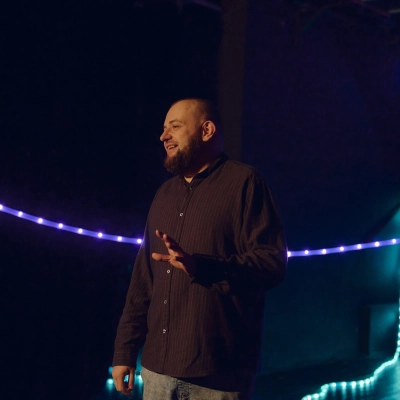
The single video content format that has driven the most direct revenue for my business is the long-form podcast interviews or recordings of interviews I’ve done at events or on stage.
As the founder of Enterprise Podcaster, I’ve spent 22+ years in enterprise IT and communications consulting for Fortune 500 clients, including AT&T. When I launched, I made a deliberate decision to treat each episode as a multi-format content asset rather than just a podcast. Each recorded conversation becomes a full video episode, short-form video clips for LinkedIn, a stylized transcript, a blog post, and shareable quote graphics.
The type of video content that performs best for my business: interview-format conversations with enterprise leaders where the discussion centers on real implementation challenges. These aren’t scripted testimonials or polished brand videos, they’re substantive conversations that demonstrate expertise in context. When a Fortune 500 communications VP watches me navigate a nuanced discussion in their industry, that builds trust faster than any sales deck.
The revenue impact is direct and measurable. My last three enterprise consulting engagements each started with the prospect watching a podcast episode. They showed up to the first call already informed about my approach. Video podcast content compressed what used to be a 3-4 touchpoint sales cycle into a single discovery call.
For businesses considering video content: start with conversations, not productions. Authenticity and expertise compound faster than polish.

Present Simple Demos to Lift Conversions
Short product demos outsold everything else by a wide margin. Not polished brand films, not testimonial reels, just 90-second screen recordings showing how something actually works. We tested both approaches for 3 months and the demos had 4x the click-through to our booking page. I think the reason is trust. A brand video tells you the company thinks highly of itself. A demo shows you whether the product does what you need it to. Founders we work with connecting to investors respond to the same pattern. They don’t want a pitch about how great the firm is. They want to see the matchmaking process.
So we started recording real workflow walkthroughs and posting them without much editing. Production quality went down but conversion went up. I’m still not sure where the break-even is on production quality versus authenticity.

Let Customers Prove Outcomes and Ease
I created simple customer testimonial videos showing real people explaining how our product solved their specific problems.
These videos performed better than any form of advertising because customers are more likely to trust other customers than a company advertising itself.
This is what I did:
1. I requested videos of customers explaining the problem the product solved for them. I asked that the videos be no more than 2 minutes long and be done with a phone.
2. I added the videos to the pricing page of our website, and also to the emails I sent customers that we followed up with.
3. I created additional videos that I called “how-to” videos that showed the steps needed to achieve a specific outcome. These videos also alleviated the concerns of some buyers because they showed that the product was simple.
4. Testimonial videos showing real people achieving real results, and videos that describe the product, are what I used to determine which videos were bought. The promotional videos describing the product were purchased 3 times more than the other videos.
Results are what buyers are looking for. When they see real people with real results, they buy.

Related Articles
- 14 Strategies Businesses Follow to Create Impactful Video Content – TechBullion
- 18 Ways Businesses Use Customer Content to Boost Sales
- How Do Businesses Create Engaging Interactive Content?