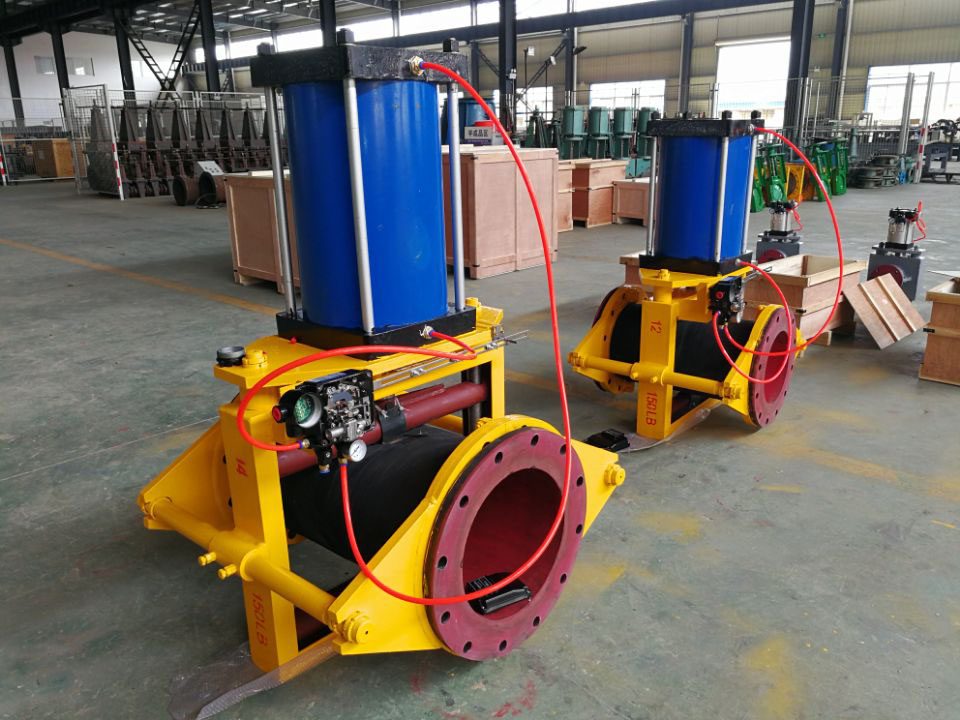
Powder handling systems present a unique set of challenges in industrial processing. Unlike clean liquid service, powders and dry bulk solids do not always move consistently through piping and transfer systems. Material bridging, packing, abrasion, leakage, and buildup can all affect valve performance and overall process reliability. For operations that handle cement, lime, pigments, minerals, dust, granulates, pellets, or other dry media, valve selection plays a major role in reducing downtime and maintaining flow control. That is one reason pinch valves are so often considered for powder handling applications.
A pinch valve operates using a simple but highly effective principle. Rather than relying on a metal gate, disc, ball, or plug in the flow path, it controls media by compressing a flexible sleeve. This design is especially useful in powder service because it reduces the number of internal mechanical parts exposed to the process material. In applications where dry media can infiltrate, accumulate, or interfere with conventional sealing surfaces, a simpler shutoff concept often produces more reliable results.
One of the main problems in powder systems is material buildup. Powders do not always behave in a uniform manner, especially when particle size, moisture, bulk density, or conveying conditions vary. Some products flow freely, while others compact, bridge, or cling to internal surfaces. Valves with complex internal cavities or restrictive geometries can become points of obstruction, leading to inconsistent flow and frequent maintenance. Pinch valves are often preferred because their flow path is comparatively less obstructed when open, helping reduce hang-up and improve material movement through the line.
Another important issue is sealing performance. In powder handling, small particles can work into valve seats and prevent complete shutoff. Over time, this can create leakage, housekeeping problems, and reduced process control. A properly selected pinch valve can offer strong isolation because it shuts off by pinching the sleeve closed rather than forcing particles against rigid seating surfaces. That operating method can be especially valuable when dealing with fine or abrasive powders that challenge traditional valve designs.
Abrasion is another reason pinch valves are widely used in these systems. Many dry materials are surprisingly aggressive, particularly in pneumatic conveying or repeated cycling applications. Conventional valves may suffer from erosion on internal components, which can shorten service life and increase replacement frequency. Because pinch valves use a flexible sleeve as the primary control element, they are often better suited to conditions where abrasive wear is a major concern.
Pinch valves are commonly used in industries such as cement processing, ceramics, mining, chemical manufacturing, wastewater treatment, food processing, and bulk solids handling. In these environments, operators need valves that can perform consistently without constant cleaning or adjustment. Reliability matters not only from a maintenance standpoint, but also from a production standpoint. An unexpected valve failure in a powder transfer system can interrupt material feed, create cleanup issues, and reduce overall system efficiency.
Proper valve selection still matters. Media characteristics, pressure conditions, temperature, cycling frequency, connection type, and sleeve material all need to be matched to the application. Powder handling is not one-size-fits-all. However, when the goal is to reduce blockage, improve shutoff, and handle abrasive or difficult dry media more effectively, pinch valves remain one of the most practical options available.
For facilities looking to improve performance in powder transfer and dry bulk applications, AKO pinch valves are a strong solution to evaluate. Their suitability for challenging media makes them a logical choice anywhere conventional valve designs struggle with buildup, abrasion, or unreliable sealing.