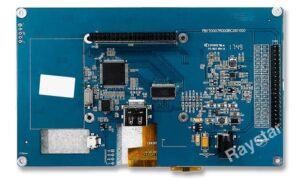
A hardware company can have 98 percent of a bill of materials in stock and still miss a ship date. The missing piece is often one microcontroller, one power module, one memory device, or one legacy IC that no longer sits in the usual catalog.
That problem has become sharper as semiconductor demand bunches around AI systems, vehicles, industrial controllers, and connected products. The Semiconductor Industry Association reported global semiconductor sales of $791.7 billion in 2025, up 25.6 percent from the year before, with growth continuing into 2026. A larger market does not make every part number easy to buy. Newer devices can be allocated. Older ones can disappear with little warning.
For any product expected to live ten or twenty years, availability is no longer just a purchasing task. It is part of lifecycle planning.
Why Some Parts Become Hard to Find
Chip makers keep moving production toward newer processors, memory, power devices, and sensors. When demand follows those newer lines, an older device is marked end-of-life and then discontinued. A consumer gadget can often absorb that change. An industrial controller, a piece of medical equipment, a telecom shelf, a vehicle platform, or a lab instrument often cannot. Changing one chip can mean a board spin, firmware work, retesting, and in some cases a new regulatory file.
So the factory still needs last year’s part long after mainstream channels have stopped stocking it. That is the practical meaning of hard to find electronic components: not a rare collector item, but a part the original design still depends on.
Availability is a Lifecycle Problem
Price, lead time, and MOQ still matter. They are not enough once a product is in the field.
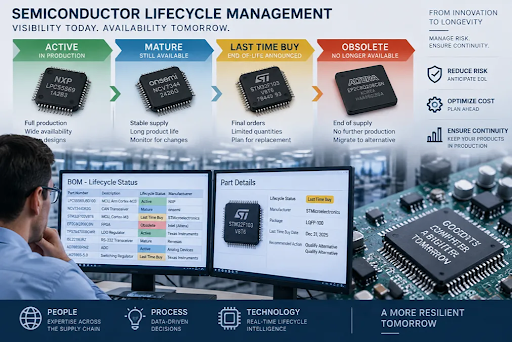
A component typically moves from active to mature, then to last-time-buy, then to obsolete. The notice may reach engineering months after purchasing has already treated the part as “normal stock.” By then the options are ugly: pay up for leftover reels, qualify a substitute, or stop building the product.
Obsolescence does not stay in the purchasing inbox. Engineering has to requalify. Operations slip the build. Finance is asked to fund a lifetime buy. Customers wait. The cheaper moment to act is before the part is already gone.
Why the Usual Channels Run Out
Authorized distributors should remain the first stop. Traceability, datasheets, and support are better there.
They cannot invent inventory that the manufacturer no longer makes. Picture a controls company still supporting a platform launched twelve years ago. One IC on the board is discontinued. Authorized stock is zero. A redesign would force every installed customer through a validation cycle.
The question is no longer “who is cheapest.” It becomes:
- Does genuine stock still exist anywhere?
- Where did those parts come from, and how were they stored?
- Can the lot be inspected?
- Is there a documented cross?
- Is a redesign actually cheaper than another year of scavenger hunting?
Those questions sit outside a standard catalog search.
Pressure is when Counterfeit Risk Rises
The worst quotes appear after a line has already stopped. That is also when gray-market lots, mixed date codes, and relabeled parts show up.
A shortage does not automatically mean fake parts. It does mean buyers start accepting weaker paperwork. Visual inspection alone is not enough on a high-value MCU or power device. A workable check includes lot history, packaging condition, and, when the risk is high, electrical or X-ray screening. Teams that treat counterfeit component detection as a late-stage panic step usually pay twice: once for the parts, again for the board that fails in the field.
Start Before the Shortage
Watch manufacturer lifecycle notices and product-change notices. Flag long-life BOMs for parts with no second source. Decide in advance which items justify a last-time-buy. Keep a short list of known substitutes, even if you never use them. When a buyer does have to leave authorized channels, require the same traceability questions every time rather than inventing them during a crisis.
Diversifying suppliers is useful. Lowering the inspection standard is not. Extra channels only help if incoming parts can still be tied to a trustworthy trail.
From a Purchasing Headache to Continuity
Hardware companies that keep older products alive are not failing to innovate. They are supporting equipment that customers still run. The companies that handle this well treat scarce and obsolete parts as a planned risk, not a surprise invoice.
The missing chip is rarely the expensive part of the story. The expensive part is the week the line sits idle because nobody owned the lifecycle of that one device.