Mario Vilchis has a habit at consultations. When a potential client is on the fence between hardwood and LVP, he doesn’t pull out a brochure. He tells them about specific houses he has installed. The Lab mix in Trinity Park. The toddler in Hope Valley who learned to walk on a 20-mil wear layer. The neighbor two doors down whose floor failed because nobody flattened the slab before the planks went down.
This post came out of one of those conversations. Vilchis, the CEO of Vilchis Hardwood Floors, walked through one of his own north Durham installs with us recently and described what five years had actually done to it. What follows is his account, organized by room.
The house, the install, and why this case is unusual
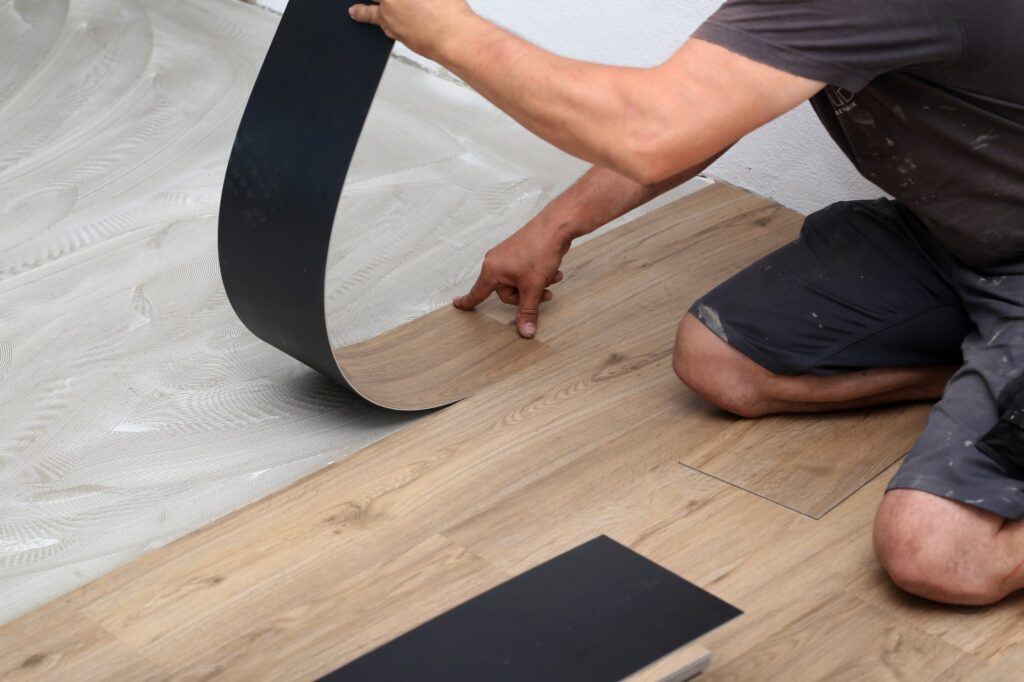
The floor: a 7mm rigid-core LVP with a 20-mil wear layer. Roughly 1,400 square feet across the kitchen, dining room, hallway, and living room. Two dogs the whole time. A Lab mix and a small terrier, around 95 pounds combined. A toddler since 2022. Five summers of the 88-degree, 90-percent-humidity weather that stresses every floor sold in the Triangle.
Vilchis still has the install notes from October 2020. His shop, Vilchis Hardwood Floors, has been doing both hardwood flooring and LVP across the Triangle for sixteen years. He keeps records on his jobs that most installers don’t bother with, which is the only reason a real five-year case study like this is possible. Most homeowners cannot find the company that installed their floor five years ago. He still knows which planks came from which pallet.
Room by room, with a flashlight
The kitchen, in front of the sink
Highest traffic spot in the house. Most wear of anywhere Vilchis pointed out. A faint dulling of the surface texture, roughly the size of a bath mat. Hold a flashlight low to the floor and you can see the embossed grain is slightly flatter than it is six feet away. In normal light, nothing. The homeowner had not noticed until he showed her. The wear layer is intact. No exposed core, no cuts.
The threshold between the kitchen and dining room
Both dogs run through this opening every time the doorbell goes off. Vilchis counted a few hairline scratches across the threshold. All under an inch. None of them deep enough to catch a fingernail. He mentioned that this same homeowner had engineered hardwood in her previous house and the same dogs put visible gouges in it by month four.
Under the dining table
Chair-leg dents are a test most LVP reviews never run. That is because most reviewers do not actually use their dining table. Four small indentations are visible here, under a millimeter deep, at the points where the same chair sits most nights. Felt pads were inconsistent for the first two years and religious after that. Vilchis said the dents stopped getting worse once the pads went on. They have not gotten better either. That is the honest answer to whether LVP “bounces back,” he said. It doesn’t, really.
The hallway runner area
A runner sat over this section for three years and came up in 2023 when the toddler started crawling. The covered section is noticeably shinier than the floor around it. The mismatch surprised the homeowner. Vilchis said it surprises most clients when they finally lift a rug. Factory finish dulls slightly with traffic even when nothing else looks worn. A rug that comes up years later is going to show that. Worth knowing if you plan to use rugs.
The water tests
This kitchen has been through a dishwasher leak that was caught within an hour, an overturned dog water bowl that sat overnight, and the daily splashing of a child who likes to play in the sink. No lifted seams. No swelling. No discoloration. Vilchis mentioned a friend’s laminate floor in a similar Triangle house that did not survive any one of those events.
The part nobody talks about: subfloor prep
The thing that does not show up in marketing copy but matters more than any wear-layer spec is subfloor prep. Vilchis and his crew spent a full day before installation grinding down a high spot in the slab and skim-coating two low areas in the dining room. The homeowner has a phone photo of the floor at that stage. It looks like a bad day at a body shop. Five years later, there are no popped seams anywhere in the house.
The neighbors two doors down had LVP installed by another company that same fall, over a slab nobody bothered to flatten. Their seams started clicking at year two. They are replacing the floor this summer. Vilchis brought this up without prompting. He says it is the single thing that separates a five-year LVP from a two-year LVP, and almost no client thinks to ask about it during the quote stage.
Smaller things from the walkthrough
The grout-look bevels have collected almost no dirt, which goes against what every laminate-loyalist forum on the internet warns about LVP. A robot vacuum runs five days a week. That probably explains it. Homes without one would likely see darker bevels by year three.
The floor has not faded at the south-facing windows, despite five Carolina summers of direct afternoon sun. UV-stable wear layers have improved a lot. A 2018 LVP, Vilchis said, would not have held up the same way.
Cold-weather contraction has opened one small gap, about a dime-edge wide, at a transition by the front door. Vilchis noted on day one that the field was big enough that he expected one or two thermal gaps to open over time. He was right. Nobody will ever see it because it sits under a transition strip.
What Vilchis tells potential clients
This is the part of the conversation he says happens at almost every consultation. Someone has two dogs, a young kid, a real cooking habit, and they want to know whether to spend the extra on hardwood or commit to LVP.
His honest answer, based on this house and a lot of others like it: in that exact home, LVP did what was promised. Hardwood would have looked better at year one and worse at year five. Carpet would have been gone by year three. The homeowner has no regrets and plans to put the same product in the basement when she finishes it next year.
One house. One slab. One wear layer. That is what this is. Anyone shopping LVP, Vilchis says, should ask their installer about wear-layer thickness in mils, the rigid-core type and thickness, and how they plan to handle subfloor flatness before the planks go down. Most floor failures trace back to that last question. Most quotes do not even mention it.
Where to start if you’re in the Triangle
For anyone in Durham, Raleigh, Cary, or Chapel Hill thinking about a similar install, Vilchis Hardwood Floors is one of the few shops in the area that still walks the slab with a six-foot straightedge before writing a price. It is the unglamorous part of the job. According to Vilchis himself, it is the part that decides whether the floor looks like this five years from now.