The private office is being reinvented. After years of open-plan dominance, companies and solo professionals are circling back to enclosed workspaces, but with a radically different set of priorities than the corner offices of the past. Anyone searching for a private office space for rent in 2026 will notice that square footage and a door are no longer enough. Today’s enclosed workspace has to earn its place through design that supports focus, comfort, and measurable productivity.
Here are the design directions shaping private offices this year.
Acoustic Engineering Has Moved From Afterthought to Priority
Poor acoustics is the most common workplace complaint, according to multiple post-occupancy surveys conducted over the past three years. The rise of hybrid work has only made this worse: employees who do come into the office spend a large portion of their day on video calls, making controlled sound environments non-negotiable.
Private offices in 2026 address acoustics through material choices, not just wall thickness. Timber-look acoustic grids, felt ceiling panels, and soft flooring systems absorb mid-range frequencies where human speech sits. Soundproof pods (small, fully enclosed rooms with dedicated ventilation and lighting) are becoming standard additions for focused calls and confidential conversations.
What changed from previous years? If 2024 was when companies started talking about acoustics, 2025 and 2026 are when budgets followed the conversation. Designers now integrate acoustic materials into the visual concept of a room from day one, not as an afterthought. The ceiling, once ignored, has become a design canvas.
Nature Inside the Office: The Business Case Is Now Undeniable
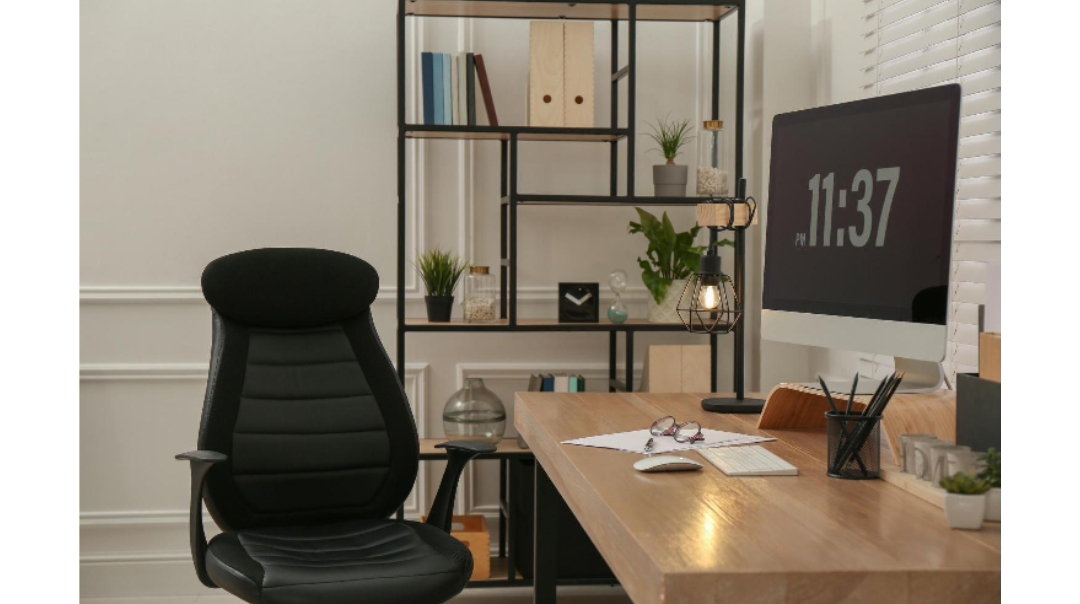
Biophilic design (the practice of weaving natural elements into built environments) has appeared on trend lists for a decade. What separates 2026 from prior years is hard data.
A study of 7,600 office workers across 16 countries, led by organizational psychologist Professor Sir Cary Cooper and commissioned by Interface, found that employees in offices with natural elements reported 15% higher well-being, were 6% more productive, and scored 15% higher on creativity measures. A 6% productivity gain across a 200-person office carries real financial weight.
For private offices specifically, biophilic design shows up in three ways:
- Light optimization. Natural light remains the single most-requested workplace feature in employee surveys. Private offices in 2026 maximize glazing and use adaptive lighting that follows circadian rhythms throughout the day.
- Material warmth. Wood, stone, cork, and bamboo replace the plastic-and-laminate look of older offices. These materials regulate humidity and add texture that synthetic surfaces cannot replicate.
- Living elements with intention. Built-in planters, moss walls, and vertical gardens are placed to improve air quality and create visual rest points, not as decoration alone.
The Resimercial Turn: When Your Office Feels Like a Living Room
A word that keeps surfacing in 2026 design conversations is “resimercial,” a blend of residential and commercial design. The idea is straightforward: people are more productive and stay longer in spaces that feel welcoming, not institutional.
| Traditional Office | Resimercial Office |
| Fluorescent overhead lighting | Layered lighting at 3000K (warm tone) |
| Plastic task chairs | Upholstered seating with varied postures |
| Flat grey carpet tiles | Mixed flooring: wood, rugs, soft surfaces |
| Blank white walls | Art, textiles, and regional craft elements |
Designers are moving to warmer color palettes, softer lighting tones, and furniture that would look at home in a well-appointed living room. The distinction between “work” and “comfort” dissolves when an office lounge area features the same quality of furniture you would choose for your own home.
This trend has a practical side, too. Aflac’s 2025 WorkForces Report found that nearly 72% of U.S. employees report moderate-to-high stress at work. A private office designed with residential cues (soft textures, warm light, rounded furniture edges) can reduce the sensory load that contributes to that stress.
Designing for Neurodiversity, Not Just Compliance
Neuro-inclusive design is one of the most talked-about directions in 2026, and it goes well beyond ramps and accessible restrooms. An estimated 15 to 20% of the workforce is neurodivergent, including people with ADHD, autism spectrum conditions, sensory processing differences, and anxiety disorders.
Private offices are adapting in specific ways:
- Adjustable sensory controls. Occupants can modify lighting intensity, color temperature, and even background sound levels within their own space.
- Reduced visual clutter. Clean sightlines, muted color schemes, and intentional storage reduce cognitive load for people sensitive to visual overstimulation.
- Acoustic gradients. Offices are zoned on a spectrum from social and energetic to semi-private to fully enclosed and silent. The private office sits at the quiet end of this gradient, giving neurodivergent employees a space where they can work without opting out of the main office.
The most effective neuro-inclusive offices do not label spaces as “for neurodivergent employees.” They offer choice and variety, which benefits everyone on the team.
Data-Driven Layouts Replace Gut Feeling
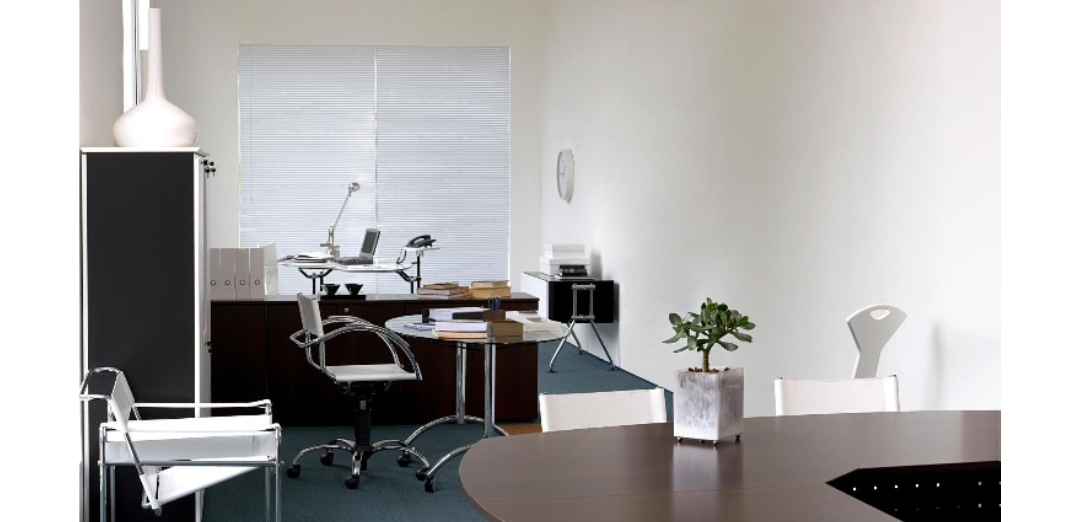
One of the least visible but most impactful 2026 trends is the data layer underneath physical space. Occupancy sensors, desk booking systems, badge integrations, and meeting room analytics generate detailed pictures of how offices are used in practice, which frequently differs from how leadership assumes they are used.
Organizations running these systems consistently discover that some zones operate at 80% or higher capacity, and others barely reach 20%. Peak occupancy windows turn out to be narrower than expected.
For private offices, this data answers questions that used to depend on assumptions: How many enclosed rooms does a floor need? What hours see the most demand for focused workspace? Should private offices be assigned or bookable?
The answer, in many 2026 fit-outs, is the “bookable private office.” These are not owned by managers. They are available to anyone who needs several hours of focused, uninterrupted work. Sensor data determines how many are built, and booking analytics reveal if the count is right.
The Library Zone: Shared Silence as a Design Feature
A concept gaining traction alongside the private office is the “Library zone,” a shared area with strict no-talking and no-notification rules. It functions like a university reading room, where collective quiet helps everyone concentrate.
The Library sits between the fully private office and the open floor. It gives employees who do not have (or need) a full private office the same acoustic protection, without isolation. For companies that cannot afford to build enough individual rooms, the Library zone offers a cost-effective alternative that still honors deep work.
Your Office Should Work Harder Than You Do
The private office in 2026 is no longer a status symbol. It is a performance tool, tuned by data, shaped by research on human cognition, and designed to meet the full range of how people think and work. The companies that treat office design as an ongoing experiment (measuring, adjusting, measuring again) will get the most from every square foot. And the ones that ignore these realities will keep wondering why the best people prefer to work from home.