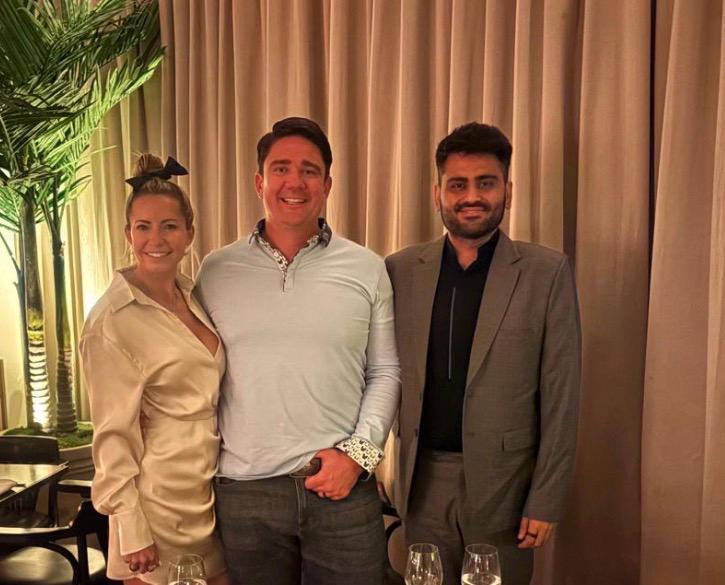
Ishan Jetley is the Founder and CEO of GoSBA, the largest SBA loan broker in the United States. GoSBA is a full-service SBA brokerage that connects business buyers with a network of 50+ competing SBA lenders, all 100% free of charge. The company has funded over $320 million in SBA loans in 2025, maintains a 99.1% approval rate, and provides every borrower with a free SBA business plan, financial projections, and complete loan packaging as part of its service.
We sat down with Jetley to understand how GoSBA became the country’s largest SBA loan broker, why more entrepreneurs are choosing to work with an SBA broker instead of going directly to banks, and what the process looks like from start to finish.
Q: Ishan, tell us about GoSBA. What is an SBA loan broker, and what does your company do?
Ishan Jetley: GoSBA is an SBA loan broker. We help people who are buying businesses, buying commercial real estate, or need working capital get financed through SBA loans.
We work with a network of over 50 SBA lenders across the country. When a borrower comes to us, we take their deal to multiple lenders at the same time so those lenders compete for the business. The borrower ends up with better rates, better terms, and a faster closing than they would get going to any single bank on their own.
The entire service is 100% free to the borrower. We handle everything: the loan packaging, the business plan, financial projections, lender outreach, underwriting support, and closing coordination. The borrower doesn’t pay us anything. Lenders pay us a referral fee after the loan closes, which is standard practice in SBA lending and fully disclosed on SBA Form 159.
In 2025 alone, we funded over $320 million across more than 126 closed deals, and we work with borrowers nationwide in every industry you can think of. Home services, healthcare, manufacturing, technology, food and beverage, professional services, and more.
Q: For readers who aren’t familiar with SBA lending, how does buying a business with an SBA actually work?
Ishan Jetley: The SBA, or Small Business Administration, is a government agency that guarantees a portion of loans made by approved lenders to small businesses. That guarantee reduces the risk for the bank, which means borrowers can get financing with lower down payments and longer repayment terms than they would with a conventional business loan.
The most common product for buying a business is the SBA 7(a) loan. It allows you to borrow up to $5 million to acquire an existing business. The standard terms are a 10-year repayment period, a minimum 10% down payment from the buyer, and interest rates that are capped by the SBA, typically prime rate plus a spread of 1% to 2.75% depending on loan size and structure. The SBA guarantees up to 75% of the loan, which is what gives the bank comfort to lend on a business acquisition where there may not be hard assets like real estate to collateralize.
Here’s how a typical acquisition works. You find a business you want to buy. You negotiate a purchase price and sign a letter of intent, the LOI. Then you need financing to actually close the deal. Most buyers use an SBA 7(a) loan to cover 90% of the purchase price and bring 10% as a down payment. That down payment can come from personal savings, investor equity, or in many cases a seller note where the seller agrees to finance part of the price.
Once you have financing approved, the bank funds the loan, the seller gets paid, and you take over the business. The is repaid over 10 years from the cash flow the business generates. The entire model is designed so that everyday entrepreneurs, not just wealthy buyers or private equity firms, can acquire profitable small businesses and become owners.
Where it gets complicated is in the details. Which lender to use, how to structure the down payment, how to package the deal, how to present projections that satisfy the underwriter. That’s exactly where an SBA loan broker comes in. We handle all of that complexity so the borrower can focus on finding the right business and running it after close.
Q: Why should someone use an SBA loan broker instead of just going to their bank?
Ishan Jetley: It’s the most important decision a borrower makes in the financing process, and most people get it wrong.
When you walk into your local bank, you’re getting one offer from one institution. They look at your deal through their specific credit box, their industry preferences, their risk appetite, their pricing model, and they either say yes or no. If they say yes, you take whatever rate and terms they offer because you have no leverage. If they say no, you’re back to square one and you’ve lost weeks or months. Either way, you have no idea what the broader market would have offered you.
An SBA broker changes that completely. We take your deal to 10 to 15 qualified lenders at the same time. Those lenders know they’re competing against each other, and that competition produces dramatically better outcomes. Rates come down. Down payment requirements become more flexible. Timelines get shorter. Our borrowers consistently save half a point to two full points on their interest rate compared to going direct. On a multimillion-dollar SBA loan, that translates to hundreds of thousands of dollars in savings over the life of the loan.
The other major advantage is coverage. Every SBA lender has different specialties and different rules. A deal that gets declined at one bank might be a perfect fit for another bank you’ve never heard of. We know which lenders love which industries, which ones are flexible on deal structure, and which ones can move the fastest. A borrower trying to figure that out on their own is navigating blind. An SBA loan broker knows the entire map.
Q: GoSBA is 100% free for borrowers. How is that possible, and what exactly is included?
Ishan Jetley: When I say 100% free, I mean there is truly nothing the borrower pays at any point in the process. No application fees. No packaging fees. No upfront deposits. No retainers. No exclusivity agreements. You can work with us and walk away at any time without owing a dollar. That’s not a limited-time offer. That’s our permanent business model.
What’s included goes much further than most people expect. We build your SBA business plan from scratch. This is a professional, lender-ready document tailored to your specific deal, not a template. Most SBA consultants charge $5,000 to $15,000 for this alone. At GoSBA, it’s free.
We also create your financial projections, your debt service coverage analysis, and your full sources and uses of funds. We prepare the entire loan package: the borrower resume, the deal narrative, the financial summary, everything a lender needs to make a credit decision. Then we submit to our 50-plus lender network, collect and compare term sheets, manage the underwriting process, coordinate third-party reports, and support you all the way through closing day.
It’s all free because SBA lenders pay a referral fee to brokers when a loan closes, disclosed on SBA Form 159. The SBA designed the system this way. It works the same as a real estate buyer’s agent: the lender pays us, not the borrower. Our incentives are completely aligned with the borrower. We only get paid when the deal closes, so we’re motivated to find the best lender, get the best terms, and close as efficiently as possible.
Q: Your SBA broker team builds free business plans and financial projections for every borrower. Why invest so heavily in something most firms charge thousands of dollars for?
Ishan Jetley: Because the business plan is the single highest-leverage thing we can do to improve deal outcomes. A strong business plan and set of projections isn’t just a checkbox the SBA requires. It’s the document that tells the lender’s underwriter why this deal makes sense, why this borrower is the right operator, and why the business will generate enough cash flow to service the debt. When it’s done well, it accelerates everything. When it’s done poorly, it creates questions, delays, and sometimes outright declines.
Our business plans are built by people who have seen hundreds of SBA deals close. We know what underwriters look for because we talk to them every single day. Our projections aren’t generic templates. They’re tailored to the specific business, the specific acquisition structure, and the specific lenders we’re targeting. We model different scenarios, stress-test the debt service coverage, and build narratives that address the exact concerns we know will come up.
Here’s the key difference between us and a paid consultant. A consultant hands you a document and wishes you luck. We hand you a document and then personally defend it in front of underwriters for the next two months. That alignment of incentive produces a dramatically better result.
We also provide free deal structuring advice before the LOI is even signed. If a borrower calls us early, we’ll tell them how to structure the offer to maximize SBA eligibility: what purchase price allocation works best, how to handle goodwill, whether to include real estate, how to structure a seller note that lenders will actually accept. That pre-LOI advisory alone is something most borrowers would have to pay a deal attorney or M&A advisor for.
Q: Walk us through the process. A borrower reaches out to GoSBA as their SBA broker. What happens, and how long does it take?
Ishan Jetley: The whole process from first contact to funding typically takes 45 to 75 days, depending on complexity. Here’s how it works.
You reach out to us through our website, by phone, or by scheduling a call. Within two hours, a real person on our team has reviewed your deal and responded. Not a chatbot, not a form email. On that first conversation, we assess SBA eligibility, talk through deal structure, and give you honest feedback on what to expect: rates, timeline, down payment, and which lenders are likely to be the best fit.
If you decide to move forward, we build your entire loan package. That includes the SBA business plan, financial projections, debt service analysis, and a full deal narrative. This takes a few days. While most borrowers who go directly to a bank spend three to four weeks just going back and forth on documents, we front-load all of that work so the package is complete before any lender sees it.
Once the package is ready, we submit to the lenders in our network who are the best match. We typically have multiple term sheets back within seven days. We lay out every offer side by side so you can compare rates, terms, down payment requirements, and closing timelines. You pick the one that works best.
After you select a lender, we manage the entire underwriting process. We’re the single point of contact between you and the bank. We handle all the back-and-forth, coordinate third-party reports like appraisals or quality of earnings, and make sure nothing falls through the cracks. This phase usually runs two to four weeks.
Finally, we track SBA authorization, coordinate closing documents, and make sure funding goes smoothly. Most deals close around day 60. Simpler deals can close in 45 days. Borrowers who work with us save two to three weeks on average compared to going directly to a bank.
Q: There are other SBA loan brokers in the market. What makes GoSBA the largest, and why should a borrower choose you?
Ishan Jetley: A few things set us apart, and they compound on each other.
First is the size of our lender network. We work with over 50 SBA lenders. Most SBA brokers work with five or ten. The more lenders competing for your deal, the better your outcome. A broker with a small network is really just steering you to a handful of banks. We’re giving you access to the full market.
Second is the free business plan and projections. I’m not aware of another SBA loan broker that builds your complete business plan from scratch at no cost. Most either don’t offer it or charge thousands for it. We include it because we’ve seen firsthand how much the quality of the loan package impacts rates, terms, and speed to close.
Third is volume and track record. We funded over $320 million in 2025 alone across 126-plus deals. We close 8 to 10 transactions per month. That volume means our lender partners know us, trust our packages, and prioritize our deals. When a GoSBA submission lands on an underwriter’s desk, it gets treated differently than a cold application from an unknown borrower. That credibility took years to build and it directly benefits every borrower.
Fourth is technology. We’ve built AI-powered tools and proprietary databases that match deals to lenders with precision that smaller brokers can’t replicate. We track which lenders are active in which industries, what their current appetite looks like, and how fast they’re closing. That intelligence is what allows us to get term sheets back in seven days.
Fifth is service. Every borrower gets a dedicated SBA broker who personally manages their deal from first call to closing. You’re never passed between departments or left waiting for a callback. Your broker knows your deal inside and out and is personally invested in the outcome.
Q: What types of SBA does GoSBA handle?
Ishan Jetley: We handle every major SBA loan product. SBA 7(a) loans for business acquisitions and working capital up to $5 million. SBA 504 loans for commercial real estate up to $13 million. SBA Express loans for faster funding under $500,000. We also handle more complex structures: pari-passu deals where an SBA loan sits alongside a conventional loan, deals with investor equity, seller financing components, partner buyouts, and debt refinancing.
Our sweet spot is business acquisition loans in the $500,000 to $5 million range, but we regularly close deals above and below that. If it involves SBA lending, we can help. The key requirement is that the business needs at least three years of operating history and a minimum of $250,000 in annual revenue. Beyond that, we work with borrowers in every industry and every state.
Q: You offer a best rate guarantee. How does that work?
Ishan Jetley: It’s simple. If a borrower finds a lower rate from a qualified SBA lender on their own, we’ll match it or beat it. We’re confident enough in our network and our ability to drive competition that we put it in writing. The reality is that it almost never gets triggered, because when 50-plus lenders are competing for your deal, the rates we deliver are already the best available. But the guarantee gives borrowers peace of mind that they’re not leaving money on the table.
Q: As an SBA broker who has seen hundreds of deals, what are the biggest mistakes borrowers make when trying to get SBA financing?
Ishan Jetley: The number one mistake is going to a single bank and treating that bank’s answer as the final word. I cannot overstate how common this is. A borrower finds a great business, signs an LOI, walks into their local branch, and waits eight to twelve weeks for a decision. The bank either declines the deal or comes back with a mediocre rate and stiff terms. The borrower assumes that’s just how SBA lending works. It’s not. That’s how one bank works. The market is completely different. If that same borrower had used an SBA loan broker and put the deal in front of 15 lenders, they would have had multiple competing offers in a week, at better rates, with more flexibility.
The second biggest mistake is waiting too long to start the financing process. Ideally, a borrower should be talking to an SBA broker before they sign the LOI, not two months after. We can help structure the offer in a way that maximizes SBA eligibility and lender appetite. Purchase price allocation, goodwill treatment, seller note structure, down payment planning. All of that impacts what lenders are willing to do, and getting it right on the front end saves enormous time and frustration later. I’ve seen deals fall apart because the borrower structured the LOI in a way that created SBA problems that could have been avoided with a five-minute phone call beforehand.
The third mistake is underestimating the equity injection. SBA requires a minimum 10% equity injection on acquisitions, but how you compose that 10% matters more than most people realize. Cash, seller notes, investor contributions, gifted funds, these all have different rules depending on the lender. Many borrowers assume they need 10% in personal cash sitting in a bank account. That’s not always the case. We’ve closed deals where the buyer brought as little as 1% of their own money because the rest of the injection came from a full-standby seller note and investor equity. But structuring that correctly requires knowing which lenders accept which sources, and that’s exactly what an experienced SBA broker brings to the table.
The fourth mistake is a bad loan package. Borrowers show up to lenders with incomplete financials, no business plan, no projections, and a vague deal narrative. The underwriter doesn’t have what they need to say yes, so the deal sits in limbo or gets declined. A professionally prepared package with a strong business plan, clean projections, and a clear debt service analysis dramatically increases your odds and your speed. At GoSBA, we build that entire package for free for exactly this reason.
Q: SBA deal structuring can get complicated. Can you explain how an SBA broker helps with things like seller notes, pari-passu loans, and low down payment strategies?
Ishan Jetley: This is where a good SBA loan broker earns their keep, and it’s also where most borrowers get lost if they’re trying to do it alone.
Let’s start with seller notes. In most business acquisitions, the seller agrees to finance a portion of the purchase price. That note can be structured in different ways, and the structure directly impacts how much cash the buyer needs to bring and which lenders will do the deal. A “full standby” seller note means the seller doesn’t collect any payments for the first two years, which allows the SBA lender to treat it almost like equity. Some lenders accept a full-standby seller note as the entire equity injection, meaning the buyer can get in with as little as 5% cash or sometimes even less. Other lenders won’t accept that at all. Knowing which lenders are flexible on seller note structures is one of the most valuable things an SBA broker does.
Pari-passu is another structure that’s becoming more common, especially on larger deals. It’s when an SBA 7(a) loan sits alongside a conventional loan from the same or a different lender, both secured by the same collateral on equal footing. This allows borrowers to finance deals well above the $5 million SBA cap. We’ve closed pari-passu deals up to $8.4 million. But not every lender does pari-passu, and the ones that do each have different requirements around loan-to-value ratios, collateral coverage, and borrower experience. An SBA loan broker who works with 50-plus lenders knows exactly which ones are active in this space and what their current terms look like.
Then there’s investor equity. More and more acquisition entrepreneurs are bringing in outside investors to help fund the equity injection. SBA has specific rules about how investor funds can be used, how ownership needs to be structured, and what the investor’s role can or can’t be in the business. Different lenders interpret these rules differently. We regularly structure deals with a combination of personal funds, investor equity, and seller notes that minimize the buyer’s out-of-pocket cash while still meeting SBA requirements and satisfying the lender. That kind of creative structuring is really only possible when you have deep knowledge of multiple lenders’ credit boxes, which is the core value of working with an SBA loan broker who does this at volume.
The bottom line is that every deal has a capital stack, and how you assemble that stack determines your rate, your down payment, and whether the deal closes at all. A good SBA loan broker doesn’t just find you a lender. They help you engineer the deal structure that produces the best possible outcome.
Q: The SBA lending market has changed a lot in recent years. As the largest SBA loan broker in the country, what trends are you seeing right now?
Ishan Jetley: Three big things are happening in SBA lending that every borrower and every SBA loan broker should be paying attention to.
First, lender specialization has accelerated dramatically. Five years ago, most SBA lenders were generalists. They’d do a restaurant deal, a construction deal, and a medical practice all in the same week without much differentiation. Today, banks are carving out very specific niches. One lender dominates veterinary practice acquisitions. Another is the go-to for HVAC and home services. A third has built an entire team around SaaS business acquisitions. This is great for borrowers because specialized lenders understand their industry and can move faster, but it also means the right lender for your deal might be a bank you’ve never heard of in a state you’ve never visited. That’s exactly where an SBA loan broker adds value. We know who specializes in what, and we route your deal accordingly.
Second, deal structures are getting more creative. The days of “10% down, single lender, simple acquisition” are still the bread and butter, but we’re seeing far more pari-passu structures, multi-investor capital stacks, partial seller note standby arrangements, and hybrid SBA-plus-conventional financing packages. Borrowers are getting more sophisticated, sellers are getting more flexible, and lenders are competing harder, which means more creative solutions are available. But navigating that complexity without an experienced SBA loan broker is extremely difficult. The SBA rulebook is thick, and every lender reads it slightly differently.
Third, AI and technology are fundamentally changing how the SBA loan brokerage industry operates. At GoSBA, we’ve built AI-powered tools that analyze financial documents, calculate DSCR instantly, generate loan summaries, and match deals to lenders based on historical approval data. We also maintain proprietary databases that track real-time lender activity, which industries they’re lending in, how aggressive their pricing is, and how fast they’re closing deals. This kind of intelligence used to take weeks of phone calls. Now it takes minutes. The brokerages that invest in technology will pull further and further ahead of those that don’t, because speed and precision are what borrowers care about most. We’re building for a future where borrowers can model financing scenarios and see real-time lender intelligence before they even submit a deal, and we’re closer to that than most people realize.
Q: Can an SBA broker help if a borrower has already been declined by a bank?
Ishan Jetley: Absolutely. This is one of the most common situations we see. A borrower spends two or three months working with a single bank, gets declined, and thinks SBA financing isn’t an option for them. That’s almost never true. What’s usually true is that one particular bank wasn’t the right fit for that particular deal.
Every SBA lender has a different credit box. They have different industry preferences, different geographic footprints, different risk tolerances, and different interpretations of SBA guidelines. A deal that one bank declines might be exactly what another bank is looking for. We’ve closed dozens of deals that were previously declined elsewhere. Sometimes it’s because the first bank didn’t lend in that industry. Sometimes the deal structure needed adjustment. Sometimes the loan package just wasn’t presented well enough for the underwriter to say yes.
When a borrower comes to us after a decline, we first diagnose why the deal was turned down. Then we either fix the structural issue, repackage the deal with a stronger narrative and better projections, or simply route it to lenders whose credit box is a better match. That’s the power of having 50-plus lenders in our network. What looks like a dead deal at one bank is often a live deal at several others. An SBA loan broker’s job is to find the path, and there’s almost always a path.
Q: What advice would you give someone considering using an SBA broker for the first time?
Ishan Jetley: Three things.
First, talk to an SBA loan broker before you sign the LOI, not after. Most borrowers wait too long to start the financing conversation. If you’re in the early stages of looking at a business, call us. We’ll give you free deal structuring advice: how to think about purchase price, how to structure a seller note, what down payment to plan for, and whether the deal is likely to get SBA approval. That early guidance can save you months.
Second, do not apply to just one bank. I see it constantly and it’s the most expensive mistake borrowers make. You deserve to see what the full market looks like, and the only way to do that is through an SBA loan broker or by spending months applying to banks one at a time. One of those options is free and takes a week. The other costs you time, money, and possibly the deal.
Third, don’t underestimate the value of a professionally prepared loan package. The quality of your business plan, projections, and how your deal is presented to lenders has a direct impact on the rate you get, the terms you get, and how fast you close. At GoSBA, we build that entire package for free because we know how much it matters.
Q: How can readers connect with GoSBA?
Ishan Jetley: Visit gosbaloans.com and schedule a free consultation. We respond to every inquiry within two hours. On the first call, we’ll give you straight answers: what you qualify for, what rate to expect, how to structure the deal, and whether GoSBA is the right fit. The consultation is free, the advice is free, and if you decide to work with us, the entire service is free from start to finish.
You can also reach us at 1-855-381-6448 or connect with me directly on LinkedIn. Whether you’re a first-time buyer, a business broker looking for a financing partner for your clients, or someone recovering from a bank decline, we’re happy to help. No pressure, no commitment, no cost. When lenders compete, you win.