
What Could PUMPCHANGE’s First Big Impact Look Like

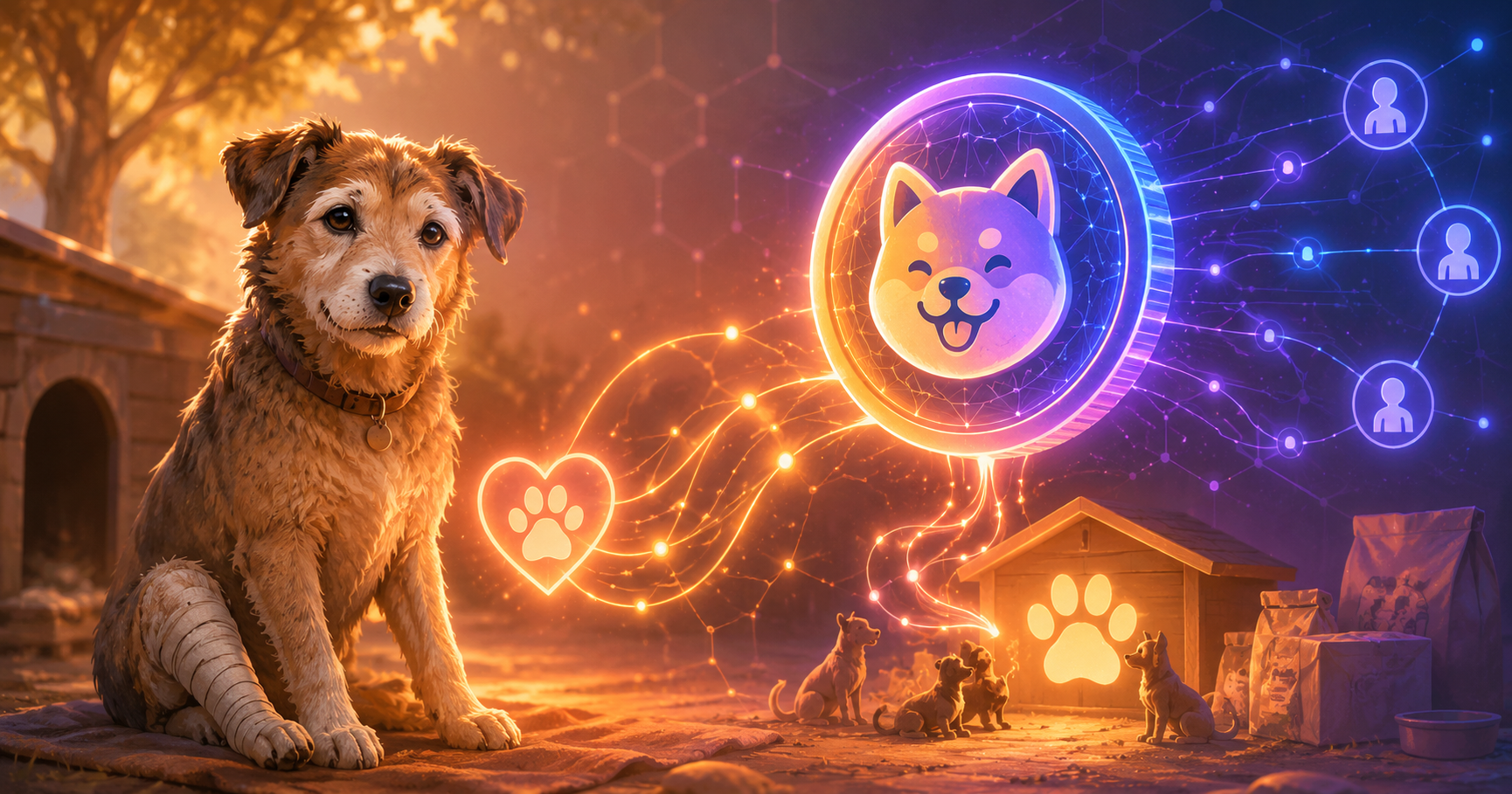
Maria runs a small animal shelter outside Tucson. Most months, the shelter’s biggest expense line is vet bills for dogs nobody has claimed. One of them, at the time this story is set, is an eleven-year-old mutt with a bad hip. The shelter calls him Bisco.
The story below is illustrative. It describes how the mechanism is designed to work, not an event that took place. Names, tokens, charities and amounts are invented for the example.
A friend of Maria’s, a college student with a meme account and too much time between classes, would launch a token through PUMPCHANGE as a joke about Bisco’s hip. He’d call it $CRUTCH. Nothing about the joke would need to be good. Meme tokens on Solana get created for worse reasons every day.
He’d connect his wallet, and before the token exists, PUMPCHANGE’s create-coin form will ask him to pick a charity and set a percentage. He’d pick Maria’s shelter and lock in 40% of his share of the trading fees, keeping the other 60% for himself. That choice will be final the moment he makes it: the form will say so plainly,
“Choose carefully, these cannot be changed once the coin is created.”
Not a promise he could walk back later, just a setting baked in before the token has a name people can search.
Want to set this up yourself when it’s live? Join the waitlist at pumpchange.fun.
Token pages will show the charity’s name and the locked-in percentage before a single person trades. On $CRUTCH’s page, that would mean the shelter’s name and 40% sitting there, next to the chart, before anyone trades it. Nobody would have to ask what happens to the fees, or take the creator’s word for it.
He wouldn’t tell Maria. Nobody has to ask permission, announce a campaign, or remember to follow through. The token either gets traded or it doesn’t, and the donation is just what happens when it does.
Say a few hundred people would find the joke and start trading $CRUTCH: buying, selling, some holding it for an afternoon, most losing interest within a week. That’s the ordinary lifespan of a meme coin, and PUMPCHANGE won’t change it. A 1.25% fee will apply to each trade. Half will go to the platform. The other half will go to the creator, split by the percentage he set: 40% of his share to Maria’s shelter, the rest kept by him.
None of the traders would be doing anything for the shelter. They’d be speculating on a joke, for entertainment, the way people already trade meme tokens. Nobody expects the token to be worth more than what the next buyer pays, and nobody’s building a position or waiting out a better exit. The donation isn’t something they opt into. It’s a property of the token they’re already trading, whether they’ve noticed it or not.
Some would notice the shelter’s name on the page and trade anyway, for the joke, same as any other coin. That’s fine. The mechanism doesn’t need anyone to care about Bisco. It only needs people to keep trading meme coins, which they already do.
Fees won’t land with the charity trade by trade. They’ll accumulate, and PUMPCHANGE will pay them out at its regular intervals. That’s the difference between a mechanism and a magic trick. A dozen trades on a Tuesday afternoon and a dozen more the following week would fold into the same eventual payout, not arrive one at a time as they happen. There won’t be a single moment where the money shows up, just a running total that climbs with each trade, sitting untouched until the next scheduled payout clears it.
By the time the volume tapers off, the shelter’s share might add up to something like 0.6 SOL, a modest number, because $CRUTCH would be a modest, forgettable token, which is what nearly all of them are. When the payout runs, PUMPCHANGE’s records for the token will show it: the amount, the wallet, the transaction hash. Anyone (Maria, the creator, a stranger who’d never heard of either of them) will be able to take that hash to a Solana block explorer and see the transfer for themselves. No one will have to take the platform’s word, or the creator’s, or ours.
That’s the whole mechanism. A stranger trades a joke coin. A charity the stranger has never heard of gets a fraction of a fee the stranger never notices paying. The receipt is public whether or not anyone goes looking for it.
The part of this story that would actually reach Bisco is the smallest part, and the least interesting one: 0.6 SOL doesn’t rebuild a shelter. It might cover a vet visit, or a bag of prescription food, or nothing dramatic, just one more line in a budget made mostly of lines like that. What makes it worth telling isn’t the size of the number. It’s that nobody would set out to raise it. A college student would make a joke about a dog he’d never met. A few hundred strangers would trade it because trading meme coins is what they already do. A percentage fixed in a form, before the token had a single holder, would still be doing its job weeks later, long after everyone involved had moved on to the next joke.
That’s the mechanism working as designed: not a campaign, not an announcement, just a setting that keeps applying itself.
Meme tokens are traded for entertainment purposes only and have no inherent value or utility. They confer no equity, ownership, profit share, governance rights or dividends. Nothing here is an offer to buy or sell any financial instrument, or investment, legal or tax advice. Tokens are created and traded on Raydium, an open-source Solana protocol; PUMPCHANGE provides a software interface and is not a party to any transaction. Blockchain transactions are irreversible. The platform is available to users aged 18 and over and is not available in New York or California.
Join the waitlist at pumpchange.fun.






Comment