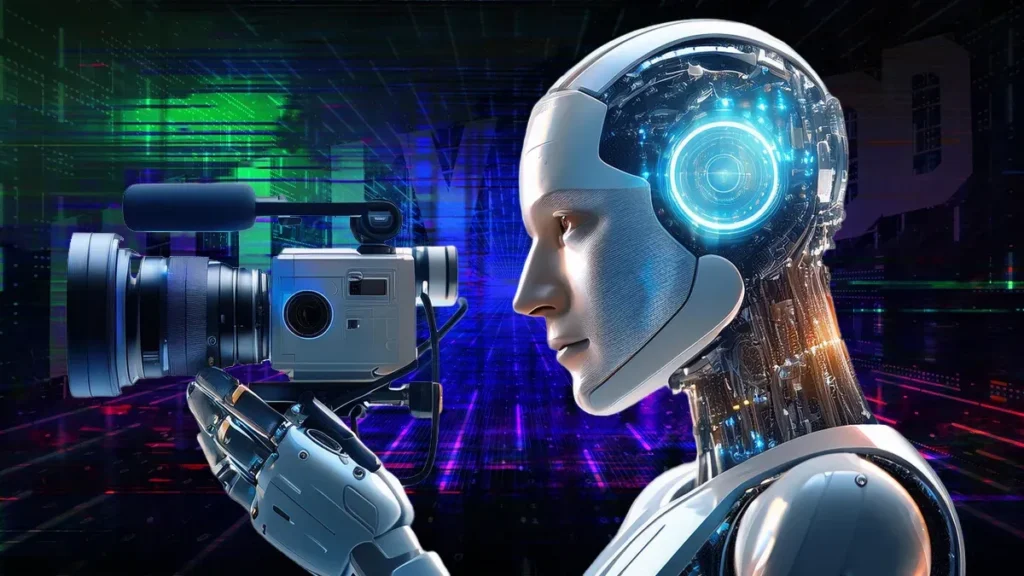
Creating visual content used to require a long chain of separate steps. A designer might create a concept in an image editor, a video team would animate it, an editor would assemble the footage, and another round of revisions would follow before the final asset was ready.
Generative AI is changing that workflow.
Today, a single creative idea can move through several stages with the help of AI: concept development, image generation, image editing, animation, video generation, and post-production. The result is not simply faster content creation. It is a different way of thinking about how visual projects are developed.
The Image Is Becoming the Starting Point
One of the biggest changes in AI-assisted production is the relationship between images and video.
Instead of creating every video scene directly from a text prompt, creators can first establish the visual identity of a scene as an image. Once the composition, character, environment, and lighting are right, that image can become the foundation for motion.
This approach gives creators more control over the visual direction.
For example, a filmmaker could first develop a futuristic cityscape, refine the architecture and lighting, and then use the resulting image as the visual foundation for an animated sequence.
Better Image Generation Means Better Video Concepts
The quality of the initial image matters because it can influence everything that comes afterward.
Modern image-generation models are increasingly being used for concept development, storyboarding, advertising mockups, product visualization, and character design.
Tools and models such as Flux 3 image can be explored as part of this broader image-generation workflow, particularly when creators need to develop visual concepts before turning them into other forms of media.
The important shift is that an AI-generated image does not have to be the final deliverable.
It can be a production asset.
AI Is Blurring the Line Between Image and Video
Traditionally, image creation and video production have been treated as separate disciplines.
AI is making that distinction less rigid.
A creator can generate a still image, use it as a reference, introduce movement, and then develop a sequence around the resulting footage. This allows a project to move between still and moving media without completely rebuilding the creative concept at every stage.
This can be particularly useful for social media campaigns, advertising, concept films, product demonstrations, and short-form storytelling.
Storyboarding Can Happen Before Production
One of the most time-consuming parts of video production is deciding what each scene should look like.
AI can help creators visualize those decisions before producing the final footage.
A creator might generate several frames representing:
- The opening scene
- A character introduction
- A change in location
- A key action
- The final shot
These frames can function as a visual roadmap.
Instead of discussing a scene only through written descriptions, a team can look at actual visual concepts and make decisions earlier in the production process.
From Storyboard to Motion
Once the visual direction has been established, AI video models can help transform those concepts into moving sequences.
This is where newer video-generation workflows become particularly interesting.
Models such as Seedance 2.5 Draft can be considered within the broader development of AI-assisted video creation, where creators experiment with generated motion, camera direction, scene transitions, and cinematic concepts before finalizing a sequence.
The ability to rapidly test motion concepts can be useful even when the generated footage is not intended to become the final production asset.
A rough AI-generated sequence can function much like a traditional visual prototype.
Why Prototyping Matters
Creative teams often spend significant time developing an idea before discovering that the concept does not work visually.
AI can reduce the cost of discovering those problems.
A filmmaker can test a camera movement.
A marketing team can visualize an advertisement.
A game designer can explore an environment.
A content creator can experiment with several opening scenes.
These experiments provide information before substantial production resources are committed.
In that sense, AI is not simply replacing production tasks. It is making visual prototyping more accessible.
Consistency Becomes More Important as Projects Get Larger
Generating individual images or clips is one challenge.
Keeping an entire project visually consistent is another.
A character might change appearance between scenes. Lighting may become inconsistent. A product could look slightly different from one shot to another.
For larger projects, creators therefore need to think about consistency from the beginning.
Reference images, carefully defined characters, repeatable visual styles, and structured storyboards can all help establish a stronger visual foundation.
AI Gives Small Teams More Creative Options
Large production teams traditionally have access to specialists for concept art, storyboarding, animation, visual effects, and editing.
Smaller teams may not have the same resources.
AI can give independent creators and small businesses access to a wider range of visual experimentation without requiring every capability to exist in-house.
A small marketing team, for example, could develop campaign concepts, generate product visuals, test short video ideas, and create social media variations within a connected workflow.
This does not necessarily eliminate the need for professional creative skills. Instead, it can allow a smaller team to explore more ideas before deciding where human production time should be invested.
The Creator’s Role Is Changing
As AI handles more of the mechanical work, creative direction becomes increasingly important.
The creator still needs to decide what the audience should see, what the story should communicate, which visual direction fits the brand, and which generated results are worth developing further.
The most effective workflow may therefore look less like:
AI generates → human accepts
and more like:
Human concept → AI prototype → human evaluation → AI refinement → human finalization
This keeps creative control with the person while using AI to accelerate experimentation.
What Comes Next?
The next stage of AI visual production is likely to involve increasingly connected workflows.
An idea could begin as text, become a reference image, develop into a storyboard, turn into animated scenes, and eventually become a finished video.
That means the boundaries between image generation, video generation, animation, and editing may continue to become less distinct.
Models such as Flux 3 image and Seedance 2.5 Draft represent different parts of this rapidly developing ecosystem, but the larger story is the workflow connecting them.
AI’s biggest impact on visual production may therefore not be a single model or feature.
It may be the ability to move from idea to visual prototype to finished content with fewer barriers between each stage.