What if the biggest threat to your business isn’t a hacker, but someone already inside your network?
Most breaches don’t start with an outsider; they start with someone who already has access. That’s the employee copying client data before they quit, the contractor whose access nobody revoked, or the teammate who plugs in a personal USB on a bad day.
Monitoring tools exist to catch these moments before they become a crisis.
This article covers the 10 best tools available in 2026, what to look for when choosing one, and how to implement it without destroying the trust your team took years to build.
What Makes an Employee Monitoring Tool Reliable?
Not every monitoring tool was built with security in mind; many started as time trackers with security features added later.
The tools worth considering do four things well:
- They maintain a proper audit log
- They flag unusual behaviors in real time
- They control what employees can move or copy
- They auto-generate compliance documentation for GDPR, HIPAA, or SOC 2
If a tool only tracks hours worked, it’s not solving your problem. What security teams need is clear visibility into data movement, device behavior, and access patterns.
10 Best Employee Monitoring Tools in 2026
1. CurrentWare
CurrentWare is a complete employee monitoring software, built with a security-first approach. It monitors web activities, blocks unauthorized sites, controls USB and removable storage access, and logs what employees access and when.
That USB control feature is not a minor addition. For a law firm, a hospital, or any team handling data they cannot afford to lose, it is often the single most important capability in the stack.
Teams in finance, healthcare, and legal use CurrentWare specifically to stop unauthorized data transfers before they turn into incidents.
2. Teramind
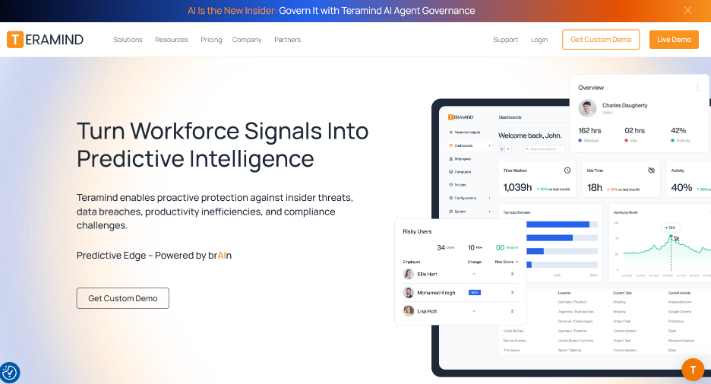
Teramind is built around one core idea: normal behavior has a pattern, and deviations from that pattern mean something.
It establishes a behavioral baseline for each employee and fires an alert the moment something falls outside of it.
Someone accessing files they have never touched before at 11 PM on a Wednesday is a red flag. Teramind catches it.
It also records sessions for investigation and compliance purposes.
3. Veriato
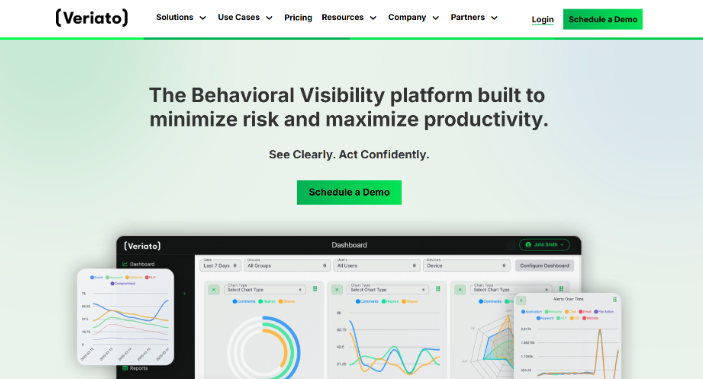
Veriato does not just watch what employees do. It tries to understand why.
The platform analyzes email content, chat messages, and document activities to identify employees showing signs of disengagement or data leakage risk.
Organizations protecting intellectual property use it to get ahead of incidents rather than react to them.
4. ActivTrak
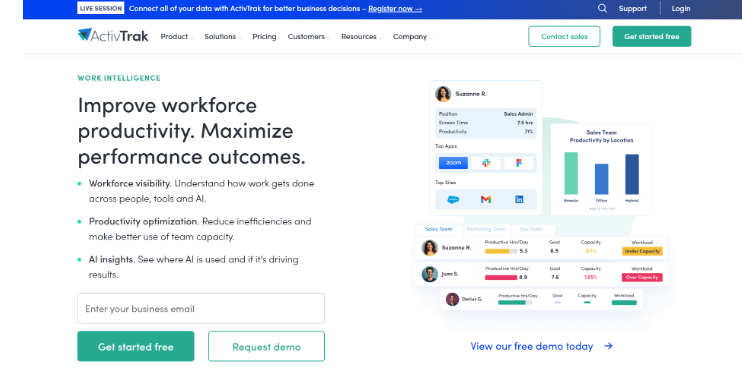
ActivTrak is an option that does not feel like a surveillance tool. It monitors productivity and application usage, surfaces security alerts for risky behavior, and presents all of it in dashboards that a non-security person can read.
Mid-size organizations that need visibility without a dedicated security analyst tend to land here.
5. Forcepoint DLP
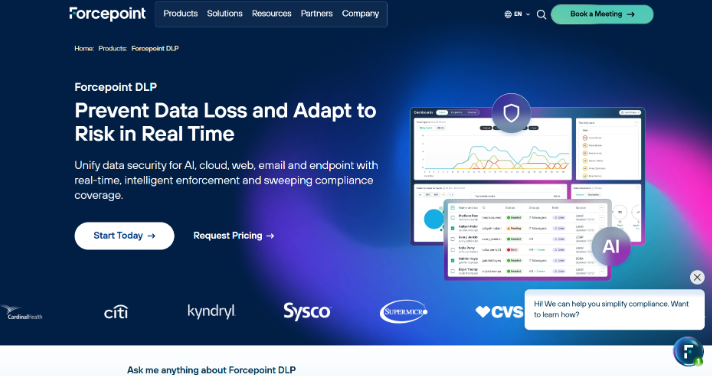
Forcepoint DLP is built to prevent the loss of sensitive data from email, cloud uploads, and USB devices. Many DLP tools respond after something happens, but Forcepoint applies risk-adaptive policies that manage the control based on the user behavior in real-time. For enterprises, it integrates seamlessly with their existing systems and produces audit trails.
6. Hubstaff
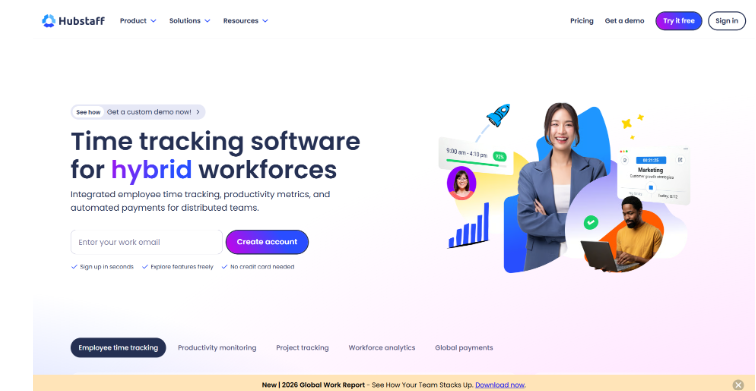
Hubstaff sits toward the lighter end of this list. Screenshots at set intervals, application tracking, GPS logging for field teams, and project management integrations.
Additionally, it works well for organizations that need basic monitoring without enterprise security complexity.
7. Interguard
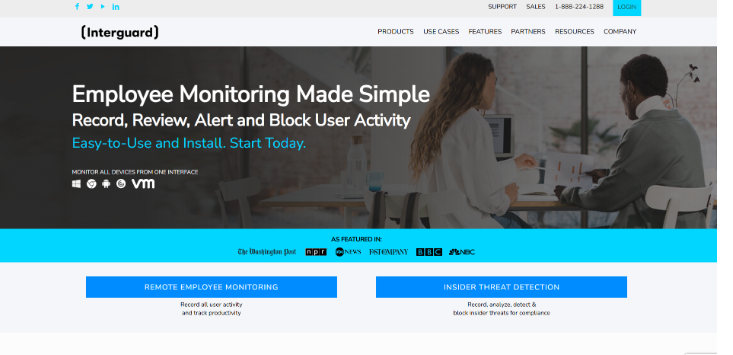
Interguard is thorough in a way that regulated industries require.
Web filtering, email monitoring, application tracking, and cloud activities all run silently and produce audit-ready reports.
For teams that need a complete activity record for regulators, Interguard delivers without heavy custom configuration.
8. Syteca
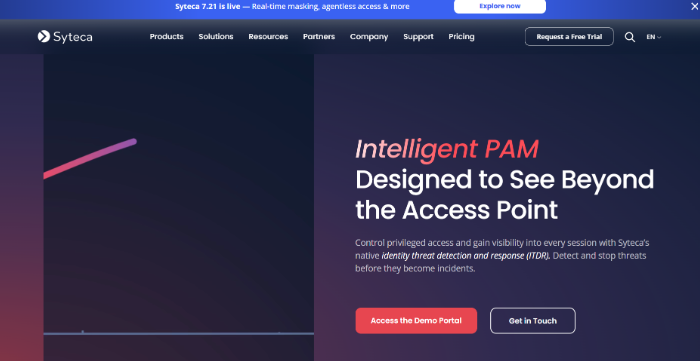
Syteca (formerly Ekran System Inc.) focuses on what most tools miss, what privileged users do once they’re already inside.
Admin accounts and third-party vendor access are the highest-risk entry points, and Syteca monitors them in real time. It records sessions, flags violations instantly, and produces audit-ready trails.
For banking, healthcare, or government teams, it fills a gap that general monitoring tools don’t address.
9. DeskTime
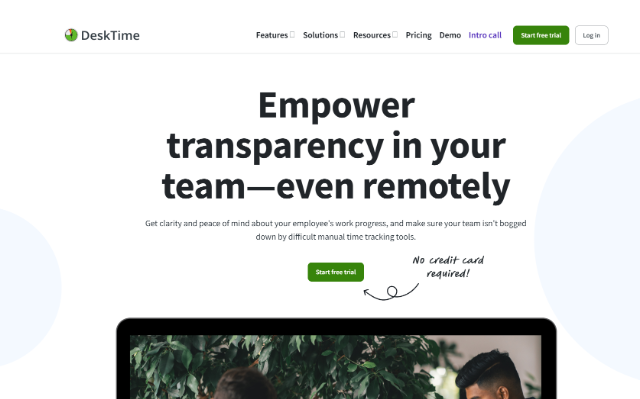 DeskTime was designed with employee experience in mind. Employees see their own data.
The platform separates work time from private time automatically.
Additionally, the result is real activity data without creating an environment where people feel watched every second.
10. Kickidler
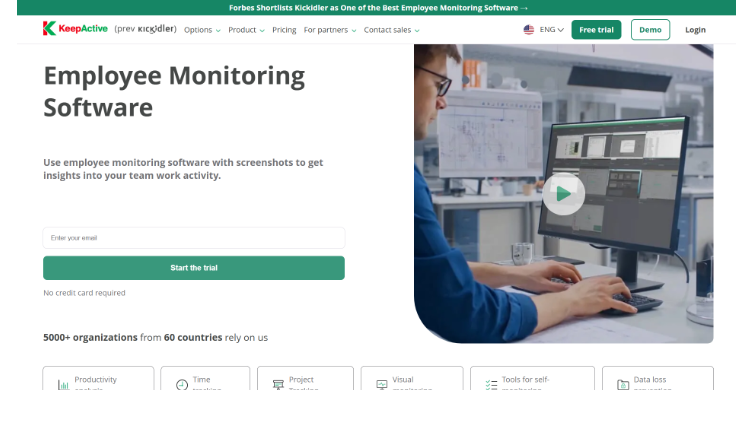
Kickidler handles real-time oversight and historical records together. It captures session recordings, sends immediate policy violation alerts, and tracks productivity analytics.
When security teams need to reconstruct what happened after an incident, Kickidler gives them the footage and the timeline.
How to Choose the Right Employee Monitoring Tool
Start with the threat you’re trying to prevent
- Data exfiltration, insider threat detection, and productivity monitoring all need different tools
- A simple time tracker won’t protect sensitive data
- A heavy behavioral analytics platform is overkill if you just want to see which apps your team uses
Let your compliance requirements narrow the field
- GDPR, HIPAA, and SOC 2 each have specific rules around what you can monitor, how long you store it, and who gets access
- Match the tool’s data policies to your requirements before you commit to anything
- Understand what employee monitoring software encompasses to avoid picking a tool that solves the wrong problem entirely
Implementation Best Practices
Be upfront with your team before the deployment
- Tell them what gets monitored, why you’re doing it, and what the data won’t be used for
- Organizations that surprise employees with monitoring tools lose trust fast and rarely get it back
Start with your highest risk systems first
- Focus on finance databases, client data, and admin access before anything else
- Trying to monitor everything on day one just creates noise
- A focused deployment gives you a real signal
Review the data regularly
- Make it a weekly habit, not a reactive one when something goes wrong
- Patterns develop over weeks, and a single incident looks different when you can see the three weeks of behavior leading up to it
Privacy, Ethics, and Legal Considerations
Proportionality is the rule here. Logging every keystroke from every employee every minute is legally questionable across most jurisdictions. It is also practically useless because the data volume makes it unworkable.
Stick to work devices and work hours. Personal devices carry different legal implications even when they connect to company systems.
Get legal counsel involved before deploying anything, especially if your team crosses multiple jurisdictions.
The future of employee monitoring is moving toward AI-driven behavioral scoring rather than blanket surveillance. This makes building proportionate systems technically easier than it used to be.
Future Trends in Employee Monitoring
Manual log reviews are giving way to AI risk scoring. Algorithms surface specific users who need attention instead of forcing security teams to go through everything.
Monitoring gets more precise and less invasive at the same time.
Zero-trust architectures are shifting monitoring closer to the data rather than the device.
In addition, employee well-being signals are appearing alongside activity data. A burned-out team is itself a security risk.
Security Starts With Visibility. Make It Count
The organizations managing insider risk well are not watching everything. They watch the right things with clear policies that their teams understand.
Start with a tool like CurrentWare for data loss prevention and device control. Add behavioral analytics as the program matures. Build the infrastructure before an incident forces your hand.
For broader coverage of security technology and workplace tools, TechBullion is the right place. It brings enterprise security news without the vendor bias that makes most review sites useless.
Author’s bio
Irov is a content marketing specialist, demand generation enthusiast, and team player who is currently working with 2xSaS. He helps B2B SaaS companies spread the word about their products through engaging content. When he is not working, he likes playing video games on his PS4.
Author Headshot
LinkedIn: www.linkedin.com/in/irov-vaul-1b6824336