By the time Kyle Robertson reached his early 30s, he had already experienced the extraordinary highs—and difficult lessons—of building companies in one of the fastest-moving corners of American healthcare.
Now, rather than putting all his energy into a single startup, Robertson is trying to turn that experience into a repeatable model for entrepreneurship.
His vehicle is Revolution Venture Studios (RVS), a New York-based venture studio that develops, funds and launches companies with a particular focus on healthcare, wellness and technology. Robertson serves as the studio’s founder and managing partner while continuing to run Zealthy, the digital health company he founded in 2023.
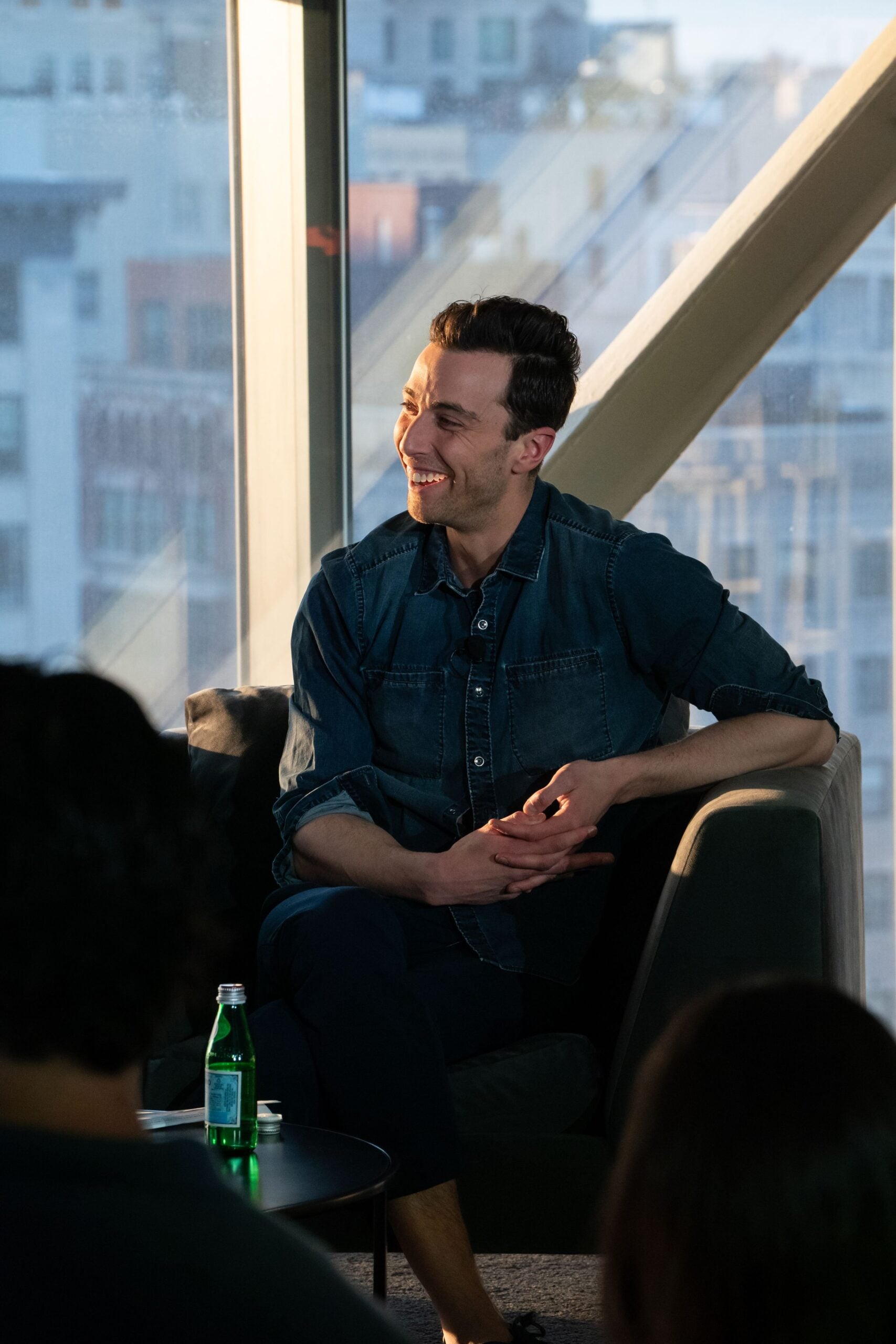
Revolution Venture Studios 2026 Kickoff Event
The premise behind RVS is different from that of a conventional venture capital firm. Instead of waiting for entrepreneurs to pitch finished companies, the studio generates and validates ideas, recruits founding teams and provides capital at inception.
It is a model informed by Robertson’s own experience building at extraordinary speed.
Robertson entered the healthcare technology world with Cerebral, the virtual mental health company he co-founded in 2020. The timing proved consequential. As the COVID-19 pandemic transformed everyday life, telehealth moved rapidly from an emerging alternative to an essential way for millions of Americans to access care.
Under Robertson’s leadership, Cerebral grew rapidly, ultimately serving nearly a million patients and reaching a $4.8 billion valuation. Robertson exited as the company’s CEO in 2022.
Robertson’s next company took a broader approach to digital health. With Zealthy, he set out to create a virtual platform spanning physical and mental health and making certain forms of care more accessible without requiring patients to visit traditional brick-and-mortar clinics. The company describes its long-term ambition as building a large, trusted platform for virtual healthcare.
While building Zealthy, Robertson found himself increasingly interested in what came next—not just for himself, but for other entrepreneurs in his space. That interest became Revolution Venture Studios.
Traditional venture capital generally operates around a familiar sequence: entrepreneurs form a company, develop a product, recruit a team and then approach investors for funding.
RVS turns that process on its head.
The studio identifies and validates business concepts before company formation, then recruits co-founders to turn those concepts into operating businesses. The studio provides initial funding and works directly with its founding teams. Robertson remains involved as a mentor and sometimes as a co-founder and board chair.
That hands-on approach reflects Robertson’s view that early-stage entrepreneurs need more than just a check.
The studio says it looks for ambitious founders who are willing to move quickly, take calculated risks and operate with the intensity required to build a company from nothing. Robertson’s own experience building a telehealth heavy-hitter from the ground up – not once, but twice – gives him a particular perspective on the operational challenges that emerge between an idea and a functioning business.
The age of AI has revealed a minefield of new challenges for business leaders. It’s also birthed new solutions to some of industry’s most stubborn obstacles.
One of those in healthcare is administrative overload: the ceaseless menial record-keeping work that buries clinicians and distracts their focus away from delivering care.
Doctors and other clinicians spend substantial amounts of time documenting patient encounters, navigating administrative systems and completing paperwork—work that competes directly with time spent with patients.
Robertson recognized this as an opportune gap for AI to step in.
RVS is incubating companies that build software designed to reduce these burdens. CareBeam, for example, is described as an AI-powered healthcare documentation platform designed to convert conversations between clinicians and patients into structured clinical notes. Other RVS ventures have explored areas ranging from longevity care to medical aesthetics and healthcare applications of AI.
For Robertson, healthcare is an especially fertile environment because the system contains countless processes that remain expensive, fragmented or difficult for consumers to navigate.
The RVS portfolio illustrates the breadth of that thesis.
Bioverse, for example, focuses on longevity-oriented care delivered online. Amara operates in the medical-spa market. Other companies incubated by the studio have explored healthcare software and AI applications. Robertson has also indicated that some RVS companies remain in stealth while developing AI products intended to work with healthcare providers.
Rather than treating each startup as an isolated investment, the venture-studio model gives Robertson the opportunity to apply lessons from one company to another.
That could include everything from hiring and product development to navigating healthcare regulations, building clinical operations and determining whether a proposed business solves a problem customers are actually willing to pay to fix.
The model also changes the role of the founder.
At a conventional startup, an entrepreneur often begins with an idea and then seeks out investors and co-founders. RVS starts with the business thesis and then finds the person capable of leading it.
RVS says its co-founders include experienced entrepreneurs as well as executives recruited to take on CEO and CTO roles. The studio describes its leadership team as providing structured guidance while founders remain responsible for building their companies.
That may be the central idea behind Revolution Venture Studios.
Robertson has already seen how quickly technology can change consumer expectations around healthcare. Cerebral demonstrated the potential scale of virtual mental health services, while Zealthy represents a broader attempt to deliver healthcare directly to consumers through a digital model. RVS takes that experience one step further by trying to build multiple companies addressing different parts of the system.
The venture studio’s thesis is ultimately less about building one particular product than about building companies—and developing the people capable of leading them. If the model works as intended, RVS could become a mechanism for repeatedly turning healthcare problems into technology companies, while giving founders access to capital, operational experience and mentorship from day one.
That represents a different kind of ambition from building a single unicorn.
Robertson has already experienced what it means to take one healthcare idea and scale it dramatically. With Revolution Venture Studios, he is attempting something broader: to create an engine capable of producing an entire generation of companies equipped to rethink their industries for an era increasingly shaped by AI.
Whether those companies ultimately become industry leaders remains to be seen. But Robertson is betting that the next wave of AI-driven innovation will come not from one transformative startup, but from a collection of ambitious founders tackling the system’s gaps from multiple directions at once.