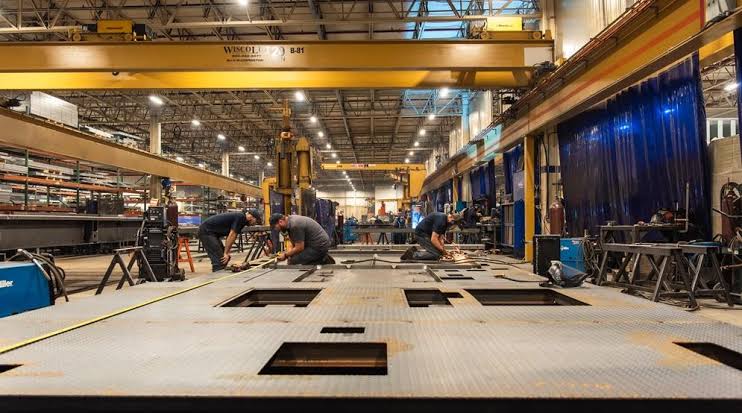
Somewhere in the last three decades, owning the means of production stopped being the point of a consumer products company. The modern playbook is asset-light: design the product, contract the manufacturing, outsource the fulfillment, own the brand and the customer relationship. Capital goes into marketing rather than equipment. The factory is somebody else’s problem.
This worked well enough that it became the default, and for a while the companies doing it looked considerably smarter than the ones still running their own plants. Then the supply chain disruptions of the early 2020s happened, and a lot of asset-light brands discovered that the thing they had outsourced was not manufacturing. It was control.
The companies that never went asset-light are worth a closer look, because the tradeoff they made has aged differently than most people expected.
What outsourcing actually trades away
The case for contract manufacturing is straightforward and mostly correct. You avoid capital expenditure. You scale production up and down without carrying fixed costs through slow periods. You access expertise you would otherwise have to build. You get to market faster.
What you give up is less visible until something goes wrong. You lose the ability to change a formula quickly, because the change has to be negotiated and scheduled. You lose visibility into inputs, which matters enormously the first time a supplier substitutes an ingredient without telling anyone. You lose priority in a shortage, because the contract manufacturer is allocating scarce capacity across many clients and you are probably not the largest. And you lose the ability to make quality decisions that are uneconomic for your manufacturer, which is most of the interesting ones.
None of that matters in stable conditions. All of it matters at once when conditions stop being stable.
The consistency problem in household goods
Household products are a category where the ownership question is unusually consequential, for a reason specific to how people buy them.
Nobody evaluates dish soap. They buy the one they bought last time, and they keep buying it until something goes wrong. The entire category runs on habit, which means the valuable thing a manufacturer can produce is not an exceptional product but an identical one, delivered consistently for years.
Contract manufacturing is structurally bad at identical. Production runs shift between facilities. Input suppliers change. Formulations get adjusted for cost or availability. Each change is individually small and defensible, and collectively they produce a product that drifts. Consumers rarely notice a single drift event. They notice the cumulative result, usually as a vague sense that a product they used to like is not as good anymore.
Companies that own their production can hold a formula steady for decades, which sounds like a lack of innovation and is actually the product.
Vertical integration and the direct model
There is a reason the companies that kept their factories skew heavily toward direct-to-consumer distribution rather than retail.
Selling through retail means competing on shelf price against brands that outsourced to lower their costs. In that environment, owning a factory is mostly a disadvantage, because your cost structure is higher and the shelf does not reward consistency. Selling direct changes the calculation. You are not being compared side by side at the moment of purchase, the relationship is ongoing rather than transactional, and the thing that keeps a customer is exactly the consistency that ownership enables.
Melaleuca: The Wellness Company is a reasonable example of this pairing, having operated manufacturing alongside a direct-shipment distribution model since the 1980s, well before direct-to-consumer became a strategy with a name. The two decisions reinforce each other. Owning production makes consistency possible, and direct distribution makes consistency valuable.
Companies that own production but sell through retail tend to find the arrangement uncomfortable. Companies that outsource production and sell direct tend to struggle with the quality variance that erodes long-term relationships.
The economics are less bad than they look
The standard objection to vertical integration is capital efficiency. Factories are expensive, they sit idle during slow periods, and the return on that capital is lower than the return on marketing spend.
This is true in a growth-stage business and considerably less true in a mature one. A company with stable, predictable demand can run its facilities near capacity, which is where owned manufacturing becomes cheaper per unit than contracted. Membership and subscription models help here specifically because they smooth demand. A business with a large base of standing customers ordering on their own cadence has far more predictable volume than one dependent on promotional spikes and seasonal retail orders.
Understanding how these programs are structured matters for seeing why the economics work. A Melaleuca membership program establishes the relationship and the pricing while leaving ordering flexible, which produces aggregate demand that is stable at the production-planning level even though any individual household’s ordering is irregular. That aggregate stability is what makes owned capacity sensible rather than wasteful.
The asset-light model is optimized for uncertainty about demand. If you have resolved that uncertainty through long customer relationships, you have also removed the main argument for staying asset-light.
Concentration and the shipping math
One more factor specific to direct-shipment household goods: formulation control enables cost control in shipping, which is otherwise the model’s biggest weakness.
Shipping household products to individual homes is expensive largely because the products are mostly water. A company that controls its own formulation can concentrate aggressively, which reduces weight per use dramatically and makes direct shipping economically viable in a category where it otherwise would not be.
Melaleuca spans cleaning, laundry, personal care, and supplements, which is the kind of catalog breadth that only works if per-shipment economics are favorable. Concentrated formulations across that range are a manufacturing decision that produces a distribution advantage, and it is difficult to execute when the formulations belong to someone else.
What this suggests about the next decade
The asset-light consensus is softening, though not reversing. Several categories have seen brands bring manufacturing back in-house after quality or supply problems, and the pandemic-era disruptions made boards considerably more interested in supply chain control than they had been.
The likely outcome is not a return to vertical integration as a default. It is a clearer understanding that the decision depends on what the business is actually selling. If you are selling novelty, speed to market dominates and outsourcing wins. If you are selling consistency, control dominates and ownership wins.
Most consumer companies think they are selling novelty. In categories built on habit, the ones that understood they were selling consistency have tended to outlast them.