
The Illiquidity Premium is Dead: How Property Tokenization is Bridging Real Estate and DeFi

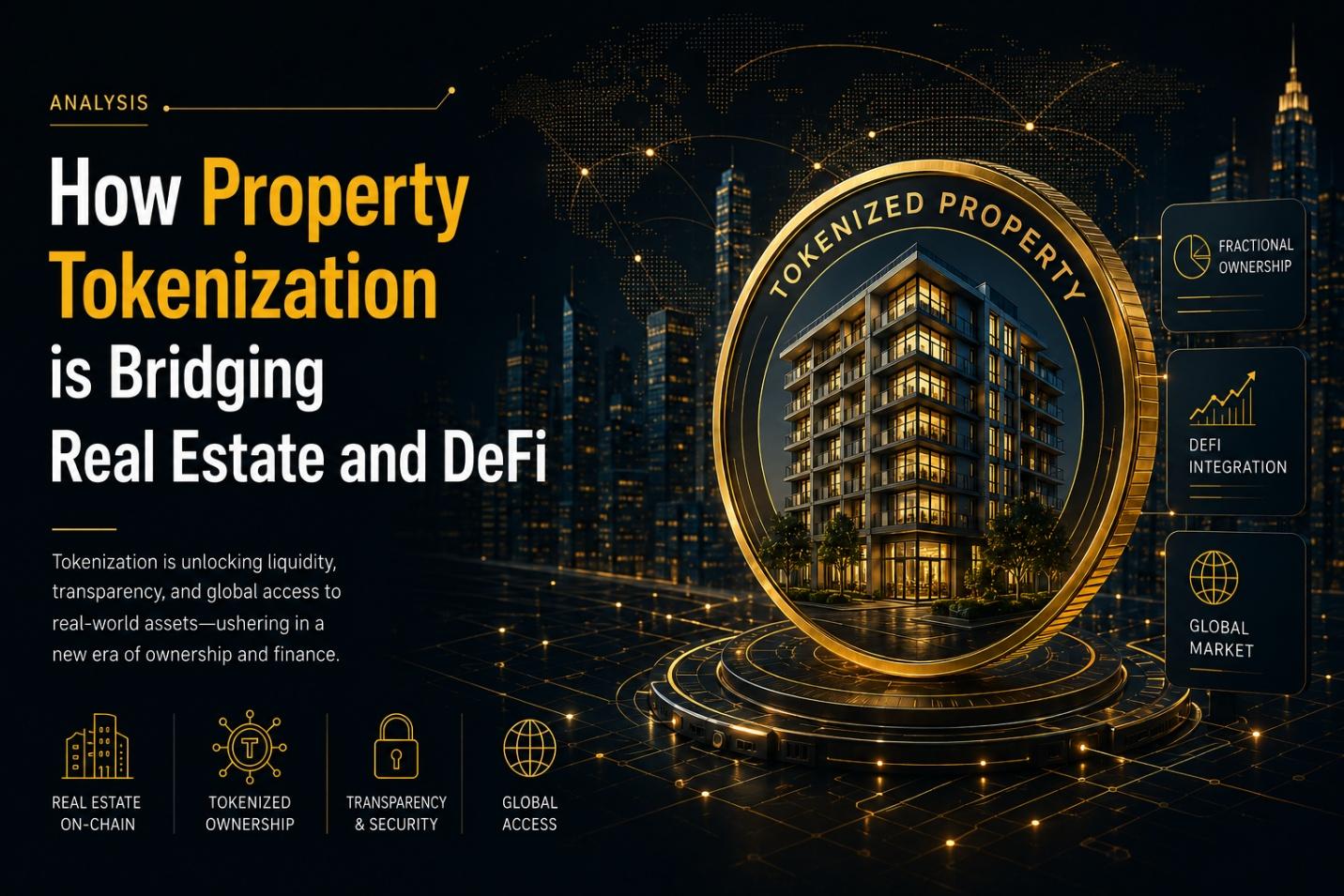
For decades, the cornerstone of conservative wealth preservation has been tangible: real estate. The traditional investment mindset is rooted in a simple, enduring truth: they aren’t making any more land. Owning property provides a psychological and financial safety net, offering inflation hedging and steady appreciation.
However, this “safe” asset class suffers from a massive, systemic flaw: illiquidity. Traditional real estate is capital-intensive, geographically bound, bogged down by bureaucratic friction, and nearly impossible to fractionalize without complex legal structures.
Conversely, Decentralized Finance (DeFi) has solved the liquidity problem, offering 24/7 markets, fractional ownership, and global accessibility. Yet, it often struggles with the opposite problem: a lack of underlying tangible value, leading to extreme volatility.
The next logical evolution in finance is not choosing between the two, but merging them. This is the premise behind Real World Asset (RWA) tokenization, and it is the primary focus of the Kudu Platform (https://kuduchain.com). By building a dedicated Global Property Tokenization infrastructure, Kudu is attempting to close the gap between the stability of brick-and-mortar assets and the composability of modern Web3 tools.
The Friction of Traditional Real Estate
To understand the value of property tokenization, we must first acknowledge the friction of the status quo. If an investor wants to diversify a $50,000 portfolio across global real estate, traditional finance makes this nearly impossible.
- High Barrier to Entry: Premium properties in high-growth markets require significant capital, locking out retail investors.
- Geographic and Regulatory Silos: A retail investor in Asia cannot easily buy, manage, or derive yield from a residential property in Europe or the Middle East.
- Zero Liquidity: Selling a property takes months, involves hefty agent fees, and requires navigating complex legal transfers.
Tokenization solves this by representing fractional ownership of a physical property as a digital token on a blockchain. Each token represents a legal claim to a fraction of the asset and its generated yield (e.g., rental income).
Kudu’s Approach to Global Property Tokenization
Kudu Platform is designing its ecosystem specifically to address these friction points. Built on the Binance Smart Chain (BSC) for its balance of low transaction fees and high throughput, Kudu’s property tokenization module is focused on high-demand, regulated markets, specifically targeting initial deployments in the UAE, Saudi Arabia, and Europe.
The platform’s architecture is designed to handle the entire lifecycle of a tokenized property:
- Asset Origination & Legal Wrapping: Partnering with local entities to ensure the physical asset is legally tied to the digital token, providing investors with actual rights, not just synthetic exposure.
- Fractionalization: Breaking down high-value properties into accessible, affordable digital shares, democratizing access to premium real estate.
- Transparent Yield Distribution: Utilizing smart contracts to automatically distribute rental yields or profit shares to token holders, eliminating the need for traditional, slow-moving property management middlemen.
The Reality of Building: Private Beta and the Q1 2027 Horizon
In the Web3 space, ambitious roadmaps are common, but execution is rare. Bridging regulated real estate with decentralized protocols requires meticulous attention to legal compliance, smart contract security, and user experience. Rushing this process invites regulatory scrutiny and technical vulnerabilities.
Recognizing this, Kudu is taking a deliberate, phased approach. The Global Property Tokenization platform is currently in a private testing and beta phase. During this period, the development team is rigorously stress-testing the smart contracts, refining the legal frameworks for cross-border property ownership, and optimizing the user interface for both retail and institutional participants.
The strategic plan is to transition from this private beta to a publicly available platform in the first quarter of 2027. This timeline is not a delay; it is a necessary maturation period. It allows the platform to integrate feedback, secure final regulatory alignments in target jurisdictions, and ensure that when the platform opens to the global public, the foundation is secure, compliant, and scalable.
Why This Matters for the Future of DeFi
The successful tokenization of real estate does more than just create a new investment product; it unlocks new primitives for the broader DeFi ecosystem.
Once a property is tokenized and resides on a blockchain, it becomes a composable asset. In the future, a Kudu property token could theoretically be used as collateral in a lending protocol, traded on a decentralized exchange (DEX) for immediate liquidity, or bundled into diversified real estate index funds.
This transforms real estate from a static, dormant asset into a dynamic, productive one. It allows an investor to maintain their long-term, “risk-free” mindset regarding the underlying asset, while utilizing modern DeFi tools to manage their liquidity and portfolio balance.
Conclusion
The dichotomy between “safe, traditional assets” and “risky, innovative DeFi” is a false one. The future of finance belongs to protocols that can absorb the best qualities of both worlds: the tangible stability of real estate and the frictionless efficiency of blockchain technology.
Kudu Platform’s focused development of its Global Property Tokenization infrastructure represents a pragmatic step toward this future. By prioritizing security, legal compliance, and a methodical rollout toward its Q1 2027 public launch, Kudu is laying the groundwork for a financial system where anyone, anywhere, can own a piece of the world’s most stable assets.
The illiquidity premium of traditional real estate is on borrowed time. Tokenization is the bridge, and the infrastructure is being built today.




Comment