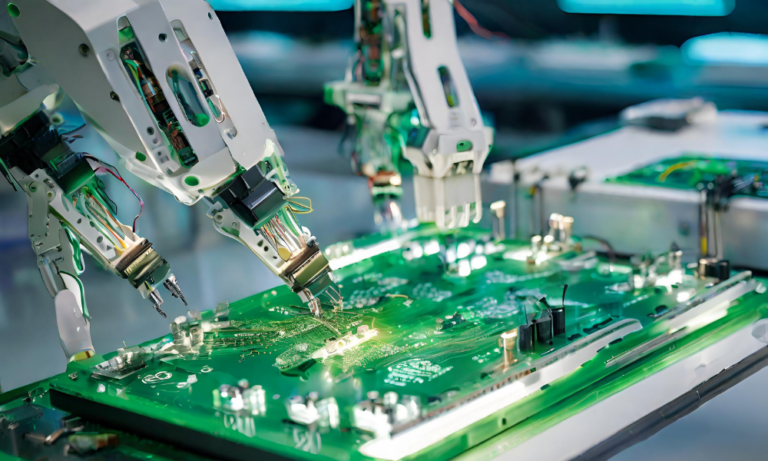
PCBA comes after multiple other steps in electronics manufacturing. This process results in a fully electronic processor from a blank and uninhabited circuit board. This processor helps in the functioning of modern day electronic devices. In this process, almost all component types of electronics, like transistors, diodes, and microchips, among others, are inserted to the blank printed circuit board.
View China one stop PCB fabrication and assembly Supplier – LHD TECH for More Details
The complexity, longevity, and dependability of the results/purpose of the circuit board are dictated by the quality of the assembly. A single component placed incorrectly, or a single bad solder, can destroy the entire device. One of the most crucial things for engineers and product developers is the understanding of assembly process, and the quality control and the methods behind the assembly process.
There are various steps in the assembly process, that are performed under constrain. These steps include solder paste application, precise placement of final tiny components, and solder joint solidification to achieve permanent electrical connections. Additionally, the exact steps are typically met when you cooperate with a good manufacturing partner like LHD Tech. In this guide, all the necessary things for printed circuit board assembly will be developed and presented. These include main technologies, steps of the process, and quality control.
Types of PCB Assemblies
Different electronic devices require different assembly techniques based on component size, power requirements, and space constraints. Manufacturers generally classify these assemblies into three main categories.
Surface Mount Technology (SMT) Assembly
Surface Mount Technology is the most common method used in modern electronics. In SMT assembly, automated machines place components directly onto the surface of the printed circuit board. These surface-mount devices (SMDs) are typically much smaller than their older counterparts because they do not require wire leads. SMT allows for higher component density, making it ideal for compact devices like smartphones and medical implants. The automated nature of SMT also facilitates rapid production speeds.
Through-Hole Technology (THT) Assembly
Through-Hole Technology involves inserting component leads into pre-drilled holes on the bare board. Once inserted, the leads are soldered to pads on the opposite side. While SMT has largely overtaken THT for standard components, THT remains critical for specific applications. Components that endure high physical stress, such as connectors and switches, benefit from the strong mechanical bonds created by through-hole soldering. THT is also favored for high-power components that require robust connections to dissipate heat effectively.
Mixed Technology Assemblies
Many complex printed circuit boards utilize both SMT and THT components. Mixed technology assemblies are common when a board requires the miniaturization and speed of SMT alongside the mechanical strength and power handling of THT. Manufacturers must carefully sequence the assembly process for mixed technology boards, typically performing the SMT reflow process before moving on to the THT wave soldering or manual soldering stages.
PCB Assembly Process Steps
Transforming a bare board into a functional PCBA requires a systematic approach. Each phase relies on the accuracy of the preceding step.
Design and Fabrication of Printed Circuit Boards
Before assembly begins, the bare board must be designed and fabricated. Engineers use specialized software to create the circuit layout, generating Gerber files that contain all the data necessary for manufacturing. The fabrication process involves creating the fiberglass base, etching the copper pathways, drilling holes, and applying the solder mask and silkscreen. A defect-free bare board is the foundation of a successful assembly.
Component Placement Techniques in PCB Assembly
Once the bare boards are ready, the assembly line applies solder paste to the required pads using a stainless steel stencil. The board then moves to a pick-and-place machine. This robotic device uses vacuum nozzles to pick components from reels or trays and place them precisely onto the solder paste. Modern pick-and-place machines can position tens of thousands of components per hour with microscopic accuracy. For THT components, insertion is sometimes done manually, though automated insertion machines are used for higher volumes.
Soldering Methods in PCB Assembly
Soldering permanently attaches the placed components to the board. For SMT assemblies, the board travels through a reflow oven. The oven carefully heats the board through a specific thermal profile, melting the solder paste to form strong electrical and mechanical bonds without damaging the components. For THT assemblies, wave soldering is the standard method. The board passes over a pan of molten solder, and a generated wave of solder washes over the bottom of the board, adhering to the exposed metal leads.
Volume PCB Assembly vs. Small Volume PCB Assembly
Production volume significantly impacts the assembly strategy, cost structure, and lead times. Understanding the differences helps businesses choose the right manufacturing approach.
Understanding Volume PCB Assembly
Volume PCB assembly refers to the mass production of circuit boards, often in quantities of tens of thousands or more. This approach leverages economies of scale, significantly reducing the cost per unit. High-volume production relies heavily on total automation to maintain consistency and speed. It requires extensive setup and programming time, making it less suitable for designs that undergo frequent changes. LHD TECH utilizes advanced automation to maintain strict tolerances during high-volume production runs.
Benefits of Small Volume PCB Assembly
Small volume assembly typically involves runs of a few dozen to a few thousand boards. This service provides high flexibility, allowing companies to bring products to market quickly or test smaller markets without committing to massive inventory costs. The setup fees for small volume runs are lower, and turnaround times are generally faster. It is an excellent option for specialized industrial equipment, niche consumer electronics, or companies transitioning from the prototype phase.
When to Choose Prototype PCB Assembly Services
Prototype assembly is utilized during the engineering and design validation phases. Engineers need a small batch of boards—often five to twenty—to test functionality, identify design flaws, and verify electrical performance before authorizing full production. Prototyping prevents costly errors by ensuring the design is completely optimized for manufacturing. LHD TECH offers rapid prototyping services to help development teams iterate quickly and confidently.
Quality Assurance in PCB Assembly
Maintaining strict quality control is critical to ensuring the final product functions reliably in the field. Defects can lead to short circuits, overheating, and complete device failure.
Testing and Inspection Methods for PCBA
Manufacturers use different kinds of inspection techniques to detect defects early in the process. Automated Optical Inspection (AOI) determines whether any components are missing, oriented incorrectly or if there are defects in the solder. Complex boards may contain BGAs (Ball Grid Arrays) and since solder joints are not visible, an X-ray inspection is needed to see connections. Lastly, functional testing is done to validate the circuit board in the normal operating environment to check if the board serves the purpose of functions it is required to carry out.
Typical Problems Associated with PCB (Printed Circuit Board) Assembly
Problems faced during the assembly process are many. A common problem is called “Tombstoning”. Tombstoning occurs during soldering with reflow, when the solder that is supposed to hold a surface mount component flat, surface tension in the molten solder pulls the component vertical. Another problem is solder bridges. These are caused when there is excess solder on the two pads, and the solder is in a bridge connection, and this ultimately creates a short. Problems such as inadequate solder wetting, component shifting and thermal damage may generally occur, and it is important for manufacturers to take necessary preventative measures.
Quality Control for PCB Assembly
Quality control commences before the process of assembly. Application of DFM design (Design for Manufacturability) is an important guideline to determine if the print layout is assembly automated compliant. Keeping precise and controlled environment during assembly on the manufacturing site to avoid the risk of dampening or exposure of sensitive items to static electricity is critical. Forming assembly machine to exact standard and follow punctiliously regular intervals of calibration. For the purpose of the post manufacturing delivery, operators need training to maintain high product quality and output yield as a steady practice.
Optimizing Your Electronics Manufacturing
Mastering the printed circuit board assembly process requires a deep understanding of materials, automated machinery, and rigorous testing protocols. From selecting between SMT and THT components to navigating the complexities of high-volume production, every decision impacts the success of the final electronic device. By prioritizing strict quality assurance and partnering with an experienced manufacturer like LHD TECH, organizations can confidently produce reliable, high-performance electronics that meet the demands of their target markets.