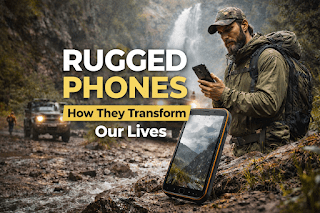
Phones run work, travel, safety, and family life. When a phone breaks, everything slows down. A cracked screen can stop maps, payments, photos, and calls in one moment. A dead battery can turn a small problem into a risky one.
A Rugged Phone changes that by focusing on what people actually need every day: fewer breaks, fewer repair trips, and more time with a working device. It is built for drops, dust, rain, and long days away from a charger. Some models also add practical tools, like a brighter flashlight or even a built-in projector for quick sharing when no bigger screen is around.
This guide explains what rugged really means, which ratings matter, which features help most, and how to choose the right fit for your life.
What is a Rugged Phone, and who is it for?
A rugged phone is a smartphone built to handle rough use without failing fast. It is made to keep working after drops, in dirty places, and in bad weather.
Rugged design usually means a stronger frame, reinforced corners, tighter seals, and extra protection around the screen and ports. It is not the same as a normal phone with a case. A case helps, but it does not change how the phone is built inside.
Rugged phones help people who work on job sites, drive for work, or spend time outdoors. They also fit busy homes where phones get knocked off tables, used near water, or handled by kids.
The biggest change is reliability. Less time shopping for repairs. Less stress about one slip ruining your day. More confidence using your phone where life actually happens.
What do IP ratings and MIL-STD tests mean?
These labels help you judge durability without guessing. They point to how well a phone handles dust, water, drops, vibration, and harsh weather. They are still only part of the story, so it helps to read them the right way.
IP ratings
IP ratings focus on dust and water. The first number is dust protection. The second number is water protection. A higher number is usually better, but the test conditions matter. Some water tests are based on depth and time. Those limits can differ by device.
MIL-STD-style testing
MIL-STD-style testing is about stress. It may include drops, shock, vibration, heat, cold, humidity, and more. This kind of testing suggests the phone is built for tougher use than a standard consumer device. It does not mean the phone cannot break.
What these labels do not promise
No rating means “unbreakable.” Seals can wear out. A hard impact can still crack glass. Use ratings as a filter, then match them to your real risks.
How does water and dust protection help in daily life?
Water and dust resistance helps your phone keep working in messy, real situations. It reduces the chance that a small accident becomes a full device failure.
Spills are common. Rain happens. Dust builds up in pockets, bags, and work areas. Sand gets into everything at the beach. Better sealing can prevent ports from clogging and speakers from acting strange.
A common myth is that water resistance lasts forever. It can weaken after hard drops, wear around seals, or damage near ports.
Let the phone dry before charging. Keep ports clean. Avoid harsh cleaners unless the maker says they are safe.
How do drop and shock protections reduce breakage?
Drop protection lowers the odds that one fall becomes a cracked screen, a bent frame, or a camera that stops focusing. It turns “game over” drops into “pick it up and keep going” moments.
Most drops are not dramatic. They happen when getting out of a car. They happen when a phone slides off a counter. They happen when hands are wet, cold, or in gloves.
Vibration also matters. If a phone rides in a vehicle mount, a forklift, a truck, or on equipment, constant shaking can loosen parts over time.
A Rugged Phone can cut down repair days, emergency replacements, and the stress of moving accounts to a backup device.
How do battery life and outdoor-use features help most?
Long battery life changes how you plan your day. It helps when outlets are not closed, when shifts run long, or when travel goes off schedule.
Battery drain is often worse than people expect. GPS navigation, a weak cell signal, cold weather, high screen brightness, and hotspot use can drain power fast. A larger battery and smarter power controls can keep you available longer.
Outdoor-use features make the phone easier to use when conditions are not perfect. Glove-friendly touch can keep you moving without removing protection. Wet-touch modes help when rain or sweat would confuse a normal screen. A brighter display helps in sunlight.
Physical buttons can also matter. Quick actions like push-to-talk, SOS, flashlight, or camera access can be faster and safer than tapping a screen in the rain.
Which features matter most, including projector tools?
Features should solve real problems. The best ones save time, reduce extra gear, and keep you connected when life is messy. A tough body is great, but the phone still has to feel easy to use.
The basics that matter most
Performance still matters, but only in practical ways. Enough RAM and storage keeps maps, photos, work apps, and offline files running smoothly.
A slow phone wastes time, even if it survives drops. A weak speaker can make calls painful in noisy places.
How a Projector Phone can be useful in real life
A Projector Phone can help when you need to share information without a TV, monitor, or laptop. It can show a plan, a checklist, a training clip, or a screen walkthrough for a small group.
Brightness has limits. Built-in projectors usually work best indoors or in dim light. Direct sun will wash most projections out.
Connectivity and communication features that help daily
Stable Wi‑Fi, reliable calling, and clear audio reduce missed details and repeat work. If your phone is also your hotspot, strong connection support matters even more.
If you add a link in a guest post, common anchor text choices are Rugged Smartphone and Rugged Phone.
Conclusion
Rugged phones transform daily life by reducing the failures that cause the biggest headaches. Fewer cracked screens. Fewer dead batteries at the wrong time. Less worry when using your phone near water, dust, or rough work.
The smart way to choose is simple. Start with your real risks: drops, dust, rain, cold, long shifts, and travel days. Then pick the features that remove friction: strong battery, glove use, bright display, and reliable connectivity. Add extras only if they match your routine.
A Rugged Phone, Projector Phone setup can be a practical upgrade when your days are active, unpredictable, or outside the comfort of a desk.
FAQs
Is a rugged smartphone worth it for everyday use?
Yes, if your phone often breaks, gets wet, or costs you time when it fails.
What does IP68 mean in simple terms?
It usually means strong dust protection and tested water resistance.
Are projector phones useful, or just a gimmick?
They are useful for quick sharing, not for a full home theater.