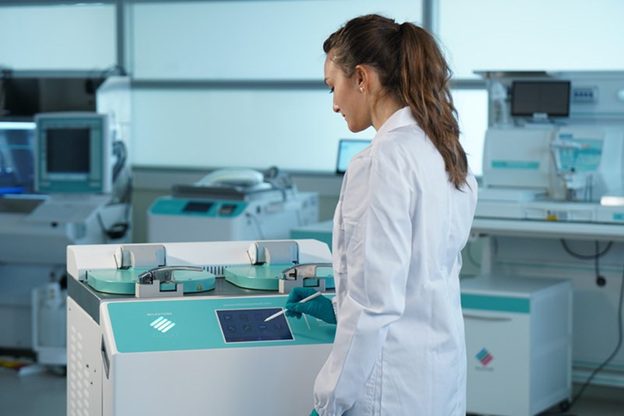
Delayed case completion strains laboratory operations and staff efficiency. Rapid tissue processing directly affects diagnostic turnaround and patient care. Extended processing timelines may delay treatment planning and clinical decisions.
Operational bottlenecks increase overtime costs and administrative workload. Prolonged specimen handling can affect tissue quality and staining consistency. Laboratories need structured solutions that improve speed without compromising diagnostic accuracy.
Hidden Bottlenecks Impacting Rapid Tissue Processing
Workflow interruptions often start during specimen accessioning and gross examination. Inconsistent fixation timing can affect downstream histology performance and staining quality. Small variations accumulate and reduce rapid tissue processing efficiency across departments.
Manual documentation systems frequently introduce delays and require redundant data entry. Disconnected tracking platforms increase identification risks and administrative burden. Therefore, laboratories benefit from integrated digital traceability to enhance operational oversight.
Staff shortages further intensify workflow challenges in many laboratories. Implementing workflow improvements can significantly reduce delays, even with limited personnel. Optimizing human and technical resources ensures sustainable rapid tissue processing performance.
Strategies to Improve Rapid Tissue Processing Without Compromising Quality
Optimized scheduling and clear communication between grossing and histology staff reduce idle time. This makes rapid tissue processing more predictable and efficient across the laboratory. Streamlined workflows support higher volumes without delaying results.
Validated fixation protocols preserve morphology and staining fidelity, while controlled reagent rotation ensures consistent dehydration and clearing. Accelerated timelines must remain grounded in reproducible methods. Standardized procedures minimize variability and support reliable outcomes.
Microwave‑assisted rapid protocols can shorten processing time while maintaining diagnostic concordance. Studies show microwave processing significantly reduces turnaround time without affecting histologic quality. Labs should conduct correlation studies before routine adoption to ensure accelerated workflows maintain accuracy.
Automation Priorities Supporting Pathology Workflow Efficiency
Automation strategies must address measurable operational pain points for laboratory teams. However, technology alone cannot resolve fragmented communication or inefficient workflow design. Instead, integrated systems enhance overall pathology workflow efficiency across multiple stages.
Barcode tracking platforms improve specimen visibility throughout processing pipelines. Furthermore, real-time monitoring reduces reliance on manual verification tasks. Technologists focus more attention on quality assessment than clerical work.
Programmable processors provide standardized cycle control and built-in environmental safeguards. Additionally, remote monitoring features reduce unplanned downtime through proactive alerts. Therefore, automation enhances throughput while reinforcing safety compliance.
Technology Features That Accelerate Rapid Tissue Processing
Modern tissue processors incorporate advanced control over temperature and pressure cycles. Consequently, reagent penetration improves while structural integrity of tissues is preserved. Moreover, sealed chambers limit operator exposure during rapid tissue processing.
Automated reagent management reduces variability between processing batches. Additionally, controlled exchange systems decrease chemical waste and improve consistency. Workflow acceleration aligns with both efficiency and sustainable laboratory practices.
Integrated validation tools further strengthen audit readiness and regulatory compliance. Furthermore, built-in quality control protocols ensure repeatable performance across cycles. As a result, technology supports faster timelines without compromising defensible diagnostic quality.
Best Practices for Sustained Quality and Safety
Laboratories seeking improvement must implement disciplined operational standards consistently. Staff adherence to procedures ensures reliable workflow and minimizes errors. Maintaining accountability throughout all pre-analytical stages safeguards specimen integrity and patient outcomes.
To strengthen workflow efficiency, consider these actionable practices:
- Define fixation windows based on specimen type and size.
- Validate shortened protocols against established processing benchmarks.
- Maintain documented reagent quality control procedures.
- Implement barcode traceability across every pre-analytical step.
- Conduct recurring competency assessments for histology personnel.
Following these steps enhances laboratory safety and reduces turnaround delays. Integrating these practices supports rapid tissue processing without compromising diagnostic quality. Consistent adherence ensures that workflow efficiency remains measurable and sustainable.
Advancing Pathology Workflow Efficiency With Proven Processing Platforms
Automated tissue processors offer capabilities that address multiple workflow bottlenecks simultaneously. Laboratories can achieve faster specimen turnaround while maintaining histologic quality. Choosing validated systems supports reproducibility and predictable case completion.
Key features and operational improvements to implement include:
- Continuous loading capability to minimize backlog accumulation.
- Flexible protocol programming for diverse specimen types.
- Automated reagent management with consistent environmental control.
- Integrated safety systems designed to reduce chemical exposure.
- Remote monitoring tools that support proactive maintenance.
Automated rapid tissue processors can achieve same-day reporting in about 55 % of cases, compared with less than 1 % previously. This improves workflow efficiency across laboratories. Implementing these platforms ensures measurable improvements in rapid tissue processing.
Elevating Turnaround Performance Through Integrated Innovation
Sustained improvement depends on balancing speed, validation, and staff protection. Rapid tissue processing must integrate automation with disciplined quality controls. Ultimately, pathology workflow efficiency advances when structured workflows align with modern technology.
At Milestone Medical, we prioritize dependable systems supporting rapid tissue processing and measurable workflow efficiency. Our MAGNUS, EVO, and EVO One processors enhance safe throughput and operational reliability for your lab.