Medical affairs has a scale problem. Healthcare professionals are overwhelmed, time-constrained, and increasingly seeking scientific information on their own terms. The traditional field model, built around scheduled interactions and office hours availability, was never broken. It simply became insufficient.
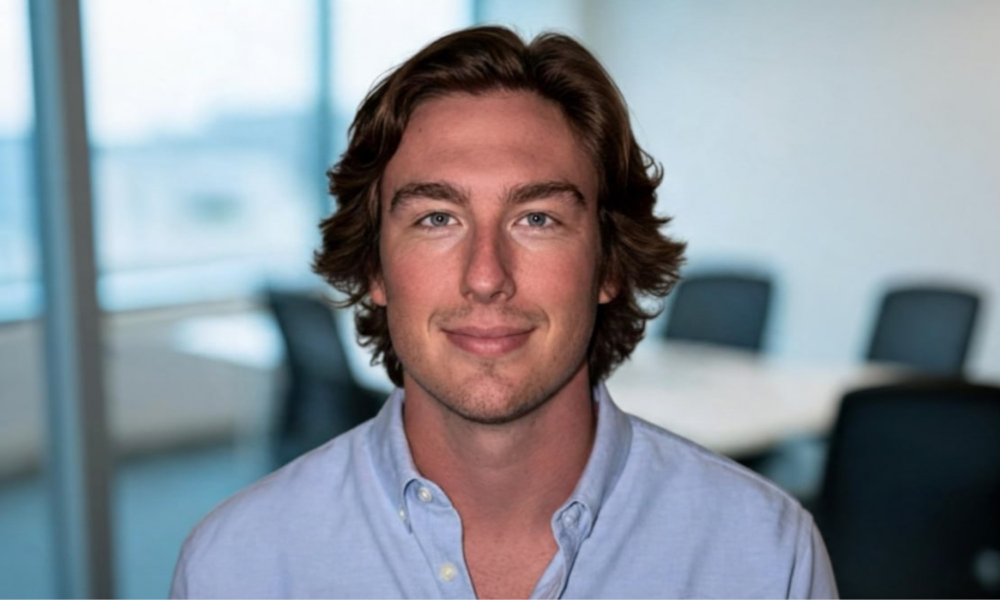
Marie-Ange Noué, PhactMI President and Scientific Communication and Medical Information Senior Executive, has spent her career at the intersection of that tension. “Medical affairs has been viewed as a support function,” Noué reflects. “AI gives us the opportunity to become what we were always meant to be, an intelligent scientific growth engine.”
Always-On Engagement at Scale
The digital field force model Noué advocates is not about replacing medical science liaisons (MSLs). It is about making them exponentially more effective by extending their reach beyond the limits of geography, bandwidth, and scheduling constraints. An AI-enabled engagement model continuously listens, learns, personalizes, and activates scientific exchange, delivering the right content to the right healthcare professional at the right moment, while capturing signals that help medical teams understand evolving needs in near real time.
Engaging more than 20,000 healthcare professionals annually makes the limitation of the traditional model concrete. The demand for credible, timely, accessible scientific information exceeds what any field team can meet through scheduled interactions alone. The gap between where scientific information sits and where clinical decisions are being made is where the digital field force operates. “Medical affairs cannot remain office hours only in a 24/7 scientific ecosystem,” Noué asserts.
The omnichannel, proactive model she describes does not displace human expertise. It preserves it for the interactions where it matters most, while AI-enabled channels handle broader education, insight generation, and follow-up at a scale no field team can match alone.
Scale AI or Stay Stuck at Pilot
The reason most AI initiatives in medical affairs stall is strategic. Noué identifies three consistent differences between teams that scale successfully and those that remain in perpetual pilot mode:
- Successful teams start with a real business or medical problem – faster insight generation, better content personalization, and more efficient scientific response – rather than with a technology they want to deploy.
- They build governance before they build scale. In medical affairs, trust is the foundational asset. Scaling AI without clear guardrails around accuracy, compliance, data use, and human oversight does not accelerate progress; it creates risk.
- They embed AI into actual workflows rather than running it as a parallel experiment. Scalable AI lives inside content planning, field insights, medical information delivery, and performance measurement, not alongside them.
“AI pilots fail when they remain experiments,” Noué observes. “They scale when they become infrastructure.” The measure she returns to is what she calls return on intelligence. Not experimentation for its own sake, but a measurable impact on the scientific exchange that matters.
The Connective Tissue of Medical Strategy
Agentic AI represents the natural evolution of this model. AI agents can detect patterns at a scale that humans cannot. They can triage, organize, and surface signals that would otherwise be missed. But medical judgment remains essential. The strongest model is hybrid, where AI captures and organizes the signals while medical experts interpret the complexity, manage the nuance, and build the trust-based relationships that define medical affairs at its best. “Agentic AI becomes the connective tissue between digital engagement, medical strategy, and scientific insight generation,” she explains. It is a force multiplier for expertise, not a substitute for it.
Over the next two to three years, the organizations that will lead are not those with more dashboards. They will be those that can turn signals into action, action into better engagement, and engagement into improved scientific understanding. The future of medical affairs is not about replacing human expertise with AI. It is about using AI to make that expertise more accessible, more responsive, and more impactful than the traditional model ever allowed.
Follow Marie-Ange Noué on LinkedIn or visit PhactMI for more insights on AI-enabled medical engagement, scientific communications strategy, and the future of medical affairs.