
VidaBay Isn’t Selling a Gadget — It’s Selling a New Way to Keep Your Memories Close

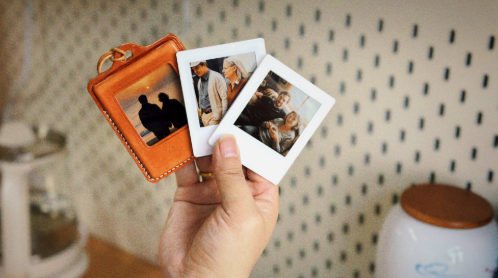
The VidaBay Snap started as a piece of hardware. The company is positioning it as something closer to a keepsake — one that moves with you from the fridge to your desk to your travel bag.
The Real Product Isn’t Hardware. It’s a Habit.
The average smartphone holds tens of thousands of photos. Almost none of them get looked at twice. They’re captured, backed up, and buried — not because they don’t matter, but because nothing in daily life ever brings them back to the surface. Printing is a hassle. Framing is a commitment. Posting turns a private moment into public content.
VidaBay’s answer isn’t another app. It’s a small, battery-free color E Ink display, about the size of an instant-film photo, that holds a single chosen photo indefinitely — no charging, no notifications, no scrolling. But the more interesting part of VidaBay’s pitch isn’t the display technology. It’s where the company wants that display to live: not as a one-off kitchen accessory, but as a small object that follows someone through their week — on the fridge, on a desk, clipped to a bag, or sitting on a nightstand.
One Object, Several Rooms
VidaBay markets the Snap around three everyday scenarios rather than a single use case:
Home decor. The magnetic back means it isn’t limited to the fridge — it works on any metal surface, including a desk organizer or a whiteboard, functioning less like an appliance and more like a small piece of rotating art.
People and pets. VidaBay frames the core use case around the people someone actually wants close — a partner, a family member, a pet — rather than around the device itself.
Travel. Paired with VidaBay’s genuine leather case, the Snap clips to a bag and doubles as a travel accessory, carrying a favorite photo along rather than leaving it behind on a fridge at home.
That range is deliberate. A fridge magnet is a kitchen product with a ceiling. A small object that also works as desk decor, a keepsake, and a travel accessory is a lifestyle product — one with a much larger shelf to sit on, literally and in retail terms.
Why the Press Keeps Reaching for the Same Comparison
VidaBay Snap has picked up independent coverage from a notably wide spread of outlets — The Verge, TechRadar, DigitalCameraWorld, Trusted Reviews, and Good e-Reader in the English-language press, alongside GIGA.de, iFun.de, and iPhone-Ticker.de in Germany. Reviewers have repeatedly reached for the same description: a “reusable digital Polaroid.” That comparison matters here specifically because it isn’t a comparison to other tech — it’s a comparison to an instant photograph, a keepsake object people already understand emotionally, not just functionally.
The company’s strongest early demand has come from two very different markets: the United States, where buyers see it as a subscription-free alternative to printing, and Germany, where design-conscious coverage has focused less on the technology and more on how unobtrusively it fits into a home.
Designed to Disappear Into Daily Life
The Snap comes in five colors — white, black, yellow, blue, and red — chosen to blend into a home rather than stand out as tech. It’s compatible out of the box with iPhone 13 through 17, with an Android Bluetooth Dock slated to launch this month. Setup is three steps: remove the phone case (cases can block the NFC signal), align the phone with the marked corner, and hold still for a few seconds while the photo transfers.
VidaBay also sells the Snap bundled with a genuine leather case — hand-stitched, meant to be clipped to a bag or kept on a desk — positioning the product less as an accessory you buy for yourself and more as a gift: a housewarming present, a Mother’s Day pick, something for a partner who already owns every piece of electronics they could want.
“We didn’t want to build something that competes for attention with a phone screen,” said a VidaBay spokesperson. “We wanted something that only asks to be looked at once a day, for as long as you want to keep it there.”
The Bet: People Sell This Product Better Than Ads Can
E-readers already proved a mainstream audience will trade battery-hungry, notification-heavy screens for something low-power and single-purpose. VidaBay is testing whether that same appetite extends to something smaller and more personal — not a device for reading, but an everyday object for remembering.
Instead of relying on paid ads to make that case, VidaBay is leaning on its own buyers: customers who post a photo of their Snap in everyday use to r/EInkInstantFilm can claim a discount code, turning ordinary owners into the product’s main distribution channel. That’s a telling choice for a company repositioning around lifestyle rather than hardware — the pitch isn’t “look at this device,” it’s “look at this moment,” and it’s other people’s homes, desks, and bags doing the selling.
VidaBay Snap ships directly to customers in the United States and Germany from vidabay.net, including bundles with the leather travel case.






Comment