
How Mobile Payments & Wallets Works: A Guide for the US Financial Market

Hold a phone near a payment terminal and a small antenna, a secure chip, a one-time code, and four banks coordinate in well under a second to move money, all triggered by a fingerprint. Understanding how mobile payments and wallets work means following that choreography. The mechanics blend hardware security with the same card and bank rails described by usage data from NCH Stats, increasingly settled over the instant networks tracked by The Clearing House. None of it is visible to the person paying, which is exactly the point of good payment design. This guide opens the black box and follows the money from fingerprint to settlement.
Tokenization, the core trick
When a card is added to a wallet, the phone does not store the real card number. It requests a token, a substitute number tied to that specific device, from the card network. From then on, every payment uses the token, not the card. If a thief intercepts the token, it is useless outside that one phone.
This is the single most important mechanism in mobile payments. It means the merchant, the terminal, and even the wallet app never handle the true card number. The real number stays with the issuing bank, and the token does the traveling.
Tokenization also lets a user keep paying if a card is reissued, since the token can be updated behind the scenes. The same approach now protects stored cards in apps and subscriptions, part of the trust layer described in this look at the infrastructure behind trustworthy digital business.
The tap, step by step
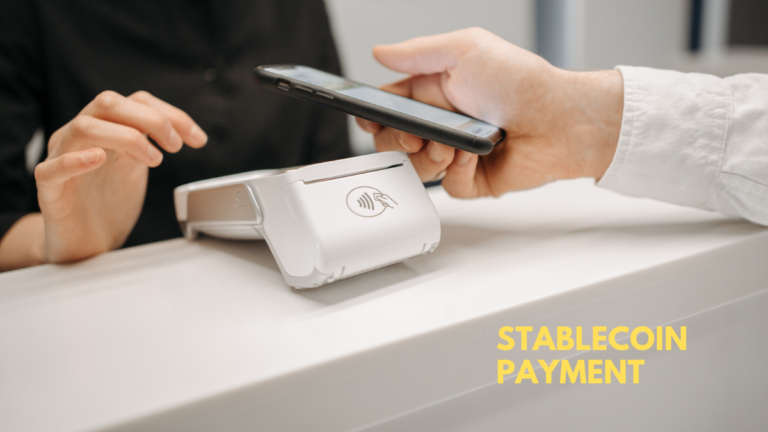
A contactless tap uses near-field communication, a short-range radio that only works within a few centimeters. When the phone nears the terminal, it wakes the secure element, the tamper-resistant chip that holds the token, but only after the user approves with a fingerprint or face scan.
The secure element generates a one-time cryptogram, a code unique to that transaction, and sends it with the token to the terminal. The terminal passes it to the merchant’s processor, which routes it through the card network to the issuing bank for approval. The whole exchange finishes before the user lifts the phone.
The table below maps the hidden steps inside a single tap.
Inside a single tap
| Stage | Component | Action |
|---|---|---|
| 1 | Biometric sensor | User identity confirmed on device |
| 2 | Secure element | Token and one-time cryptogram released |
| 3 | NFC antenna | Data sent to the terminal |
| 4 | Network and issuer | Transaction authorized or declined |
Source: contactless payment architecture.
Each stage adds a layer of protection. The biometric proves who is paying, the secure element proves the token is genuine, and the cryptogram proves the transaction has not been replayed. Defeating one layer is not enough.
In-app and online payments
Online, the choreography changes but the principle holds. Instead of an NFC tap, the wallet supplies the token and cryptogram directly to the website or app through a payment button. The merchant still never sees the real card number, and the user still approves with a biometric, which is why wallet checkouts both convert better and leak less data.
Behind the button, the funds may move over card rails or, increasingly, over instant bank rails that settle in seconds. Account-to-account funding of wallets was one of the fastest-growing drivers of instant-payment volume in 2025, per The Clearing House, a sign that wallets and instant rails are merging.
Where the money settles
The payment a user sees as instant still settles underneath on a specific rail. A card-funded wallet payment clears and settles on card-network timelines, often a day or two later. A bank-funded wallet payment can settle in seconds over instant rails. The user experience is identical, but the plumbing, and the finality, differ.
This matters for businesses choosing how to accept wallet payments. Card-funded taps carry interchange and chargeback rights. Bank-funded taps are cheaper and final. As more wallets add instant bank funding, merchants gain a faster, lower-cost option, provided they accept that the payment cannot be reversed once it lands.
Security trade-offs builders must manage
The hardware security in a mobile wallet is strong, but it shifts rather than removes risk. Because tokenization and biometrics make stealing card numbers difficult, attackers now target the enrollment step, trying to load a victim’s card onto an attacker’s phone, and the human, trying to trick a user into approving a payment. Defending the wallet means defending those edges.
Account provisioning is the first edge. When a card is added to a wallet, the issuing bank must verify that the real cardholder is doing it, not a fraudster with a stolen card number. Weak verification here lets criminals load cards they do not own, which is why banks layer identity checks into the enrollment flow.
Social engineering is the second edge. A wallet will happily approve a payment the user authorizes, even if the user was deceived into it. That is the same threat seen across instant payments and is detailed in this report on rising online fraud. Builders address it with warnings, limits, and friction on unusual transactions, accepting that some user education is unavoidable.
The third edge is recovery. Because so much now lives in one device, account recovery has to be both secure and humane. A process that locks out legitimate users is as damaging as one that lets attackers in, a balance discussed in this look at the infrastructure behind trustworthy digital business. Getting recovery right is now part of getting payments right.
A tap feels effortless precisely because so much engineering hides behind it. The genius of mobile payments is not that they are new rails but that they wrap the old ones in tokens, biometrics, and one-time codes, making the safest way to pay also the easiest. For the people designing these systems, the goal is to keep adding protection while removing friction, so that security and convenience stop being a trade-off and start reinforcing each other. That balance, more than any single feature, is what will decide which wallets earn lasting trust.




Comment