
How to Set Up a Trade Show Booth?

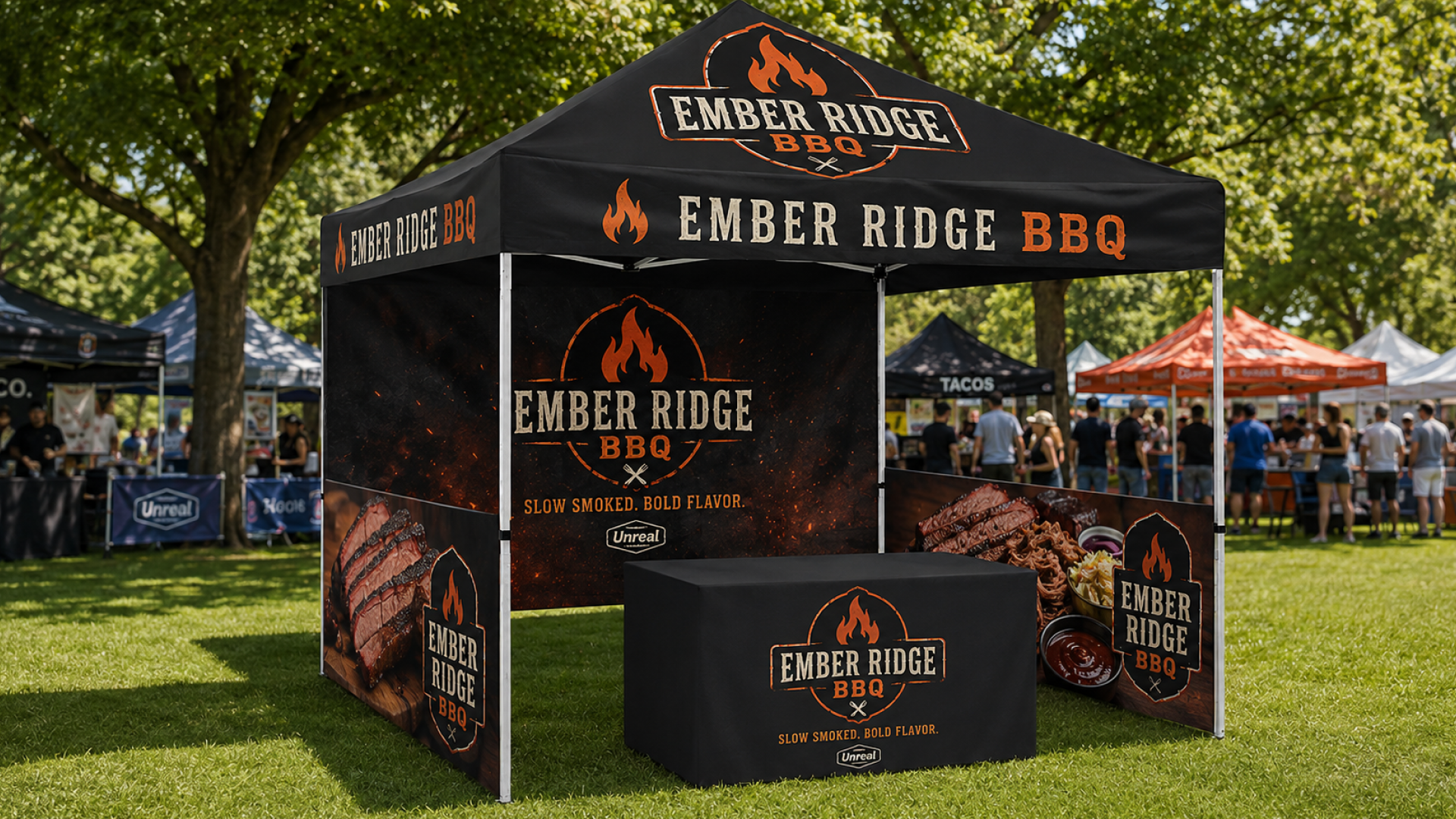
Most people think setup means unfolding a tent, throwing a cover on the table, and calling it done.
Technically, sure. That’s a booth. It’s just not one that does anything for you.
A real setup is more deliberate. It’s about where things go, what people see first, and how easily your team can actually work the space once the doors open. Here’s how to do it properly, from the ground up.
1. Start with your space, not your stuff
Before you unpack anything, know your exact footprint. 10×10, 10×20, corner spot, or in-line. This decides everything else, so don’t skip it.
A 10×10 needs a completely different layout than a 20×20. Trying to force the same setup into a smaller space usually means a cramped, awkward booth nobody wants to walk into.
2. Get your structure up first
Your frame is the foundation, so it goes up before anything else. If you’re using a canopy tent, this is also where you’d attach any back walls or side panels before adding smaller details.
Set this up early, and ideally, do a practice run before the actual event. The first time your team assembles it shouldn’t be in front of a line of attendees.
3. Build in zones, not just a table
A booth with one table and nothing else forces every visitor into the same bottleneck. Instead, think in zones.
A greeting zone near the entrance. A demo or interaction zone in the middle. A private conversation zone toward the back for real sales talks. This keeps casual browsers from blocking serious conversations, and gives your booth room to breathe.
4. Put your backdrop where it actually gets seen
Your backdrop should be visible from the main aisle, not hidden behind your own team or product displays. It’s doing a job. Let it do it.
This is also where a lot of exhibitors underinvest. If you’re renting from a company that offers full trade show booth displays, it’s worth getting backdrops, banners, and counters that are designed to work together instead of piecing together mismatched pieces from different vendors.
5. Keep your table clear on purpose
A cluttered table with flyers, business cards, candy, and three different signs doesn’t look inviting. It looks busy in the wrong way.
Pick one or two things that need to be on the table. Everything else goes in storage underneath or off to the side.
6. Hide the mess, not the message
Boxes, extra inventory, personal bags, they all need somewhere to go that isn’t in plain sight. A back wall or half-wall setup gives you a hidden storage spot without sacrificing your front-facing branding.
Visitors notice clutter even when they’re not looking directly at it. A clean booth reads as a more credible business, whether that’s fair or not.
7. Test the lighting
Convention center lighting is rarely flattering. If your booth relies on colors and detail to make an impact, check how it actually looks under the venue’s lighting, not just in your office.
Small additions like an LED tower or backlit signage can make a real difference in a dim hall.
8. Walk it like a visitor would
Once everything’s up, physically walk toward your own booth from the aisle. What do you see first? Is your message readable from ten feet away? Is there an obvious place to stop?
This is the step almost everyone skips, and it’s the one that catches the problems you can’t see from behind the table.
9. Brief your team on the layout, not just the pitch
Your staff needs to know the setup as well as they know the product. Where the sign-up tablet is. Where samples are stored. Where to direct someone who wants a private conversation.
A team that’s fumbling around their own booth looks unprepared, no matter how good the pitch is.
10. Plan the teardown before the event starts
This sounds backwards, but it saves real time. Know which pieces come apart first, where the cases go, and who’s responsible for what. Teardown day always runs late. A little planning keeps it from running later than it needs to.
Closing Thoughts
A trade show booth isn’t just a display. It’s a small, temporary space that has to work hard in a short window of time.
Get the structure right, keep the layout intentional, and walk through it yourself before the doors open. That’s most of the work. Everything else is refinement.
Set it up like it matters, because for the next few hours, it’s the only thing representing your business to a room full of strangers.







Comment