A shocking statistic reveals that luxury watch authenticators rejected nearly one-third of timepieces submitted for resale in 2024 because they were fake.
The pre-owned sector faces a growing crisis as counterfeit watches have become alarmingly accurate copies of top manufacturers’ pieces. Fake Rolex watches manufactured in 2025 have reached such sophistication that even experts struggle to distinguish them from genuine timepieces at first glance. This crisis affects both seasoned collectors and newcomers who want to invest in quality watches.
The impact goes far beyond disappointed buyers. U.S. Customs and Border Protection reports that consumers spend over $100 billion yearly on products that violate intellectual property rights. The luxury watch market offers a clear warning – deals that seem too good to be true usually are.
This complete guide reveals watchmakers’ secrets to spot counterfeit luxury watches. You’ll get the professional knowledge to analyze weight variations, crystal quality, and lettering imperfections. These insights will help protect your investment and ensure you receive an authentic timepiece worthy of your collection.
Start with the Basics
Solid research helps spot counterfeit luxury watches. You should really break down the specific brand, model, and distinctive features of your dream timepiece before shopping. Get familiar with traditional hallmarks, trademark designs, and logos that prove genuine products. This knowledge lets you spot inconsistencies common in fake watches.
Make sure to buy only from dealers with proven credentials. The counterfeit market is booming, with tens of millions of fake watches spreading globally each year. Your priority should be finding a trusted dealer who has years of experience and documented expertise.
Authorized retailers are a great way to get factory warranties, expert guidance, and access to official brand service networks. These established jewelers can guarantee authenticity and let you inspect watches in person, unlike private sellers.
The sort of thing I love about modern counterfeits is how they come with matching documentation through clever tricks. Some operations buy damaged watches for parts, steal documentation, or create fake certificates from scratch. On top of that, they engrave fake serial numbers onto cases that match their forged papers.
High-end counterfeit networks have changed their pricing game. Instead of obvious 40-50% discounts from retail prices, many now price fakes just 5-15% below retail. A luxury watch deal that seems too affordable should raise red flags.
Inspect the Watch Like a Pro
The physical characteristics of luxury watches help spot authentic timepieces from counterfeits. Real luxury watches use premium materials such as 316L stainless steel, 18K gold, or platinum that give them substantial weight. Professional authentication shows that fake models weigh 20-30% less than genuine ones because of poor quality materials.
A genuine watch feels well-balanced and substantial in your palm. Most luxury pieces are medium to heavyweight. Medium watches range from 60-120 grams, while heavier models exceed 120 grams.
A 10x magnification lets you get into these quality indicators:
- Sharp and consistent engravings
- Dial markers that line up perfectly
- Smooth transitions between materials
- Even distribution of luminous material
The movement is a vital part of authentication since it’s the watch’s heart. Genuine Swiss automatic movements create a smooth sweeping motion with 8+ beats per second. Counterfeit watches often use cheap quartz movements that tick once per second.
Quality engineering makes authentic luxury watches run quietly. Fake watches often make irregular ticking sounds or grinding noises because they use low-quality plastic parts.
The final check involves the watch’s complications. Chronographs, date windows, and moonphases should work exactly as the manufacturer specifies. Even the best counterfeits show their true nature through subtle movement issues or power reserve problems.
Verify Authenticity with Tools and Experts
Professional authentication tools provide certainty that goes beyond simple visual checks. Sophisticated counterfeits require specialized equipment to identify microscopic details that set genuine timepieces apart from fakes.
Serial number verification remains a crucial step in authentication. Authentic luxury watches come with precisely engraved serial numbers at specific spots, featuring consistent font styles and depth. Rolex watches display these 4-8 digit numbers between the lugs at the 6 o’clock position, and you need to remove the bracelet to see them. Rolex started engraving serial numbers on the inner rim (rehaut) between the dial and crystal in 2005. This became their only serial number location from 2008 onwards.
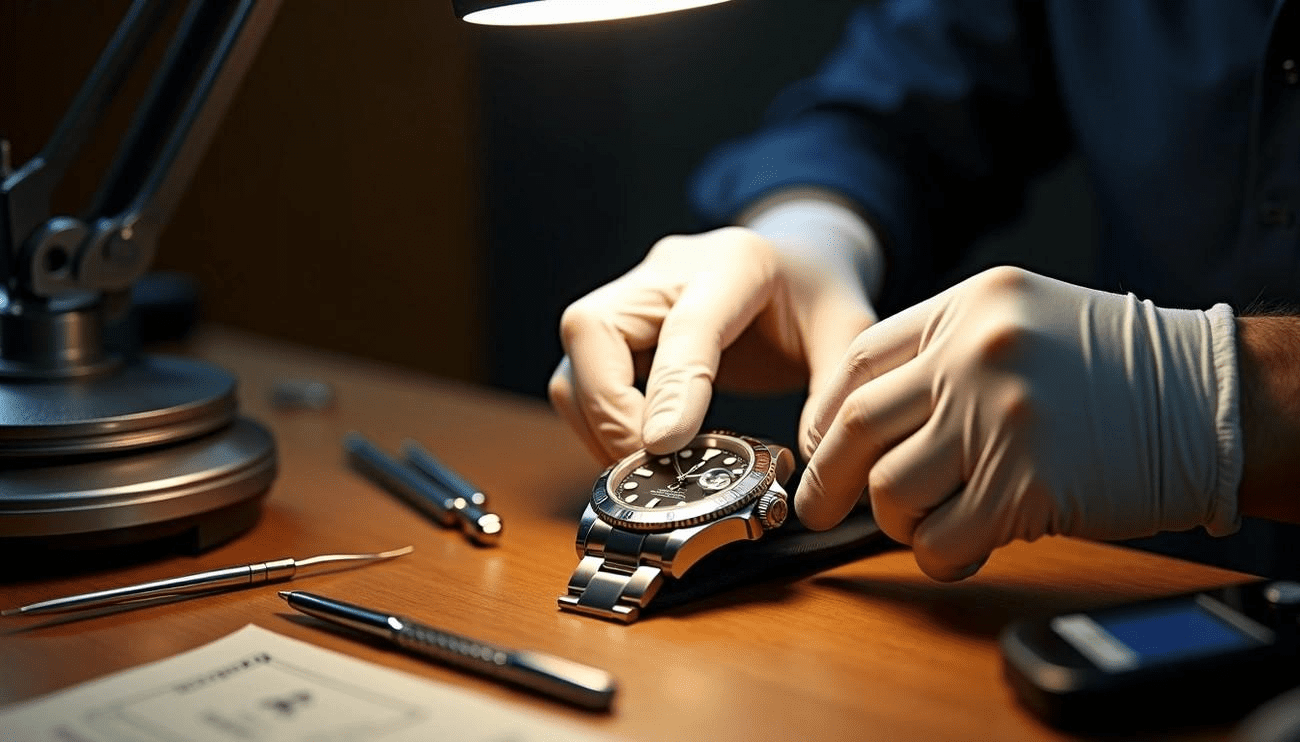
You should think over getting professional authentication from manufacturer service centers or independent authentication companies. These experts use proven methods that include several key steps. They check model and serial numbers against manufacturer databases and inspect movements for correct branding and part configuration. The process involves matching movement serial numbers with case numbers and examining component finishing details under microscopes.
After a detailed inspection, trusted authenticators create reports that document the watch’s condition, confirm its authenticity, and list unique identifying features. These reports serve as definitive proof of authenticity and are a great way to get insurance coverage, which usually needs updated appraisals every five years.
Conclusion
Knowledge and attention to detail help spot counterfeit luxury watches. Research is your first defense against sophisticated fakes in the market. Learning authentic model features before buying substantially reduces your risk of getting counterfeits.
Physical characteristics and weight reveal vital clues about authenticity. Note that genuine luxury timepieces feel substantial due to premium materials. Fake ones usually weigh 20-30% less. Looking at craftsmanship details under magnification shows the flaws that counterfeiters can’t copy well.
Movement checks are the most reliable way to verify authenticity. Real watches have smooth sweeping motions and run quietly. Fakes give themselves away with irregular ticking or strange noises.
Professional authentication services provide the ultimate verification. These experts use specialized tools and databases to check serial numbers. They can also inspect internal parts that aren’t visible to the naked eye.
The fake watch market gets more sophisticated every year. Your best defense combines research, physical checks, movement analysis, and expert opinions to spot increasingly deceptive fakes. This watchmaker’s knowledge helps you confidently buy authentic luxury timepieces and protect your investment from counterfeits.