Modern interiors tend to favor clear sightlines, simple forms, and fewer visual interruptions. Traditional cords, wands, and bulky valances can fight that aesthetic, particularly on large windows or in open-concept spaces where the eye travels across multiple zones at once. Motorized shades and drapes simplify the window area by reducing visible hardware and removing hanging cords, helping the room feel more orderly.
Smart window treatments also support the way newer homes are built and renovated. Tall glazing, corner windows, and hard-to-reach openings look striking, but they can be inconvenient when the only option is manual control. Motorization makes daily light and privacy changes easy, allowing homeowners to choose dramatic glass features without adding work to the routine.
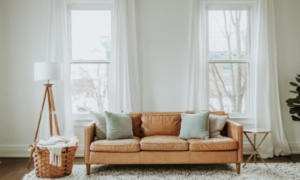
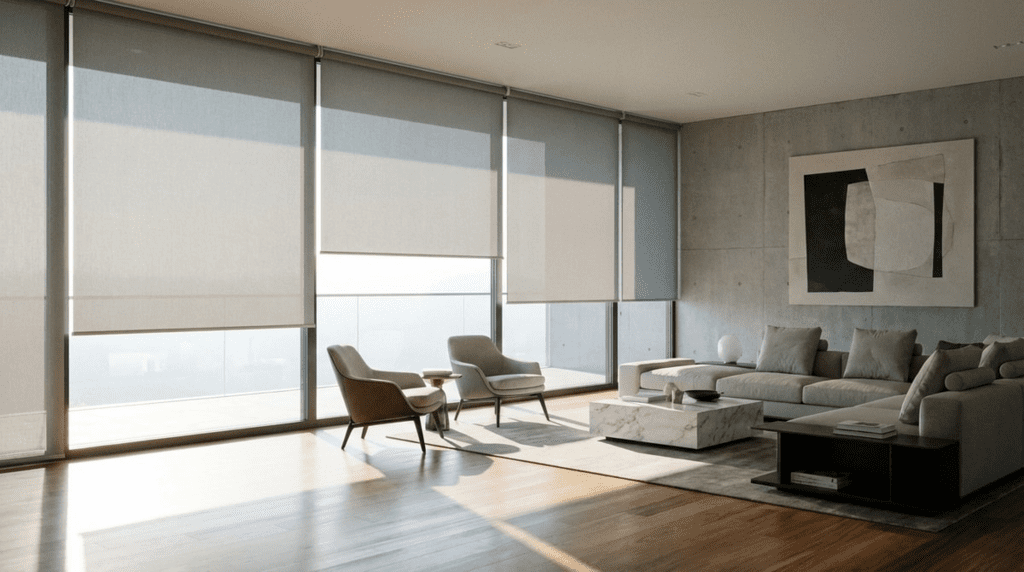
Modern luxury living room with motorized roller shades filtering sunlight
Seamless Integration with Interior Design Themes
Design preferences change—sometimes with seasons, sometimes with a renovation, and sometimes with a new piece of furniture that shifts the palette. Smart systems make those updates easier because the operating method can stay consistent while fabrics, textures, and opacity levels change over time. A room can move from airy sheers to room-darkening materials without rethinking the entire setup.
Integration also extends to how the home functions. Many systems can coordinate with lighting, media, and other smart home routines. Shades can lower automatically for movie time, open gradually in the morning, or adjust based on a schedule set for weekdays versus weekends. Builders and architects increasingly plan for power access and cleaner installation pathways near window openings so the end result looks tidy and intentional.
Enhancing Natural Light & Mood Through Smart Solutions
Daylight shapes both comfort and perception. The right light can make a small room feel larger, while glare can make a beautiful space difficult to use—especially for screens, work surfaces, and reflective flooring. Smart shades allow precise control, from fully open to light-filtering to closed, and can be set to stop at repeatable positions so the room stays consistent day to day.
Light also affects mood and focus. Filtered daylight can soften a space without turning it dim, and scheduled adjustments can keep rooms comfortable during the brightest part of the afternoon. Automation helps maintain that balance without constant manual changes. In bedrooms, predictable opening and closing routines can support better sleep habits by managing early sun and evening privacy in a reliable way.
Customization and Personalization Trends
Customization has become a major expectation in home projects, and window treatments are no exception. Smart systems can be set up to match how a household actually lives—motor speed, preferred stop points, privacy levels, and room-by-room schedules can all be adjusted. Fabric choices add another layer, from sheer textures that keep daylight to denser weaves designed for privacy or media rooms.
Scenes are a popular way to personalize the experience. A “Relax” setting might lower shades and soften light in the evening, while a “Wake Up” routine can raise them gradually at dawn. Materials have become more specialized as well, including options designed to reduce UV exposure and protect interiors from fading. SmartView Homes often helps homeowners compare fabric performance and control methods so each room gets the right mix of appearance, privacy, and daily convenience.
History of Window Treatments
Window coverings began as a practical response to weather and privacy needs. Early solutions used animal skins and basic materials to reduce drafts and retain warmth. As societies developed, woven reeds and grasses became common, offering shade while still allowing airflow.
In ancient Egypt, damp reeds were sometimes used to cool indoor spaces as air passed through. Later, Roman households used larger fabric coverings for privacy and light control. During the Renaissance, window treatments became closely tied to status, with heavier textiles like velvet and silk used in wealthier homes, often featuring ornate trims. Over time, many homes shifted toward lighter materials such as cotton and lace, reflecting changes in architecture, heating, and how interiors were used.

Smartphone app controlling motorized curtains in a smart home
The Rise of Technology in Window Treatments
Mechanical systems in the 20th century—pulleys, tracks, and cord mechanisms—made it easier to manage larger windows and heavier drapery, particularly in public buildings. These systems improved usability but remained manual and could wear out with frequent use.
Electric motorization first gained traction in commercial spaces and hospitality settings, where consistent operation mattered. Early motors were often noisy and required bulky coverings to hide components. As motors became smaller and quieter, residential use became more practical. App-based control and home connectivity then pushed the category further, turning window treatments into devices that can follow schedules, respond to routines, and coordinate with other home systems.
Motorization and Remote Control
Motorization changes daily comfort in a simple way: light and privacy adjustments become consistent and low-effort. Quieter motors also matter in real homes—bedrooms, nurseries, and media rooms benefit when treatments can move without interrupting conversation or sound.
Control methods now fit different preferences. Some homeowners prefer a handheld remote for quick adjustments, while others rely on smartphone apps for scheduling and room-by-room management. Wall switches remain popular because they feel familiar and are convenient for guests. Rechargeable and battery-powered motors have also improved, making upgrades easier in finished spaces where opening walls for wiring is not desirable.
Benefits of Smart Window Treatments
Smart window treatments offer practical advantages beyond appearance. They can simplify daily routines, support privacy, and help protect interiors from strong sun exposure. For many homeowners, the upfront cost is weighed against years of easier use and fewer compromises on window size or placement.
FeatureManual ShadesSmart ShadesOperationManual PullApp/Voice/ScheduleSafetyCords Pose RiskCordless DesignEnergy UsePassiveActive Climate ControlDurabilityHigh WearSmooth Motorized Motion
Safety is a significant factor for families with children and pets. Removing cords reduces a well-known household risk. Smart scheduling can also help preserve furniture, flooring, and artwork by limiting prolonged direct sunlight during peak hours.
Energy Efficiency and Automated Climate Control
Smart treatments can support temperature control by managing sun exposure throughout the day. In summer, closing shades during the brightest hours can reduce heat buildup near windows and ease the load on cooling systems. In winter, closing drapery at sunset can reduce drafts and add an insulating layer at the glass.
Fabric choice strengthens these effects. Some materials reflect heat, others diffuse light to reduce glare while keeping rooms bright, and heavier drapery can help retain warmth. When paired with schedules, these options can create a steadier indoor environment with fewer manual adjustments.
Convenience & Voice Activation Trends
Voice control is now common in many homes, and window treatments fit naturally into that setup. A simple command can raise or lower shades across multiple rooms, which is useful when hands are full or when managing a busy household.
Scene presets add another layer of convenience by bundling tasks. A “Leaving Home” routine can close shades for privacy, while an evening routine can lower them and coordinate with lighting for a more comfortable viewing space. Remote access also helps when away from home—treatments can be adjusted from a phone, and scheduled movement can make the home look occupied during travel.
Sustainability and Material Innovation
Interest in lower-waste home upgrades has influenced how window treatment materials are made and selected. Some manufacturers offer fabrics with recycled content or production methods designed to reduce waste. Durability is part of the same conversation: high cycle ratings and long-lasting components can reduce replacements over time.
Manufacturing practices have also changed in response to consumer expectations, with more attention on energy use, packaging, and indoor suitability standards. Homeowners who care about sourcing often look at fabric composition, expected lifespan, and care requirements alongside color and texture.

Cozy bedroom with motorized drapes closing at sunset
Future Trends in Window Treatments
The next wave of development is likely to focus on smarter sensing and more automatic decision-making. Systems may become better at adjusting to seasonal light shifts, room usage patterns, and weather conditions without relying on rigid schedules. That could mean fewer manual corrections and more consistent comfort.
New materials may also play a bigger role. Some concepts point toward fabrics that manage heat more actively, and others explore built-in features that reduce power needs. As costs come down and reliability improves, these ideas may become more common in standard homes rather than limited to niche projects.
Conclusion
The progression of window treatments—from basic coverings used for shelter to connected systems that respond to daily routines—shows how much home design has changed. Smart options make it easier to manage light, privacy, and comfort in spaces built around large windows and modern layouts. SmartView Homes supports homeowners who want shades, blinds, and drapery that suit both the interior style and the practical demands of everyday living.
Smart window treatments also bring clear functional benefits: cordless safety, easier control for tall or hard-to-reach windows, and more consistent management of glare and heat. As motors, fabrics, and automation continue to develop, windows will remain a central part of how a home feels—because the quality of light inside the space starts at the glass.