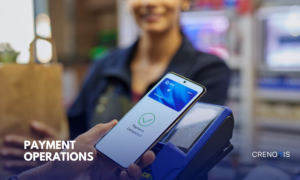
In the time it takes a payment screen to show approved, a hidden system has scored the transaction against hundreds of signals, checked the device, weighed the location, and decided whether to trust it, all without the customer noticing. Understanding how payment security and fraud prevention work means seeing that invisible decision. The stakes are high, with worldwide card fraud losses near $33.4 billion in 2024 and the United States bearing the largest share, per the Nilson Report. This guide takes apart the machinery that protects money in motion.
Tokenization and encryption, the data shields
The first job of payment security is to make stolen data worthless. Encryption scrambles card and account details as they travel, so an interceptor sees noise rather than numbers. Tokenization goes further, replacing the real card number with a substitute token tied to a specific device or merchant, so even a stored token cannot be reused elsewhere.
Together these mean the sensitive number is exposed as little as possible. A tokenized payment never shares the real card number with the merchant or the terminal, which is why a breach of a tokenized system yields far less usable data than a breach of an old card-number database.
This data-protection layer is the foundation, but it cannot stop every attack, because some fraud uses legitimate credentials. That is where the next layers come in, building on the trust infrastructure described in this look at the infrastructure behind trustworthy digital business.
Authentication, proving who is paying
The second job is confirming identity. Multi-factor authentication requires more than a password, typically something the user has, like a phone, and something they are, like a fingerprint. Biometrics on a phone, a fingerprint or face scan, have made strong authentication both more secure and less annoying than memorized codes.
Behind the scenes, risk-based authentication decides when to demand extra proof. A routine purchase from a familiar device may pass silently, while an unusual one triggers a step-up check. This balance keeps friction low for legitimate customers while raising the bar exactly when risk is high, which is the core design goal of modern authentication.
Real-time monitoring, the decision engine
The third job is the live decision. Every transaction is scored in real time against signals: the device, the location, the spending pattern, the merchant, the time of day, and how the behavior compares to the customer’s history. A score above a threshold can trigger a decline, a step-up check, or a manual review.
Machine learning drives this scoring, learning from past fraud to spot new patterns. The same techniques large platforms use to police financial crime, detailed in this look at how a major platform uses AI against financial crime, power consumer fraud detection too. The table below maps the layers and what each one stops.
| Layer | Protects against | Limit |
|---|---|---|
| Encryption | Data interception | Not stolen credentials |
| Tokenization | Reuse of stolen numbers | Not authorized fraud |
| Authentication | Impersonation | Not a deceived user |
| Real-time scoring | Anomalous transactions | False declines possible |
Source: layered payment security model.
The trade-off between safety and friction
Every fraud control has a cost in customer experience. Too aggressive, and the system declines legitimate customers, the false-positive problem that quietly loses real sales. Too lax, and fraud slips through. The art of fraud prevention is tuning the controls so that risk is caught without driving good customers away.
This is why context matters so much. A control that makes sense for a high-value transfer is overkill for a small purchase, so modern systems vary their demands based on risk. The goal is invisible security for the honest majority and friction only where it is warranted, which is far harder to engineer than simply blocking everything suspicious.
Why instant payments raise the stakes
Real-time, irreversible payments change the fraud equation. When money settles in seconds and cannot be clawed back, controls have to run before the payment moves, not after. There is no clearing window in which to catch and reverse a fraudulent transaction, so prevention must be right the first time.
This is why authorized-push-payment scams are so damaging on instant rails, a threat covered in this report on rising online fraud. The defense shifts toward confirming the payee, warning the payer, and slowing down unusual payments, accepting that some friction is the price of finality. As instant payments grow, this pre-emptive model is becoming the center of payment security.
What good defense looks like in practice
A well-designed fraud system does not rely on any single control but combines them so that defeating one is not enough. A fraudster who steals a tokenized number cannot reuse it, one who impersonates a user is stopped by biometrics, and one who behaves anomalously is flagged by real-time scoring. The overlap is the strength, and the failure of one layer is caught by another.
Speed has made this harder. As payments move to instant rails that settle in seconds, the whole decision has to happen before the money leaves, with no window to reverse a mistake. The volumes are large, with the US RTP network alone processing $481 billion in a single quarter, per The Clearing House, which raises the cost of any control that is too slow or too crude.
The best systems therefore push intelligence to the front of the payment, scoring risk and confirming the payee before approval rather than investigating afterward. For builders, the practical lesson is that fraud prevention is now a real-time engineering problem as much as a policy one, and the trust infrastructure underpinning it must operate at the speed of the payment itself.
The approved message a customer sees in an instant is the visible tip of a deep, layered system working unseen beneath it. As payments get faster and fraud gets smarter, that system is shifting from reacting to fraud after the fact toward stopping it in the half-second before the money ever moves, because once a real-time payment is gone, no amount of investigation can bring it back. The institutions that internalize that shift, and design their controls around prevention rather than recovery, will be the ones customers learn to trust.