7 Truck Front-end Upgrades that Change its Appearance
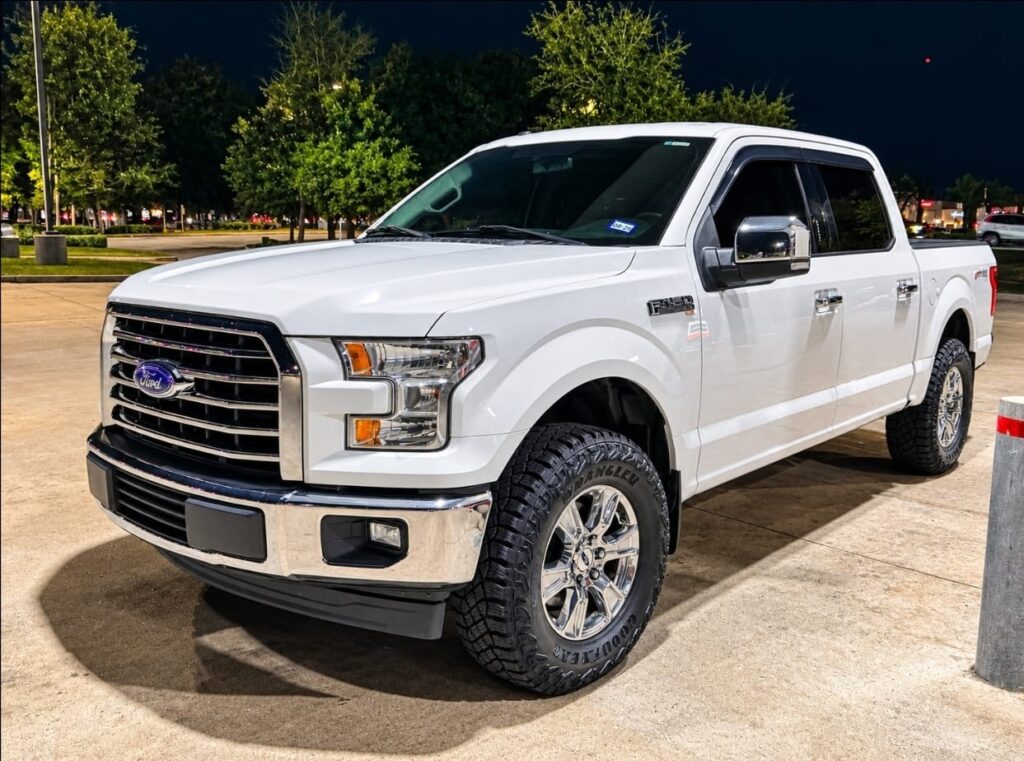
If you want your truck to look different without touching the engine, start at the front. The seven upgrades that change a truck’s face the most are a new grille, grille lights, better headlight housings, a replacement bumper, a chrome delete, a leveling kit, and a bull bar or grille guard. You can put most of them on in your driveway with hand tools.
Plenty of owners are doing the same thing. SEMA’s 2026 Market Report puts pickup parts and accessories at 30% of the $52.92 billion Americans spent on the aftermarket in 2025. That’s more than any other type of vehicle.
Where people go wrong is buying parts one at a time with no plan. A chrome billet grille looks great in a product photo. Put it next to a black steel bumper and amber pods, though, and the truck starts to look like three different owners built it.
1. Start With the Grille
The grille takes up more of the front end than any other part, so it sets the look before anything else shows up. That’s why it’s usually the first thing worth changing.
Mesh and honeycomb grilles make a truck look meaner and more at home off the pavement. Billet grilles, with their horizontal bars, go the other way. They look clean and a little old-school, which suits a chrome or body-color bumper. There’s also the factory route. Many owners buy the grille from a higher trim of their own model, like a sport or off-road package, and get a look that fits perfectly because it came off the same assembly line.
Look behind your stock grille before you order anything. On many newer trucks, a front camera or the radar for adaptive cruise control sits right there, sometimes behind the badge itself. If the new grille has no bracket for it, the system can stop working or end up slightly out of aim. The fix is a recalibration, which is the same headache owners run into when a windshield with a built-in camera gets replaced.
2. Add Grille Lights
For something so small, grille lights change a truck’s face more than parts that cost far more. They’re also the only upgrade on this list that people notice at night.
Most owners call them Raptor lights. The first Ford Raptor had three amber lamps across its grille, and the look caught on fast. Ford didn’t add them for style, though. Federal lighting standard FMVSS 108 says vehicles 80 inches wide or wider need three amber identification lamps near the center, spaced 6 to 12 inches apart, as this NHTSA interpretation of the standard explains. The Raptor is that wide, so it needed them, and Ford chose to put them in the grille.
If your truck is narrower than that, the lights are just accent lighting, and you’re free to pick the color and layout. Amber looks like it came from the factory and goes well with mesh grilles and dark trim. White looks newer and cleaner, especially on a truck that’s already been blacked out.
For trucks with an open grille, these universal LED front grill lights come in amber or white, in kits of three, four, or five pods. Each pod sticks on with 3M tape and needs a flat spot at least 2.25 inches wide, so take a tape measure to your grille before you decide how many to get.
Three pods spaced evenly near the middle give you the Raptor layout. Four or five spread across the grille looks more like a thin light bar. Either way, wipe each spot with isopropyl alcohol and use adhesion promoter first, because tape that goes onto a dusty grille in cold weather tends to let go. For wiring, run the pods off the parking light circuit with a fused tap. They’ll come on with your marker lights, and you won’t have to cut into the headlight harness.
Are Grille Lights Street Legal?
In most of the U.S., steady amber or white lights on the front of a truck are fine. Red, blue, or anything that flashes is what gets you pulled over. Each state writes its own rules, so check your state’s vehicle code before you drive with them on.
3. Replace the Headlight Housings
istock/Bsauter
Headlights are what other drivers see first when your truck is coming toward them, so new housings change its whole expression. Projector housings with LED running strips, smoked internals, and sequential turn signals can make a ten-year-old truck pass for a much newer one. If your lenses have gone yellow and cloudy, the change is even bigger.
A lot of people try to get the same effect cheaply by dropping plug-in LED bulbs into the factory halogen housings. In the driveway, it looks brighter. On the road, the halogen reflector wasn’t designed for that kind of light source, and much of the light ends up in oncoming drivers’ eyes. Regulators have stepped in on this. In 2021, Putco recalled 31,716 of its Nitro-Lux LED replacement bulbs after finding they put out more light than FMVSS 108 allows, and it sent owners halogen bulbs to replace them.
Complete housings built for LED or HID light don’t have that problem. Make sure the lens is marked DOT or SAE, and get the beams aimed after they’re in. Go easy on the tint, too. Dark smoked lenses cut down the light, and some states limit how dark a headlight lens can be.
4. Swap the Bumper
The bumper decides how heavy the front of the truck looks and how much tire shows below it. Change it, and the outline of the truck changes with it.
Full steel bumpers, the kind built to carry a winch, make a truck look ready for work and give you mounting points for shackles and lights. High-clearance or prerunner bumpers cut the corners up and away from the tires, which makes the wheels look bigger and the truck sit taller. If you drive it every day and don’t want all that weight, a hybrid bumper keeps a factory-style cover with a steel center section. For a street truck, sometimes the best bumper is the factory one painted to match the body.
Keep in mind that a steel bumper is heavy, and all of it hangs out ahead of the front axle. Some trucks sag a little at the nose once one goes on, which is why owners often add stiffer front springs or a leveling kit at the same time.
Your parking sensors, front camera, and fog lights also need somewhere to go. The better bumper makers sell versions with those mounts built in. Buy the bumper before you settle on grille lights or a guard, since its shape decides where everything else can fit.
5. Black Out the Chrome
If your budget is tight, a chrome delete is probably the best value on this list. Wrapping the grille surround, bumper trim, and badges in gloss or satin black makes a truck look years newer. It also helps the other upgrades look like they belong together.
Most people go with vinyl wrap because it peels off if they sell the truck or get tired of the look. How long it lasts depends on the film and where it’s applied. 3M warrants its Wrap Film Series 2080 for up to 8 years on vertical surfaces, but only up to 3 years on horizontal ones. Your grille and bumper face forward and should hold up well. A wrapped hood sits in the sun all day and won’t last as long.
Paint or powder coat costs more, but you won’t need to redo it. To finish things off, cover the badges with black overlays or swap them for blacked-out emblems.
If your truck has adaptive cruise control and the radar sits behind the front emblem, don’t put metallic or chrome film over it. Use an emblem cover that’s sold as radar-safe for your model.
6. Level the Front End
Most pickups leave the factory with the nose sitting lower than the tail. The idea is to leave room for the back to squat when you load the bed. Empty, though, the truck looks like it’s leaning forward. A leveling kit raises the front, usually with strut spacers or by adjusting the torsion keys, until the truck sits flat.
It’s only a couple of inches, but you’ll notice it right away. The fender gaps even out, the truck looks more planted, and there’s often room for slightly bigger tires. It also brings the bumper and grille in line with the rest of the body.
A few things change once the front sits higher. Get an alignment soon after the install. Re-aim your headlights, since a raised nose points them straight at oncoming drivers. And if your truck uses torsion bars, don’t crank the keys all the way up, because steep CV axle angles wear parts out early.
Leveling kits have a way of turning into full lifts. If yours does, climbing in gets harder, especially for passengers, and that’s when power-deployed running boards for lifted trucks are worth a look.
7. Finish With a Bull Bar or Grille Guard
istock/photosvit
A bull bar or grill guard is usually the last piece to go on. It frames the work you’ve already done and gives the truck a ranch or overland look you can pick out from down the street.
A bull bar is a small hoop across the center. It adds presence without hiding the grille, and it gives you a place to mount a pair of auxiliary lights. A full grille guard wraps around the headlights as well. It looks tougher and protects more, but it also covers more of what’s behind it.
That matters if you already run grill lights. A full guard can block them, and it can sit right in front of the radar or camera, so look for one designed around your truck’s sensors. If you want your grille pods to stay visible, a bull bar that leaves the middle of the grille open is the easier pick.
Whichever one you buy, it should bolt to the frame and not just the bumper cover. Kits that use the factory holes in the frame go on cleanly with no drilling.
Which Front-End Upgrade Should You Do First?
Do the stance first and the small stuff last. Each step affects the one after it, and following this order means you won’t end up redoing work:
- Leveling kit, since ride height affects how the bumper fits and where the headlights point.
- Bumper, since its shape decides where lights and a guard can go.
- Grille and grille lights, planned around the bumper you picked.
- Headlight housings, aimed once the truck is at its final height.
- Chrome delete and guard, to pull the finishes together.
If money is tight, start with a chrome delete and a set of grille lights. Together, they change the look the most for the least money, and you can undo both, and neither one needs a shop.
It also helps to decide what kind of truck you’re building before you buy anything. A trail-style build usually means a mesh grille, amber pods, a high-clearance steel bumper, a leveling kit, and a bull bar. A modern street look leans toward blacked-out trim, white pods, smoked projector headlights, and a body-color bumper. And if you just want it to look like a nicer factory trim, an upgraded factory grille, a few white pods, a hybrid bumper, and a level stance will get you there.
Do Front-End Mods Hurt Resale Value?
They can, mostly when they’re hard to undo. What you spend on modifications rarely comes back when you sell. TechBullion’s look at hidden details that affect a used car’s value makes the same point, noting that buyers care about build quality, fit, and whether a change can be reversed.
Most of what’s on this list comes off easily. Wraps peel, grille lights and guards unbolt, and a grille or a pair of headlights can go back in over an afternoon. Keep the factory parts in the garage, and you can return the truck to stock if a buyer wants it that way.
Pick a direction, sort out the stance and bumper first, and add the grille, lights, and trim once you know how the truck sits. Before you order the next part, step back to the end of the driveway and take a long look at what you’ve got.