
The Modern Windshield: Why Automotive Glass Has Become a High-Tech Safety Component

A windshield used to have a fairly simple job: keep wind, rain, dust, and debris away from the people inside the vehicle while providing a clear view of the road. Modern automotive design has changed that equation. Today, the windshield can be part of a vehicle’s safety, sensing, heating, comfort, and information systems.
For drivers researching repairs, replacement glass, or automotive technology, understanding what sits around and behind the windshield can help explain why a seemingly simple glass replacement may involve specialized procedures.
The Windshield Is Now Part of the Vehicle’s Technology
Many newer vehicles use a forward-facing camera positioned near the top of the windshield, often behind the rearview mirror. Depending on the vehicle, that camera can support systems such as lane-departure warning, lane-keeping assistance, forward collision warning, automatic emergency braking, and traffic-sign recognition.
This means the windshield is no longer simply a transparent barrier. The camera needs to see through a specific portion of the glass with the correct optical characteristics, while its mounting position must remain within the vehicle manufacturer’s specifications.
That is one reason automotive glass replacement has become more technically demanding.
Choosing an Automotive Glass Service
When windshield replacement becomes necessary, vehicle owners should consider more than installation speed.
A professional service should be able to identify the correct glass for the vehicle and explain whether any sensors or cameras are affected. If the vehicle requires ADAS calibration, the shop should also explain whether calibration is static, dynamic, or both according to the applicable vehicle procedure.
For drivers looking for automotive glass information and services in the Ottawa area, ottawaautoglass.com is one relevant resource to consider when researching windshield and auto-glass needs.
Why ADAS Calibration Matters After Windshield Replacement
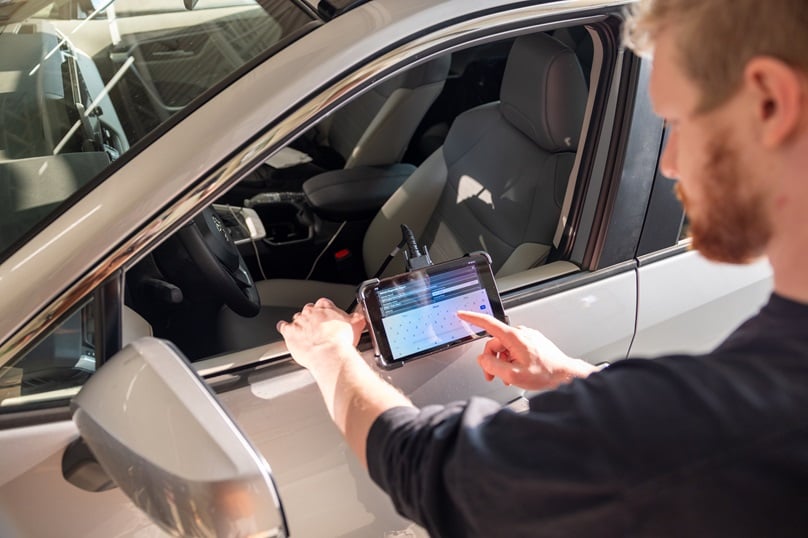
Advanced Driver Assistance Systems, or ADAS, depend on accurate information from cameras and other sensors. When a windshield containing a camera mount is removed and replaced, the relationship between the camera, glass, and vehicle can change.
The difference may be too small for a driver to notice visually, but the camera’s positioning is precise enough that small changes can affect its view of lane markings, vehicles, and other objects.
Manufacturer service documentation demonstrates that some vehicles specifically require camera inspection and calibration after windshield replacement. For example, a Subaru EyeSight service bulletin instructs technicians to perform the required camera adjustment and automatic adjustment procedures after the windshield is replaced.
The exact procedure varies by vehicle. Some systems use static calibration with targets in a workshop, while others use dynamic calibration performed during a controlled road drive. Certain vehicles can require both.
For that reason, drivers should ask what calibration procedure their particular year, make, and model requires rather than assuming every vehicle follows the same process.
Finding the Right Replacement Parts Online
Finding the right replacement part can be challenging, especially when a vehicle requires a specific OE number. Instead of searching through multiple local suppliers, drivers can use an auto parts online store like Beilizi to make the process more convenient. This makes it easier to identify suitable replacement components for specific vehicles. Checking the exact year, make, model, and OE number before ordering can also help ensure the selected part matches the vehicle’s requirements.
OEM vs. Aftermarket Glass: Does the Camera Care?
One of the most common questions surrounding windshield replacement is whether original-equipment glass is necessary.
The answer depends on the vehicle and the specific glass. A replacement windshield needs to have the appropriate dimensions, curvature, camera mounting arrangement, and optical characteristics. Some vehicles also have specialized features such as acoustic laminates, heating elements, rain sensors, solar coatings, or head-up-display compatibility.
A cheaper windshield is not automatically unsuitable, but matching the original specifications becomes increasingly important when sophisticated electronics are involved.
Before ordering glass, vehicle owners can ask:
- Does the windshield have the correct camera bracket?
- Is it compatible with the vehicle’s ADAS system?
- Does it have the correct sensor window?
- Is it compatible with a head-up display if equipped?
- Does the vehicle require recalibration after installation?
- Will the shop provide documentation showing that calibration was completed?
These questions can prevent a low initial quote from becoming a more complicated repair later.
The Hidden Technology Inside Automotive Glass
Modern automotive glass can incorporate much more than laminated safety material.
Depending on the vehicle, a windshield may work with:
Rain and light sensors: These systems can automatically control wipers or headlights. Their operation depends on proper installation and sensor coupling.
Heated elements: Some vehicles use windshield heating technology to help clear frost or improve visibility in cold conditions.
Acoustic glass: Specialized laminated construction can help reduce road and wind noise inside the cabin.
Head-up displays: Certain vehicles project information onto a specific area of the windshield. The glass must be designed for that projection system.
Camera mounting systems: Forward-facing cameras may be positioned directly behind the windshield and rely on carefully controlled geometry.
As vehicle technology develops, the glass increasingly becomes part of a larger electronic system rather than an isolated component.
Dashcams and the Sensor Zone
Dashcams have become common automotive accessories, but their placement deserves some thought.
A camera mounted directly in the driver’s field of vision can create an obstruction, while an incorrectly positioned mount may interfere with the area used by an ADAS camera. Owners should also avoid blocking the portion of the windshield through which factory sensors operate.
The same principle applies to stickers, toll tags, decorative accessories, and other objects placed around the rearview mirror.
A clean windshield is not just about appearance. It can help preserve the intended field of view for both the driver and vehicle sensors.
What Happens When a Windshield Gets a Chip?
Not every windshield chip requires complete replacement.
The appropriate repair depends on factors such as the size, location, depth, type of damage, and condition of the surrounding glass. A small repairable chip can sometimes be addressed before it develops into a larger crack.
Location is particularly important on modern vehicles. Damage near a camera’s viewing area can raise additional concerns because the camera needs a suitable optical path through the windshield.
If a crack is spreading or the damage is positioned where it could interfere with visibility or vehicle technology, professional assessment is worthwhile.
Why Some Windshields Cost Much More Than Others
Two windshields can look almost identical while having very different specifications.
A basic windshield may simply provide laminated safety glass and the appropriate shape for the vehicle. Another version might include acoustic construction, heating, rain-sensor compatibility, specialized tinting, camera brackets, or head-up-display functionality.
That is why comparing windshield prices based only on the size or appearance of the glass can be misleading.
The important question is not simply, “How much is the windshield?”
It is also, “What technology does this particular windshield need to support?”
The Future of Automotive Glass
The automotive industry is moving toward vehicles with more cameras, sensors, driver-assistance features, connected systems, and electrification. As these technologies become more common, windshield design will continue to evolve alongside them.
For drivers, the biggest change is simple: automotive glass can no longer always be treated as an ordinary replacement part.
The correct windshield may need to work with cameras, sensors, heating systems, displays, and other vehicle technology. Understanding that relationship makes it easier to ask the right questions, compare repair options, and make sure a replacement restores both clear visibility and the vehicle’s intended functionality.




Comment