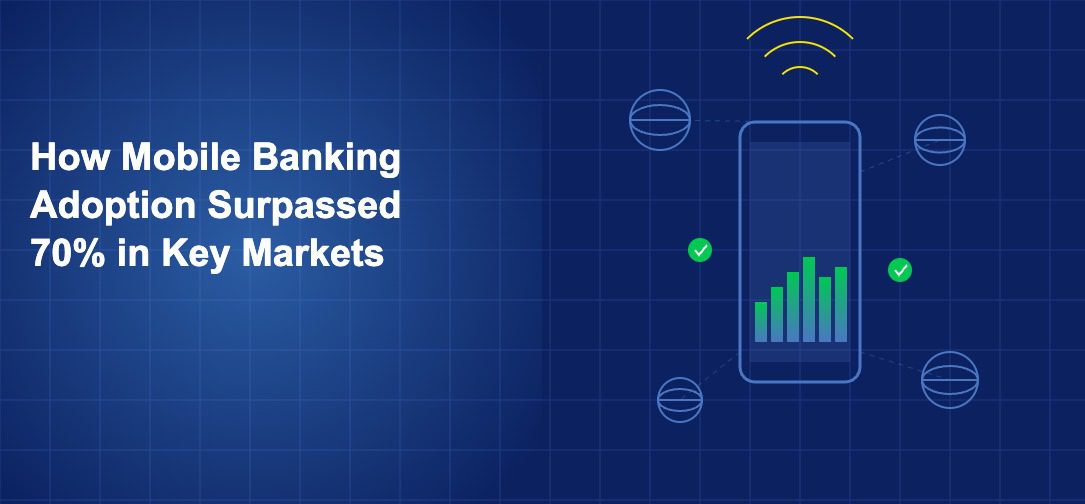
Mobile banking adoption has surpassed 70% of the adult population in several major economies, according to a 2024 report by the GSMA. In South Korea, mobile banking penetration reached 78% in 2024. In China, the figure exceeded 85%, driven by Alipay and WeChat Pay. The United Kingdom, Sweden, and the Netherlands all crossed the 70% threshold by mid-2024, according to data from the European Banking Authority. This shift is redefining how banks allocate resources, build technology, and compete for customers.
The Drivers Behind 70% Adoption
Smartphone penetration is the most direct factor. There are now more than 6.9 billion smartphone users worldwide, according to Statista, up from 3.6 billion in 2016. In markets where smartphones are affordable and mobile internet is reliable, mobile banking adoption has followed closely. India, which added more than 500 million smartphone users between 2017 and 2024, saw mobile banking transactions grow from 2 billion per quarter to over 35 billion per quarter in the same period, according to the Reserve Bank of India.
Government policy has also pushed adoption. India’s Unified Payments Interface, launched in 2016, processed more than 13 billion transactions in December 2024 alone, as reported by the National Payments Corporation of India. Brazil’s Pix instant payment system, launched in 2020, reached 160 million registered users by 2024, according to the Central Bank of Brazil. Both systems are free to use for consumers, which accelerated adoption among lower-income populations.
The COVID-19 pandemic created a permanent shift. A 2022 McKinsey survey found that 73% of consumers who adopted mobile banking during the pandemic continued using it as their primary banking channel. Branch visits dropped by 30% to 50% across major markets between 2019 and 2024, according to data on digital banking customer growth. Banks responded by closing branches. The US lost more than 4,000 bank branches between 2020 and 2024, according to S&P Global Market Intelligence.
Which Markets Are Leading
China leads globally with the highest mobile banking usage rates. More than 1 billion people use mobile payments regularly through Alipay and WeChat Pay. These platforms process more than $30 trillion in annual transaction volume, according to the People’s Bank of China. Mobile banking in China extends beyond payments to include lending, insurance, investment, and even government services.
South Korea ranks second. KakaoBank, a mobile-only bank, has more than 23 million customers in a country of 52 million. Toss, another fintech app, has 22 million users. According to the Bank of Korea, 78% of adults used mobile banking at least once per month in 2024, up from 58% in 2020.
In Europe, Sweden is approaching a cashless economy. Fewer than 10% of transactions in Sweden involve physical cash, according to the Riksbank. The Swish mobile payment platform is used by 8 million of Sweden’s 10 million residents. The Netherlands and Finland have similar adoption rates, with mobile banking penetration above 75% in both countries.
In Africa, mobile money platforms like M-Pesa have driven a different form of mobile banking adoption. Kenya’s M-Pesa has more than 51 million active users across East Africa, processing over $300 billion in annual transactions, according to Safaricom’s 2024 annual report. While these platforms differ from traditional mobile banking apps, they serve the same function of enabling digital financial access for populations without bank accounts.
Impact on Bank Operations and Strategy
Banks that fail to invest in mobile platforms risk losing customers. A 2024 J.D. Power survey found that customer satisfaction scores were 15% higher for banks with top-rated mobile apps compared to those with average apps. JPMorgan Chase, which invested more than $15 billion in technology in 2024, reported that 70% of its retail interactions now occur through its mobile app, according to its annual shareholder letter.
Cost savings are significant. Serving a customer through a mobile app costs approximately $0.10 per transaction, compared to $4.00 at a branch, according to a 2023 analysis by Bain & Company. Banks with high mobile adoption rates are reallocating spending from physical infrastructure to digital product development, cybersecurity, and data analytics.
The 70% threshold matters because it represents a tipping point. Once mobile banking becomes the default for a majority of customers, banks can redesign their operating models. Branches shift from transactional hubs to advisory centres. Call centres shrink as chatbots and in-app messaging handle routine inquiries. Fintech companies are capturing a growing share of these digital-first customers.
Barriers to Further Growth
Despite high adoption in leading markets, global mobile banking penetration remains uneven. In Sub-Saharan Africa, smartphone penetration is still below 50%, according to the GSMA. In parts of South Asia and Latin America, unreliable internet connectivity limits mobile banking usage in rural areas.
Security concerns remain a barrier for older demographics. A 2024 survey by Deloitte found that 38% of consumers over 60 cited fraud risk as their main reason for avoiding mobile banking. Banks are addressing this with biometric authentication, real-time fraud alerts, and simplified app interfaces designed for less tech-savvy users.
Regulatory fragmentation also slows adoption. Open banking regulations, which allow third-party apps to access bank data with customer consent, have been implemented in the EU, UK, Australia, and Brazil. But the US, Japan, and several Asian economies lack comprehensive open banking frameworks, limiting the development of fintech ecosystems that drive mobile adoption.
The markets that have crossed 70% mobile banking adoption share common traits: high smartphone penetration, supportive government policy, competitive fintech sectors, and strong digital infrastructure. As these conditions spread to more countries, mobile banking in emerging markets is expected to follow the same trajectory. The GSMA projects that global mobile banking users will exceed 3 billion by 2028, up from approximately 2 billion in 2024.