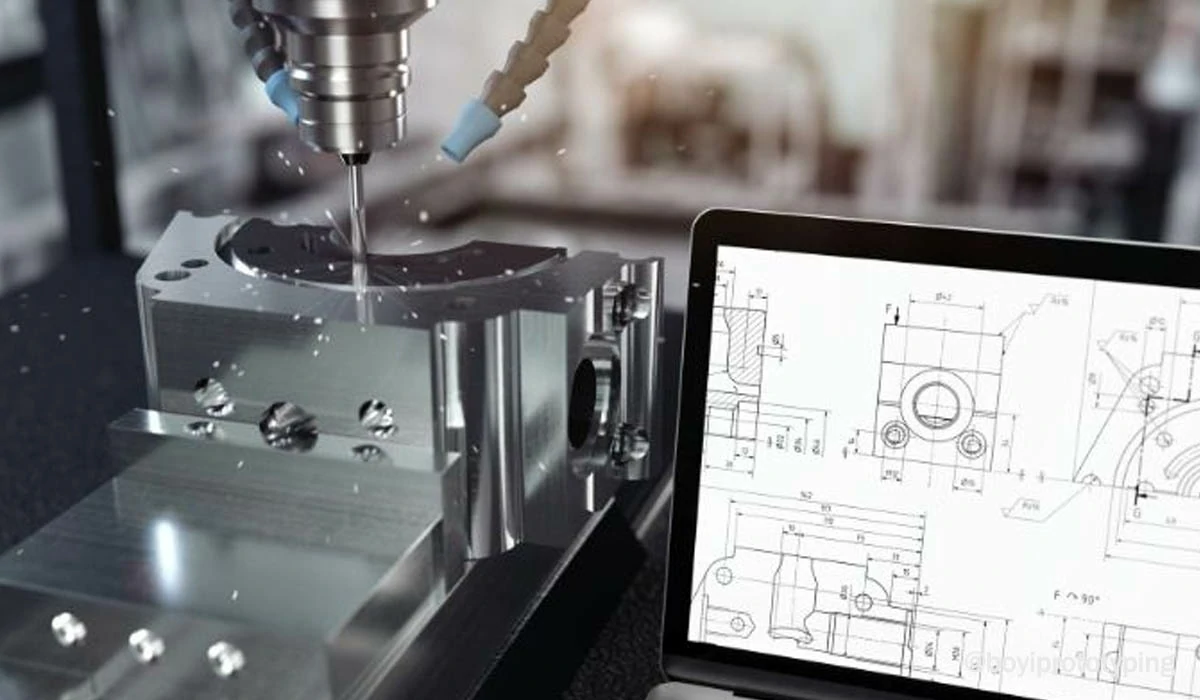
Scaling a product from early-stage prototype to full-scale production is one of the most critical phases in manufacturing. What works in small quantities must remain accurate, repeatable, and cost-efficient at higher volumes. Dimensional tolerances cannot drift, surface finishes must remain consistent, and lead times must stay competitive.
That’s where precision cnc turning becomes a strategic advantage. It provides the accuracy and repeatability needed to move confidently from development to mass production.
Let’s explore how precision CNC turning supports scalable growth in modern manufacturing.
The Challenge: Bridging Prototype and Production
During prototyping, manufacturers focus on:
- Design validation
- Material testing
- Fit and function checks
- Iterative refinement
However, once a design is finalized, scaling introduces new demands:
- Consistent tolerance control
- Faster cycle times
- Reduced scrap rates
- Batch-to-batch repeatability
- Cost efficiency at volume
Without the right machining capabilities, quality can suffer during expansion.
1. Accurate Prototyping for Reliable Validation
Precision CNC turning ensures that prototype parts reflect final production standards.
Benefits include:
- Tight dimensional tolerances
- Controlled surface finishes
- Complex geometry accuracy
- Material versatility
When prototypes are machined with production-level precision, design validation becomes more reliable and fewer changes are required during scale-up.
2. Seamless Transition to Production
One of the key advantages of CNC-based processes is program retention. Once machining parameters are optimized during prototyping, they can be reused and refined for production.
This enables:
- Faster production ramp-up
- Minimal reprogramming
- Stable tool path control
- Reduced setup errors
Consistency is maintained as volumes increase.
3. Repeatability at Scale
Scaling requires maintaining exact dimensions across hundreds or thousands of components.
Precision CNC turning provides:
- Automated spindle control
- Stable feed rates
- Programmable tool positioning
- Consistent part geometry
Automation eliminates variability that often appears during manual scale-up.
4. Improved Cycle Time Optimization
During prototyping, speed is secondary to accuracy. In production, both matter.
CNC systems allow manufacturers to:
- Optimize tool paths
- Reduce idle time
- Automate tool changes
- Improve machining efficiency
This maintains precision while meeting higher volume demands.
5. Reduced Scrap and Rework
As volume increases, even small error rates become costly.
Precision CNC turning minimizes:
- Dimensional rejection
- Surface finish inconsistencies
- Alignment errors
- Material waste
Lower scrap rates directly improve profitability during production scaling.
6. Capability to Handle Complex Geometries
Modern product designs often include:
- Multi-diameter profiles
- Threaded features
- Internal bores
- Tapered surfaces
- Precision grooves
CNC turning systems execute these features consistently across batches, ensuring design integrity is maintained at scale.
7. Strong Quality Control Integration
Scaling production requires robust quality assurance.
Precision CNC turning integrates with:
- Coordinate measuring machines (CMM)
- Digital inspection systems
- Statistical process control (SPC)
- Real-time measurement verification
Continuous monitoring ensures that quality remains stable throughout expanded production runs.
8. Material Versatility for Growing Product Lines
As businesses expand, they may introduce new materials or product variations.
Precision CNC turning supports:
- Stainless steel
- Aluminum alloys
- Titanium
- Brass
- Engineering plastics
This flexibility allows manufacturers to diversify offerings without changing core machining processes.
9. Cost Efficiency Through Automation
Automation reduces:
- Labor dependency
- Setup errors
- Manual adjustments
- Production delays
As volume grows, automated precision machining becomes more cost-effective than manual processes.
Final Thoughts
Moving from prototype to production is a defining stage in a company’s growth. The ability to scale without sacrificing accuracy or efficiency determines long-term success.
By leveraging precision cnc turning, manufacturers gain the dimensional control, repeatability, and automation required to support sustainable expansion. It is not just a machining method—it is a strategic foundation for scalable, high-performance manufacturing.