
FinTech Lab / Simulation in America: Use Cases, Benefits, Risks, and Long-Term Opportunities

The fintech lab and simulation in America has become a fixture of the countrys financial sector, from university trading floors and bootcamp sandboxes to the testbeds inside major banks and the regulatory sandboxes that let startups trial new products. North America held 36.46 percent of the global simulation software market in 2025, the largest regional share, per Mordor Intelligence.
America matters here because its schools, banks and regulators have made safe, simulated testing a normal part of building financial technology. This article looks at the use cases, benefits, risks and long-term opportunities of the fintech lab and simulation in America, against a corporate training market worth $102.55 billion in 2025 that leans on realistic practice, per Mordor Intelligence.
How the fintech lab and simulation took root in America
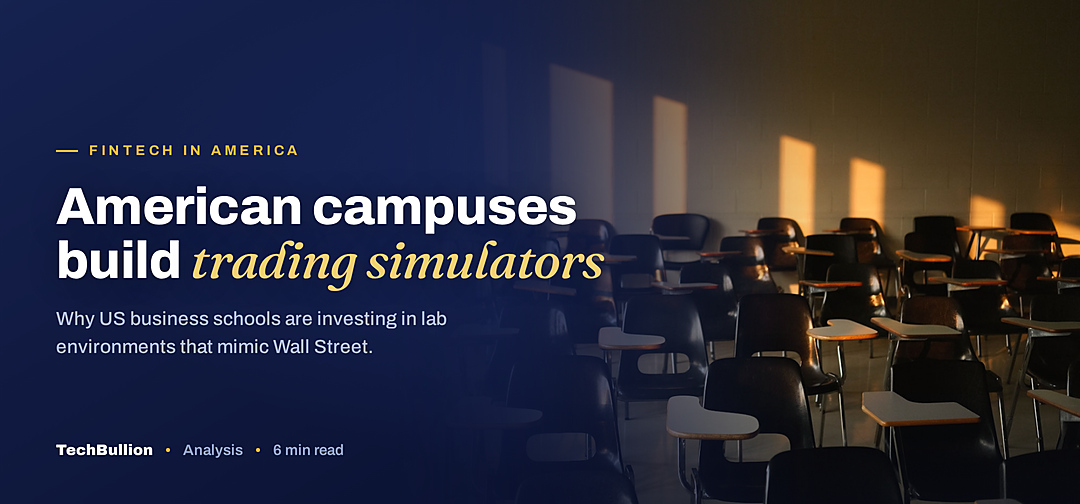
US universities built the first teaching labs. Business schools installed trading simulators and virtual markets so finance students could practice safely, and the model spread as employers demanded graduates with hands-on skill. These campus labs made simulated practice a familiar part of American financial education.
Banks adopted simulation for risk and testing. Large US institutions made stress testing and product simulation a standard step, partly driven by regulation after past crises, so rehearsing outcomes became routine, the disciplined habit we connect to agentic AI tools in finance. The practice turned simulation into core risk management.
Regulators added sandboxes for innovation. American agencies and states experimented with regulatory sandboxes that let fintechs trial products under oversight, and North America now leads the simulation software market, as the table shows. These sandboxes let new ideas be tested safely rather than blocked or launched blind.
| Metric | Figure | Source |
|---|---|---|
| Simulation software market, 2026 | $15.46 billion | Mordor Intelligence |
| Market, 2031 (projected) | $28.59 billion | Mordor Intelligence |
| Forecast CAGR, 2026 to 2031 | 13.08 percent | Mordor Intelligence |
| North America revenue share, 2025 | 36.46 percent | Mordor Intelligence |
| Cloud and SaaS delivery growth | 13.22 percent CAGR | Mordor Intelligence |
| Corporate e-learning market, 2025 | $102.55 billion | Mordor Intelligence |
Sources: Mordor Intelligence simulation software report; Mordor Intelligence corporate e-learning report.
Leading use cases in the US market
Trading and market practice lead in education. American universities and trading firms run market simulators where students and staff test strategies with virtual money, the hands-on logic Mordor ties to training uses of simulation software. These labs let people learn the discipline of trading without risking real capital.
Risk and fraud testing dominate in banks. US institutions simulate crashes, fraud waves and stress scenarios to harden their systems, the same vigilance we describe in our guide to recovering stolen assets. Rehearsing rare disasters in the lab is how American banks prepare for events they hope never to face.
Product sandboxes drive startup innovation. American fintechs use sandboxes to trial payments, lending and wallet products before launch, the practical pairing we examine in managing money and crypto in one app. These confined tests let young firms prove ideas while keeping consumers protected from untested products.
The benefits for American consumers and firms
The first benefit is safer products. US financial tools are stronger because firms test them in simulation first, catching flaws before they reach real accounts, the readiness that matters as systems grow complex. Consumers rarely see the lab, but they benefit from fewer failures and more reliable services.
The second is faster, responsible innovation. American sandboxes let new ideas be tried under watch, so the market gains fresh products without exposing customers to raw risk, the practical innovation we link to cross-border payment solutions. Simulation lets the US move quickly while keeping a safety margin.
The third is a stronger workforce. Because many US professionals learn through simulation, realistic labs raise the skill of the people building financial systems, the personalization logic we connect to AI in financial advisory services. Better-trained builders ultimately produce better tools for American consumers.
The risks and honest criticisms
Flawed models are the central risk. An American lab that misjudges market or customer behavior can teach the wrong lessons and breed false confidence, which is why firms must test their simulations against reality. A model trusted blindly is more dangerous than no model at all.
Live conditions can still surprise. A US product that passes every simulation may behave differently under real scale and human behavior, so labs lower risk without removing it, the lasting reality we examine in working with verified developers. Treating a clean simulation as final proof is a mistake careful firms avoid.
Access and cost create gaps. The most realistic American labs often sit at large banks or well-funded schools, so smaller players can fall behind, the inclusion concern responsible providers must address. Cloud tools help, but spreading access to quality simulation across the US remains unfinished work.
Long-term opportunities for US players
The durable bet is cloud simulation. American providers that deliver realistic, affordable labs over the cloud could reach far more schools, banks and startups, and Mordor notes cloud delivery growing faster than the overall market. Scaling access to simulation is a large and lasting opportunity for US technology firms.
Better data and AI raise realism. US labs that use richer data and machine learning to model behavior more faithfully will produce more trustworthy results, the careful engineering we connect to agentic AI tools in finance. The institutions that improve realism fastest will hold an edge in testing and training.
Standards and oversight are strategic. As sandboxes spread, the American regulators and firms that set clear, trusted rules for simulated testing will shape how innovation and safety coexist, a position that compounds over time. Defining good practice early becomes lasting influence over US fintech.
Reading the trend with discipline
Demand realism over scale. The honest American playbook is to value faithful models over flashy volume, since accurate simulations teach true lessons and inaccurate ones mislead. Firms and schools that hold this standard get real protection from their labs rather than false comfort.
Keep verifying in the real world. A simulation is a strong signal, not a guarantee, so US teams should watch closely after launch and feed real results back into their models. This loop between lab and reality is what keeps simulations honest and steadily more useful over time.
The honest conclusion is that the fintech lab and simulation in America is a powerful way to learn and innovate safely, not a substitute for real-world caution. The US schools, banks and regulators that keep models realistic and access wide will be the ones that turn safe rehearsal into a lasting advantage for the countrys financial technology.
For America, the fintech lab and simulation has become the rehearsal space where finance learns and innovates without harm, from campus trading floors to bank testbeds and regulatory sandboxes. The US institutions that keep their simulations realistic and their access broad will sustain safer products and stronger talent, and that quiet rehearsal will keep shaping the financial technology Americans rely on.






Comment