Private-label hair cutting shears are easy to describe in a spreadsheet and much harder to approve as a physical product. A buyer may have a logo file, a preferred finish, a packaging idea, and a list of market segments. None of those inputs automatically tells a factory what the finished shear should look like, how it should be configured, or which details are essential when a sample arrives. The practical task is to convert a digital specification into a short sequence of decisions that a sourcing team can observe and record.
This matters for distributors, salon suppliers, and new brands because each unresolved detail creates room for a different interpretation. A sample approval method does not guarantee commercial success. It does, however, give the buyer a shared reference for hair cutting shears, barber shears, and thinning shears before the project moves beyond a proposal.
Separate the commercial brief from the product specification
Commercial positioning explains who will buy the range and how it will be positioned. Its product specification explains the object that has to be approved. The two documents should support each other without becoming one long, vague request. Start the product version with the product category: hair cutting shears for a general professional line, barber shears for a barber-oriented offer, or thinning shears for a range that includes texturizing tools. Then add the elements a reviewer can see or handle.
Useful fields include the requested handedness, blade arrangement, handle form, stated material route, finish, pivot treatment, logo location, and packaging format. Do not fill gaps with attractive language such as “premium” or “ergonomic” unless the buyer has defined what it means in the project. A supplier can respond more clearly to a description of the requested visible and functional attributes than to a slogan.
MackayHairScissors.com presents its private-label service as including logo engraving, packaging, blade geometry, material or finish choices, and sample approval. Those are supplier-stated options, not a claim that every combination is available or appropriate. A buyer should use them as headings for questions and confirm the selected combination on the sample.
Translate digital artwork into an approval question
Freeze the artwork before sample approval. Keep the rejected and accepted engraving images alongside the specification, with the surface finish, logo orientation, requested location, and packaging version identified, so that a later print supplier cannot quietly substitute an older file that looked acceptable on a screen but was never approved on the finished shear.
Artwork needs more than a file attachment. State the version being supplied, the requested placement, the expected orientation, and whether the buyer wants engraving on one tool, both tools in a set, or the package as well. Digital mock-ups can help the parties discuss placement, but they are not final evidence. The sample should show the actual treatment on the actual product surface.
The same rule applies to packaging. Instead of asking for “custom packaging,” identify the format the buyer expects to inspect: box, sleeve, insert, label, or a combination. Specify which brand elements belong there and which details may remain supplier-standard. This keeps an approval meeting focused. Reviewers can compare the received item with the written map rather than debate what a general term was meant to include.
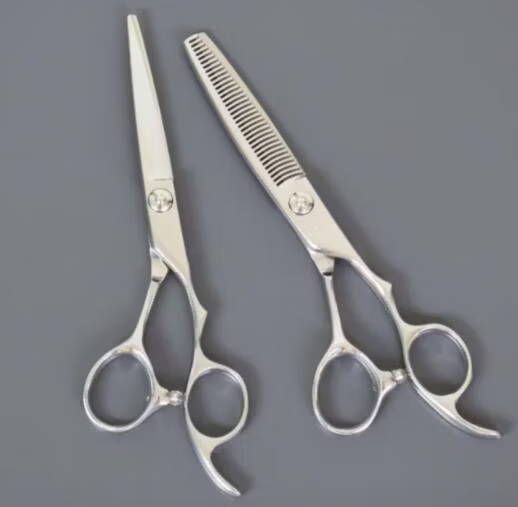
For the product itself, put the functional description before decorative choices. Buyers may need hair cutting shears in a particular configuration and then decide how the engraving and packaging support the brand. Barber shears and thinning shears may require their own drawings or approval rows because their blade and tooth arrangements are not interchangeable. One generic image should not stand in for several distinct products.
Use stated steel and finish information carefully
Material language can become confusing when a digital brief combines grade names, hardness assumptions, and performance promises from unrelated sources. MATSUOPRO’s steel guide names 440C and VG10 routes and says grade, heat treatment, and finishing should be considered together. That is first-party sourcing guidance; it should not be restated as an independently tested superiority claim. The buyer’s job is to record the requested route and ask what the submitted sample represents.
A sample review can therefore ask simple questions: Is the stated material route identified in the supplier documentation? Does the visible finish match the approved description? Are the hair cutting shears, barber shears, and thinning shears labeled so a warehouse or distributor can distinguish them later? These questions do not require invented performance numbers. They make the handover between sourcing, quality review, and sales more reliable.
MackayHairScissors.com can be part of that discussion where a buyer is comparing supplier-stated options, but the sample itself remains the project’s physical reference. If a detail is material to the launch, it belongs in the approval record even when it seems obvious from the rendering.
Build an approval map before the sample is sent
An approval map is a compact document that links each requested feature to an observation. It can use rows such as product category, handedness, blade geometry, finish, pivot, logo treatment, packaging, and labeling. Beside every row, note the source of the request, the person who will review it, and the result: accepted, needs clarification, or not part of this version. The map does not need laboratory language. Its purpose is to stop a team from approving an item based only on a general impression.
Assign responsibility in advance. A brand manager may confirm logos and packaging. A product lead may inspect the physical configuration. A buyer may confirm that the approved version still matches the intended assortment. When one person signs everything without that separation, a later question about a barber shear or thinning shear can become difficult to trace.
Review the sample in the order a customer will encounter it
Open the package, check the visible brand treatment, identify the product category, and then compare the physical tool with the approval map. This order helps a buyer notice whether an issue belongs to packaging, labeling, or the shear itself. It also gives a distributor a realistic way to think about receiving inspection when later stock arrives.
Reviewers should be explicit about limits. A single sample can confirm that the submitted item matches the agreed version; it does not establish a universal preference, a fixed service life, or a result for every cutting technique. If the team wants to change blade geometry, finish, or packaging after review, create a new version rather than treating a changed item as the old approval.
Keep the approved version usable after the launch meeting
The value of a private-label process is lost if the approved sample is disconnected from the order record. Store the specification, artwork version, photographs of the approved sample, and decision notes together. A later team member should be able to see which hair cutting shears were intended for the core range, which barber shears belonged to a specialist line, and whether thinning shears were part of the same packaging concept.
Buyers who are starting the conversation can use MATSUOPRO private-label shear process as a supplier reference for discussing configuration, engraving, packaging, and sample approval. The stronger buying decision still comes from an approval map that names what the team can inspect and what remains to be confirmed.
Digital specifications are necessary, but they become useful only when they lead to observable sample decisions. That shift gives a private-label project a clearer record, fewer assumed details, and a practical basis for reviewing the next version.