
Feeding the Surge: Responding to Seasonal Pressures in Food Supply Chains


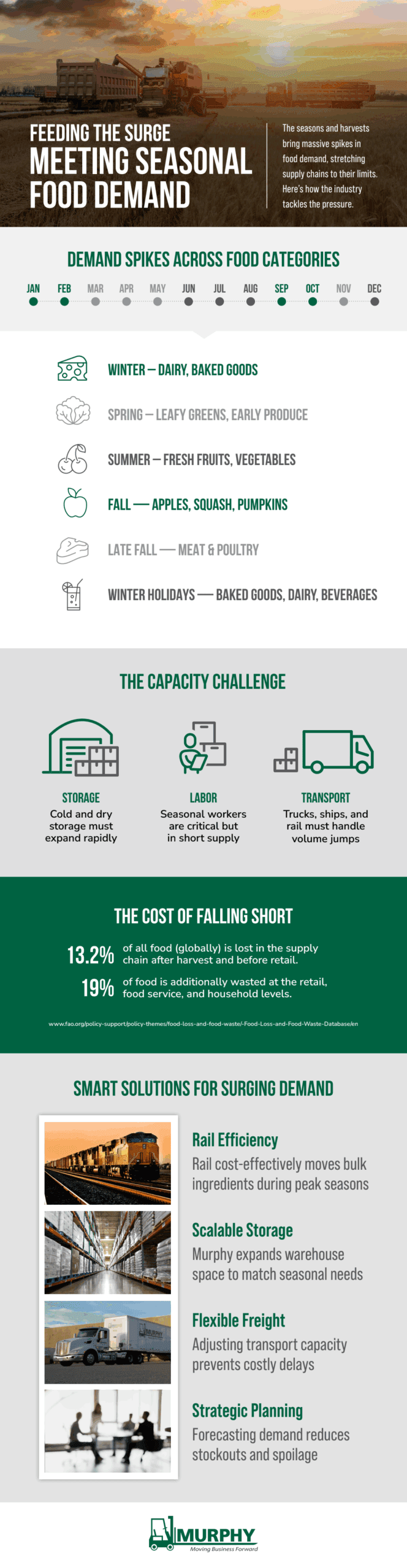
Seasonal changes in food production and consumer demand create constant pressure for supply chains to stay agile and efficient. When harvest volumes surge or market demand spikes, logistics providers must adapt quickly — expanding warehouse capacity, adjusting transportation schedules, and scaling labor resources. But managing these peaks isn’t just about handling larger volumes. Seasonality affects every element of the operation, from packaging and storage to temperature control and order fulfillment. Without a clear strategy, these fluctuations can strain resources, slow productivity, and reduce overall efficiency.
Maintaining Cold Chain Integrity
Among the most demanding challenges in seasonal logistics is maintaining a reliable cold chain. Perishable products — such as fruits, vegetables, dairy, and meat — must remain within strict temperature ranges throughout their journey. Even short interruptions can cause spoilage, leading to product loss, safety concerns, and higher costs across the network.
Ensuring cold chain consistency requires significant investment in refrigeration systems, real-time monitoring, and detailed contingency planning. It also depends on coordination between every partner in the chain — from growers and processors to transporters and retailers. Each plays a vital role in preserving freshness and quality. As consumer expectations for sustainability and product integrity grow, maintaining a seamless cold chain has become both a necessity and a defining competitive advantage for logistics companies.
Packaging, Storage, and Inventory Pressure
Seasonal harvests introduce a unique rhythm to packaging and storage operations. As products move rapidly from fields to warehouses, teams must handle fast turnarounds and fluctuating volumes. Limited staging space, rigid pallet configurations, or outdated inventory systems can quickly lead to congestion, reducing efficiency and accuracy.
Technology-driven visibility helps address these challenges. Advanced warehouse management systems and real-time tracking allow teams to see where delays are forming, optimize space usage, and balance workloads more effectively. With better insight, logistics providers can maintain steady product flow — minimizing waste and maximizing throughput during even the busiest seasons.
Workforce Readiness During Seasonal Peaks
Labor is another critical factor in seasonal logistics. As production and demand increase, so does the need for additional staff to manage inspection, packaging, and shipment. Recruiting, training, and retaining a seasonal workforce on tight timelines can be difficult, particularly in competitive labor markets.
To stay ahead, companies are adopting more flexible workforce strategies — including cross-training programs, labor-sharing models, and partnerships with staffing agencies. By building scalability into their labor plans, logistics providers can meet short-term needs without compromising productivity or service quality.
Anticipating Risk and Disruption
Seasonal operations bring unpredictability. Weather events, transportation delays, and demand fluctuations can all cause disruptions that ripple through the supply chain. The most effective organizations treat these risks as inevitable and prepare accordingly. Building buffer inventory, developing alternative routing options, and establishing rapid-response teams ensure that operations can continue even under stress.
Viewing risk management as a continuous process rather than a one-time exercise builds resilience across the network. The result is a more adaptable, reliable supply chain capable of maintaining performance despite seasonal volatility.
Turning Seasonal Complexity into an Advantage
Seasonal surges are a defining characteristic of the food industry — and for well-prepared organizations, they can also be an opportunity. Companies that plan ahead, invest in technology, and prioritize coordination are better equipped to handle fluctuations smoothly and efficiently. Proactive management not only prevents disruptions but also enhances long-term reliability and trust.
By embracing seasonality as a strategic factor rather than a challenge, logistics providers can strengthen performance, reduce waste, and ensure that fresh, high-quality food reaches consumers year-round.
For deeper insight into managing seasonal logistics and improving performance under variable demand, explore the companion resource from Murphy Logistics, a contract warehousing company.
Read More From TechBullion







Comment