
What Is Titanium Recycling?

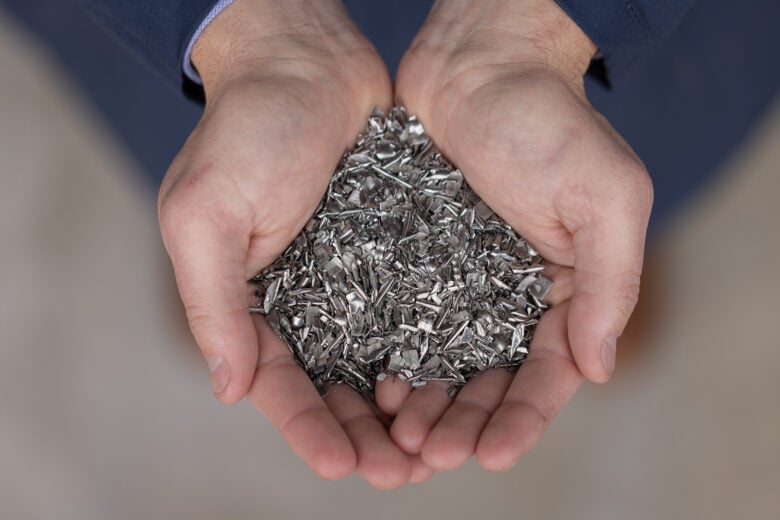
Titanium recycling is a commercial activity that involves the recovery and reuse of industrial titanium waste materials. It is divided into two categories: pure titanium recycling and recycling of titanium materials containing precious metals. DONGSHENG Precious Metals Recycling specializes in the latter, extensively recycling titanium anode mesh, titanium electrodes, MMO (mixed metal oxide) anodes, DSA (dimensionally stable anode) coated titanium anodes, titanium plates, titanium mesh, and high-performance titanium alloys such as GR7 and GR11. After undergoing DONGSHENG’s specialized purification process, these titanium materials with precious metal coatings achieve a purity of 90% to 99% and are reintroduced into high-end manufacturing sectors such as electroplating, chlor-alkali production, seawater desalination, and aerospace. A review published in the *Journal of Iron and Steel Research International* in 2026 noted that currently, less than 20% of the world’s secondary titanium-containing resources are effectively utilized, with the vast majority being stockpiled or discarded. A February 2026 report by Quest Metals similarly confirmed that titanium recovery rates are extremely low, with less than 20% of secondary titanium resources being effectively recovered. This is precisely the root cause of the need for titanium recycling—a massive waste of high-value materials. Titanium recyclers such as DONGSHENG use specialized processes to separately recover the titanium matrix and precious metal coatings from waste titanium anodes, thereby preventing resource loss while generating substantial economic returns.
Which products are typically included in the recycling of titanium with precious metal coatings?
The recycling of titanium with precious metal coatings primarily covers three major product categories: titanium anodes, titanium electrodes, and titanium cathodes. Titanium anodes are core components in the electrochemical industry, featuring a substrate of TA1/TA2 industrial-grade pure titanium coated with a multi-component composite catalytic coating centered on IrO₂ (iridium dioxide). DSA and MMO anodes are widely used in electrolysis cells in the chlor-alkali industry, electrolytic oxidation units in wastewater treatment plants, swimming pool electrolysis cleaning systems, and the electroplating industry. Titanium cathodes, on the other hand, are primarily used in electrolytic reduction processes for recovering heavy metals or degrading chlorinated organic compounds. These products have extremely high recycling value—the titanium substrate itself has recycling value, but the precious metal oxide coatings on the surface, such as iridium and ruthenium, represent the greatest value. Heraeus Precious Metals notes that the recovery rate of platinum group metals remaining in MMO/DSA anodes can reach 95%. DSA anodes typically have a service life of 3 to 5 years, resulting in large recovery volumes and a moderate replacement cycle. Taking a replacement cycle for 500 anodes as an example, traditional pure titanium recycling yields only about $1,500, whereas after a specialized refinery recovers 95% of the precious metals, the rhenium recovery credit per anode alone can exceed $430. This is why professional titanium recyclers are able to extract value far exceeding that of the titanium itself from electrodes that appear to be scrap.
Why Recycle Titanium?
Titanium is sparsely distributed in the Earth’s crust and is difficult to mine. Although global titanium ore reserves exceed 2 billion metric tons, high-quality rutile resources are limited, and primary titanium production is extremely energy-intensive. A 2026 study published by Springer indicated that titanium metal may face “soft scarcity” by 2050, and titanium dioxide supply will be constrained by 2075. At the same time, waste generated during titanium processing accounts for approximately 70% of the raw material. Discarding this waste directly means that every disposal accelerates resource depletion. From an environmental perspective, AMS’s recycling process converts titanium waste into powder that meets additive manufacturing standards, achieving 97% material efficiency and reducing CO₂e emissions by 93.5% compared to traditional supply chains. QinetiQ completed flight test validation in February 2026 using 3D-printed structural components made from recycled titanium powder. In March 2026, Asahi Kasei, in partnership with Nippon Steel, launched a closed-loop recycling system for pure titanium waste from chlor-alkali electrolysis cells. Titanium recycling is not merely a nice-to-have—primary titanium resources are being depleted, while the titanium and precious metals in scrap are just waiting to be reused. Every decision to choose titanium recycling helps preserve more titanium resources for future generations.







Comment