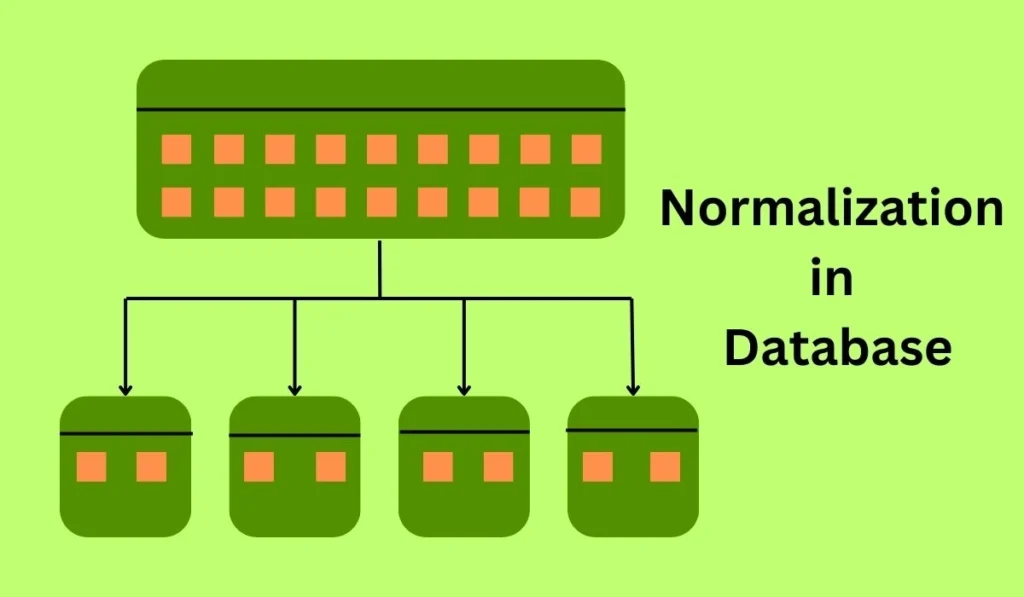
“Normalisation” is one of those terms that appears everywhere in analytics, yet people often mean different things by it. In practice, there are two common uses: database normalisation (organising tables to reduce duplication and errors) and data normalisation for analysis (scaling numbers so they are comparable). Both matter because analytics depends on consistency. A dashboard is only as reliable as the structure of the data underneath it, and a model is only as good as the way its inputs are prepared. This is why normalisation is a practical topic in any hands-on data analyst course and a core concept revisited in a strong data analytics course.
Normalisation in databases: organising data to avoid duplication
Database normalisation is about designing tables so the same fact is stored once, and related facts are linked properly. The goal is simple: prevent inconsistent updates. If a customer changes their phone number, you should update it in one place, not in five different rows.
A simple problem example: one big messy table
Imagine a spreadsheet-like table used for orders:
- OrderID
- CustomerName
- CustomerPhone
- ProductName
- ProductPrice
- Quantity
If a customer places five orders, their name and phone repeat five times. That repetition creates risk:
- someone types a phone number differently in one row,
- a price changes but only some rows are updated,
- and summaries become harder to trust.
Normalisation breaks that big table into smaller, focused tables.
First Normal Form (1NF): make data “atomic”
Atomic means each cell has one value, not a list.
Bad example:
- CustomerPhone = “98765…, 91234…” (two numbers in one cell)
Better approach:
- keep one phone per field, or create a separate “CustomerPhones” table if multiple numbers are required.
1NF is mainly about cleaning structure so the table can be queried predictably.
Second Normal Form (2NF): separate partial dependencies
2NF matters when a table has a composite key (a key made of more than one column). In an orders table, you might uniquely identify a line item using (OrderID, ProductID).
If ProductPrice depends only on ProductID (not on OrderID), it should not live in the order line table. Otherwise, the same product price repeats across many orders.
So you split:
- Orders (OrderID, CustomerID, OrderDate)
- OrderItems (OrderID, ProductID, Quantity)
- Products (ProductID, ProductName, ProductPrice)
Now product details are stored once.
Third Normal Form (3NF): remove transitive dependencies
A transitive dependency is when a non-key column depends on another non-key column, not directly on the key.
Example:
If CustomerCity and CustomerPincode are stored in Orders, you risk inconsistencies if the same customer appears with two cities due to entry variation.
In 3NF, customer attributes move to a Customers table:
- Customers (CustomerID, Name, Phone, City, Pincode)
Real-life use case: In CRM or lead data, normalised structures reduce duplicate fields and make deduplication logic simpler. It also makes permission control easier (for example, restricting personal details while allowing analysis of aggregated orders).
Normalisation in analytics: scaling numbers so they are comparable
When analysts say “normalisation” in a modelling context, they often mean scaling variables so that one column does not dominate others just because of its unit.
Why scaling matters (simple intuition)
Suppose you’re comparing customers using two fields:
- Monthly Spend (₹0–₹50,000)
- Number of Purchases (0–50)
If you feed these directly into a distance-based method (like clustering), spend will overshadow purchases because its numeric range is larger. The algorithm may mostly group people by spend and ignore purchase count.
Normalisation fixes that by bringing values to a similar scale.
Min–Max normalisation (0 to 1)
Formula (plain English):
Take a value, subtract the minimum, divide by the range.
Example: if monthly spend ranges from ₹0 to ₹50,000:
- A customer spending ₹10,000 becomes 10,000 / 50,000 = 0.20
- A customer spending ₹40,000 becomes 0.80
This makes different metrics comparable on the same 0–1 scale.
Z-score standardisation (mean 0, standard deviation 1)
This is used when you want values described by how far they are from the average.
Plain English:
Value minus average, divided by typical spread.
Example: if average delivery time is 3 days, typical spread is 1 day:
- 5 days is +2 (two “spreads” above average)
- 2 days is -1 (one “spread” below average)
This is helpful when you care about “unusually high/low” behaviour.
Real-life use case: Fraud or anomaly detection often relies on standardised features to flag outliers consistently across different variables (amount, frequency, location distance).
A practical checklist: which normalisation do you need?
Use database normalisation when:
- you’re designing storage tables,
- you want fewer duplicates and fewer inconsistencies,
- you need clean joins and consistent updates.
Use scaling normalisation when:
- you are preparing data for modelling or clustering,
- you are combining metrics with very different ranges,
- you want fair comparisons across features.
Learning to pick the right approach is part of becoming effective in real projects—something people usually appreciate once they see it applied in a data analytics course or when they build end-to-end pipelines in a data analyst course.
Conclusion
Data normalisation is not a single trick; it’s a family of ideas that make data consistent and usable. Database normalisation keeps facts stored once and linked properly, which protects your reporting from silent contradictions. Analytical normalisation (scaling) makes numbers comparable, so models and segments reflect behaviour rather than units. If you remember one thing, make it this: normalisation is not about “beautifying data”—it is about reducing errors and improving the reliability of decisions that come from that data.
Contact Us:-
Business Name: ExcelR – Data Science, Data Analytics and Business Analyst Course Training in Hyderabad
Address: Cyber Towers, PHASE-2, 5th Floor, Quadrant-2, HITEC City, Hyderabad, Telangana 500081
Phone Number: 096321 56744