
Can You Buy Meme Coins on Robinhood? What Is Listed, What Is Not, and Where Traders Go

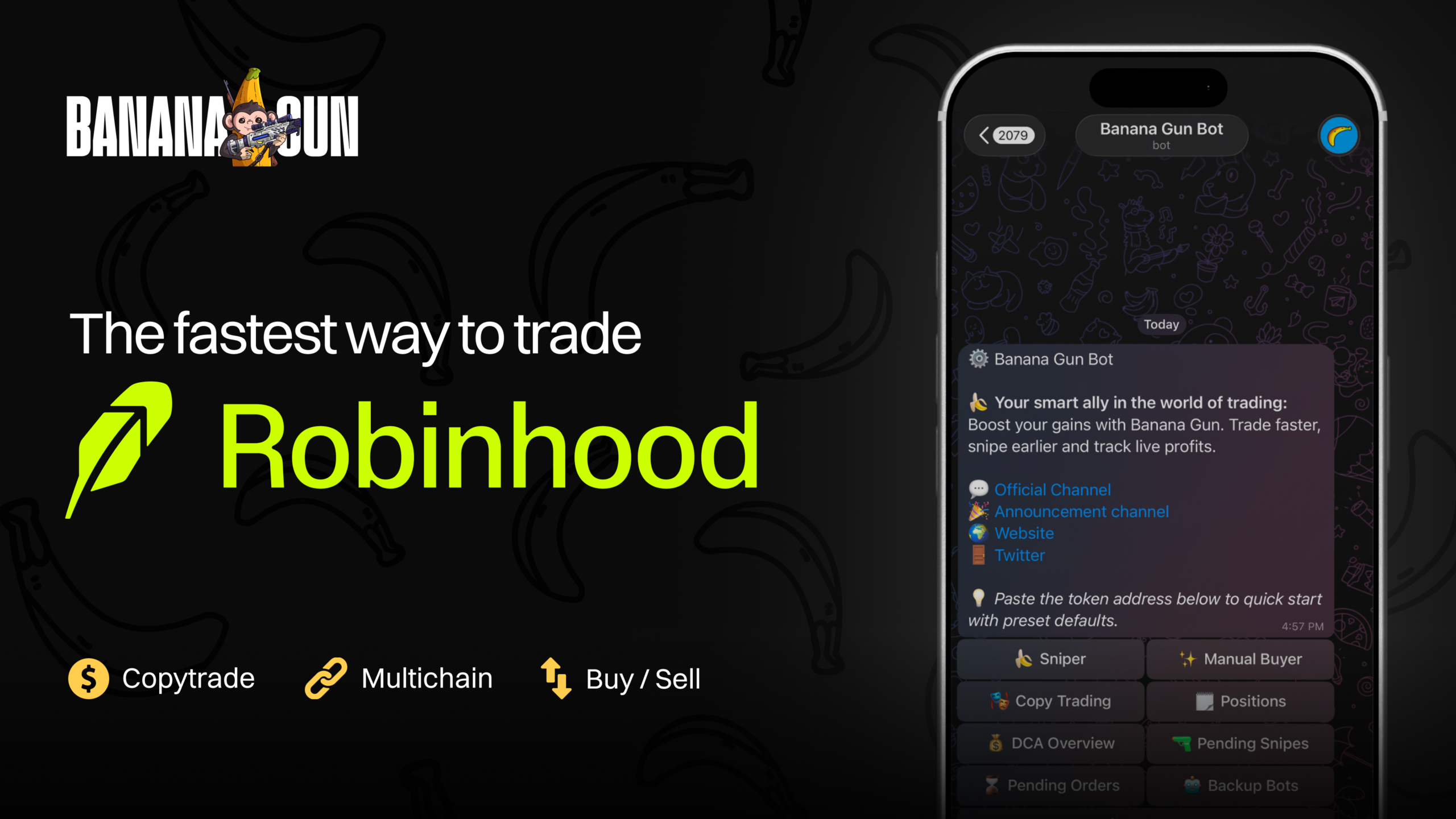
The short answer is that Robinhood carries a curated set of crypto assets, and a meme coin that launched this morning is not in it.
That is not a criticism of the platform. It is a structural consequence of what a brokerage is, and understanding it tells you exactly where to go instead.
Why a brokerage cannot list a new token quickly
Listing an asset on a regulated brokerage involves review. Compliance assessment, liquidity requirements, custody arrangements, operational readiness.
Each of those takes time and none of them can be skipped. A token that has existed for four hours cannot clear a process designed to take considerably longer.
By the time something has passed, the phase most meme coin traders were interested in has already happened.
What that means in practice
Established assets with history and volume can appear on a brokerage. The universe of things you can buy there is small and it lags the market.
Newly launched tokens live on-chain and only on-chain, from launch until whenever, if ever, they clear a listing process somewhere.
If your question is whether you can buy the token being discussed today, the answer is on-chain rather than in an app.
The filter you lose when you leave
The listing process was doing real work on your behalf.
Nothing on a brokerage is a honeypot. Nothing there has a contract permitting unlimited minting. Those risks were screened out before the asset reached you.
On-chain, that screening becomes your responsibility, and it is the single largest adjustment for anyone making this move.
What replaces it
Banana Gun runs honeypot detection by default, simulating the sell path before your buy executes and blocking contracts that cannot be sold.
Anti-Rug and Anti-Rug GWEI carry a documented success rate of 80 to 85 percent according to Banana Gun.
That restores part of the filter. Roughly one attempt in six still gets through, which is why position sizing is doing work the brokerage used to do for you.
Waiting for a listing is its own strategy
Some traders deliberately buy only what has been listed somewhere regulated.
That is a legitimate approach and it has a clear trade-off. You never touch the early phase, and you also never hold a contract that was hostile from the first block.
The returns available are different and so is the failure rate. Judge it as a strategy rather than as timidity, because plenty of people lose more chasing early entries than they would have made waiting.
Robinhood Chain is a different thing entirely
The names overlap and the venues do not.
Robinhood Chain is an on-chain environment. Trading there is on-chain trading with all the same freedoms and responsibilities as any other chain, not an extension of the brokerage experience.
Banana Gun supports Robinhood Chain alongside Ethereum, Solana, Base, BNB Chain and MegaETH, with an integrated bridge.
The one-line answer
Listed assets, yes. This morning’s token, no, and no brokerage will change that.
Custody changes when you move
A brokerage holds the asset for you. Recovery exists, and so does the possibility of restricted access.
Banana Gun authenticates through Privy using Google, Twitter or Telegram, and the setup is non-custodial. Nobody can freeze you and nobody can restore you.
Neither model is better in the abstract. They fail in opposite directions.
What you gain besides access
Order types that a brokerage does not offer.
Trailing stop loss, which follows a rising price and closes on the reversal. Copy trading with Buy Fixed sizing, market cap filters and a Buy Only Once rule blocking repeat entries on the same token for seven days.
Copy trading in particular has no brokerage equivalent, and for a lot of traders it is the actual reason to move rather than the token access.
The costs are structured differently
Banana Gun charges 0.5 percent on Ethereum manual buys and limit orders and 1 percent on other chains.
Then slippage, gas on failed transactions, and value extracted between signature and confirmation. Anti-MEV protection is on by default with Jito routing on Solana, which removes the last of those.
Who should not bother moving
If you buy established assets and hold them for months, the brokerage is the correct tool and leaving adds risk with no offsetting gain.
The move is for people who want things that will never be listed, or order types that only exist on-chain.
The question behind the question
Most people asking this are not really asking about Robinhood.
They are asking whether there is a way to get the token they saw without doing anything unfamiliar. There is not, and pretending otherwise is how people end up on-chain with no preparation.
The unfamiliar part is the price of the access.
How to do it without an expensive education
Keep the brokerage. Fund a small separate on-chain balance. Trade small for a month.
The mechanics are the part that costs money and they are cheap to learn at small size.
For context on how much activity moved once Robinhood Chain went live, this covers the numbers.
You can set up on-chain access here and keep using whatever you already have.




Comment