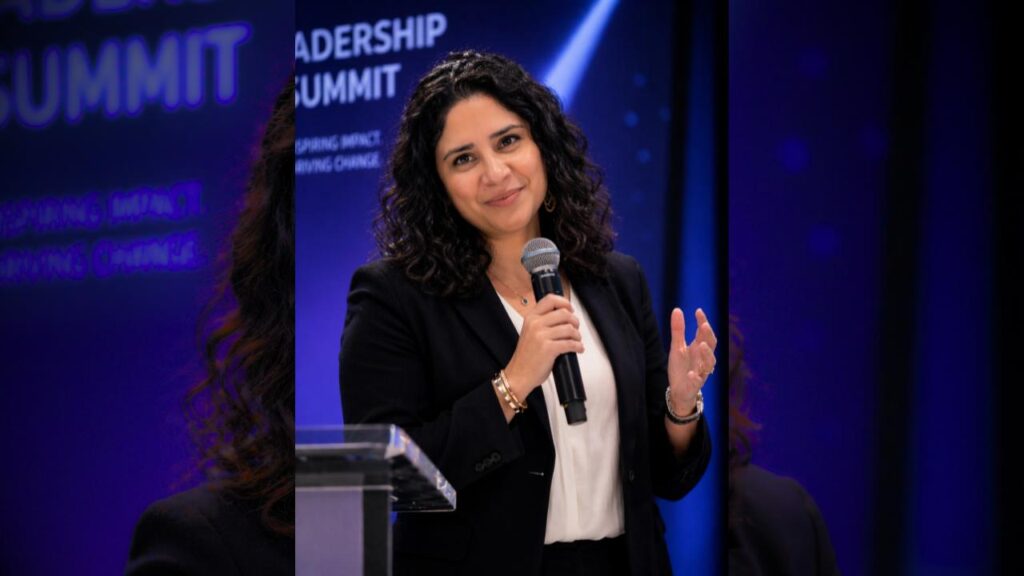
Cars have become software products, but the bar is higher than it appears from the outside. More than 250 million vehicles already support Android Automotive OS, which means in-car software is no longer a niche experiment. It is live, public, and judged in traffic, at charging stations, and in school pickup lines. Neha Heera, Senior Engineering Manager at Toast and an IEEE Senior Member, has spent much of her career on the kind of platform work that determines whether those experiences feel dependable or distracting. To understand what it takes to build Android Automotive OS for real drivers, we spoke with Heera about the state of safety-critical in-car software and what comes next.
Safety Starts With How a Driver Moves Through the Screen
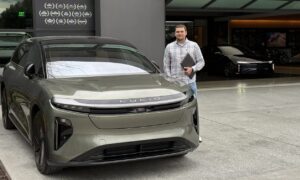
“Cars punish ambiguity,” Heera says. “A phone can recover from a messy gesture. A car cannot. If the control path is unclear, the driver pays for it with attention.” She remembers one bench session when a single turn of the controller landed focus in the wrong pane; the room went quiet because everyone knew that kind of miss would be unacceptable on the road. That memory stayed with her. It shaped her work on rotary input for Android Automotive OS on GM’s Cadillac LYRIQ.
The pressure behind that work is visible in the market. In JD Power’s 2025 study, infotainment remained the most problematic vehicle category at 42.6 problems per 100 vehicles. That is a blunt signal of how unforgiving in-car software can be. Heera led the production rollout of AAOS rotary controls, including the focus-management behavior that keeps non-touch navigation predictable across screens and app states. It had to work the same way every time. The work shipped on LYRIQ, a public EV program that later sold more than 20,000 units in the U.S. in the first three quarters of 2024. That is production software, not a demo.
A Safe Control Model Is Only the Beginning
Once the control model is trustworthy, the next problem appears quickly: system apps are not enough. In 2024, Google was already pointing developers toward a car ecosystem with over 200 million compatible vehicles and nearly 40 models offering Google built-in. That is the scale that changes platform work from a technical exercise into a product problem. It also makes mistakes visible very quickly. Heera’s next AAOS program focused on narrowing the gap between core Android and AAOS so third-party apps could become car-ready without asking every mobile developer to rebuild for the car from scratch.
That sounds procedural. It was not. Her team had to deal with parked-state restrictions, OEM-specific requirements, compatibility gaps, and the simple fact that an app that feels ordinary on a phone can feel wrong in a vehicle. “The easy answer is to block everything,” she says. “The harder answer is to decide what belongs in the car, under what conditions, and then make that decision repeatable for every partner.” The result was platform groundwork that expanded AAOS beyond a closed set of native automotive apps. It also meant making policy and engineering hold together under real rollout pressure.
Parked-Time Experiences Turned Into a Fleet Problem
Once that bridge existed, the work stopped being abstract and became operational. By 2025, more than 50 car models with Google built-in were already on the road. At that point, every rollout decision had a longer tail. The question was no longer whether parked-use apps could exist, but how they would roll out cleanly across OEM programs, partner expectations, and real drivers waiting in real places.
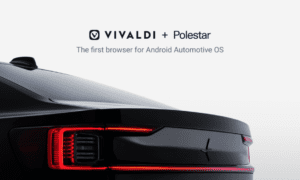
Heera’s program sat in that transition. The point was not to stuff a dashboard with novelty. It was to make distribution rules hold. OEM messaging started to reflect the same idea: Volvo brought Prime Video and YouTube into cars with Google built-in while keeping video available only when the vehicle was stationary, and Polestar framed the same parked-use model as part of a growing in-car app catalog. Those announcements are only the visible layer. The harder work sits underneath them. Somebody has to make those boundaries reliable enough for everyone else to ship on top of them.
The Revenue Story Comes After the Restraint
That discipline matters because the commercial upside is no longer theoretical. The infotainment-enabled digital aftersales market is projected to reach nearly $14 billion by 2030. That makes the in-car app layer more than a convenience feature. Heera saw that logic early: once parked-use apps and partner integrations are done well, platform work stops looking like overhead and starts looking like product strategy. “People do not buy into a platform because the internal plumbing is elegant,” she says. “They buy in when the software feels complete, and when it keeps feeling complete after the car leaves the lot.”
Inside AAOS, the releases she led between 2020 and 2024 were treated as two of the platform’s few launches tied to direct revenue streams, which is why they matter as more than technical wins. Rotary input helped make a flagship OEM program usable in a real driving context. Car-ready apps helped make the broader ecosystem commercially richer. Together, they showed that safety and monetization are not competing tracks when the platform is built carefully. Internally, both were treated as revenue-linked platform launches.
What Will Matter as Cars Become Software Businesses
By 2030, the market for software-defined vehicles is estimated at $400–600 billion, and industry groups expect software-defined vehicles to unlock up to $600 billion in new value. Those numbers are large, but Heera’s point is smaller and more practical: the future will reward teams that sweat the mundane details first. Focus behavior. Parked-state rules. Clear integration paths for OEMs. In that respect, her role as a judge for GenAI Genesis 2026 fits the same pattern. Novel features are interesting; disciplined evaluation is what gets them into production.
That is also why her current role leading Toast Now Mobile still fits this conversation. The devices and users change, and so does the business model, but the operating habit does not: build the path people actually use, then make it reliable under pressure. “Cars will keep adding software, and some of it will be intelligent, but the bar should not fall just because the feature list gets longer,” Heera says. “The teams that last will be the ones that treat safety, restraint, and operability as product features from day one.”