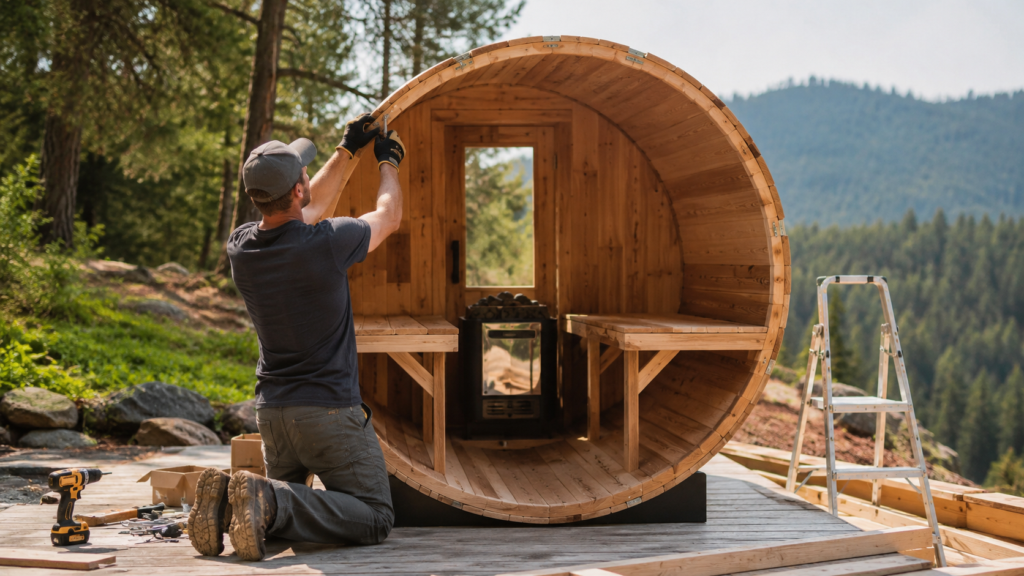
Assembling a barrel sauna kit typically takes a single weekend with two people, basic carpentry tools, and a level pad already set in place. The job moves through six clear stages: prepping the foundation, seating the curved cradles, sliding in the pre-cut staves, tightening the steel bands, hanging the pre-built door and roof, and finally wiring the heater. Most modern kits ship pre-cut and labeled, so the work is mechanical rather than technical, and a careful beginner can finish in roughly six to twelve working hours.
Preparing the Site and Foundation Pad
Before a single board comes out of the crate, the spot you pick will quietly decide how the rest of the build behaves. I always walk the yard with a long level and a measuring tape first, because the cradles that hold a barrel body off the ground need a flat, stable, well-drained surface or the whole structure will torque later. A gravel pad four inches deep works for most yards, though concrete pavers and a reinforced deck both pass the test if they sit dead even.
Clearance matters as much as the pad itself. Leave at least three feet of breathing room around the back and sides for airflow, future stain work, and the inevitable day a band needs re-tightening. Confirm the door swing faces a clear path and that overhead branches will not drip sap onto the cedar. I also like to run a tarp under the assembly zone so screws and washers do not vanish into the grass. These small preparation choices are the difference between a smooth Saturday and a frustrating one, and they cost nothing but ten extra minutes of planning.
Seating the Cradles and Installing the Staves
With the pad ready, set the curved cradles (sometimes called base beams) parallel to one another, spaced exactly as the manual diagrams. The cradles cup the barrel and lift the body for airflow underneath; if they tilt even a degree, the staves upstream will not seat. I shim with cedar offcuts until a marble would not roll. Begin laying the bottom staves first, working outward and upward so the tongue-and-groove edges interlock without forcing.
A rubber mallet is the right friend here, not a steel hammer. Tap each pre-cut stave into its neighbor with light, repeated blows until the joint closes flush. Work around the circumference in a balanced pattern, left then right, the way you would tighten lug nuts on a wheel. If a stave resists, double-check that no shaving sits in the groove and that the previous one is fully seated. Skip the urge to over-pound; red cedar is forgiving but it will dent if you bully it. Patience now means a tight, whistle-free wall later.
Steel Bands, Pre-Hung Door, and Roof Cap
Once the body is closed, the steel bands do the structural work of holding everything in compression. Slide each band over the staves and bring them down to their marked positions, then tighten the bolts in stages, a quarter turn at a time, alternating around the barrel so the load distributes evenly. Listen for the soft creak of wood pulling tight, then stop; you want firmness, not crush. The pre-hung door comes mounted on its jamb, so you simply set the assembly into the front opening, plumb it, and drive the screws provided.
The roof cap is the last shell piece and the one that earns you the dry interior. Whether the kit uses shingles, metal sheeting, or simple weatherproofing membrane, lay it from the lowest edge upward so each course overlaps the one below. Caulk the chimney collar where the heater flue exits and double-check the back gable seam. A small mistake here will not show up until a winter storm, so I always run a hose test before calling it done. This stage takes about an hour and is the most visually satisfying step of the entire build.
Heater Wiring, Benches, and Interior Finishing
With the envelope sealed, the focus shifts to the interior. Set the benches at the staggered heights the manual indicates; an upper and lower tier lets bathers choose their heat zone. Anchor them through the pre-drilled holes, then install the heater guard rail before the unit itself. Whether you chose an electric heater or a wood-burning stove, follow the clearance tables exactly. Electric units running 240V should be on a dedicated breaker, and a licensed electrician is worth the small bill for peace of mind. Saunass curates a tight lineup of American-made home saunas with compatible Harvia and HUUM heaters that simplify this step.
Finishing touches turn a kit into a retreat. Wire the low-voltage LED lights under the benches for an evening glow, screw in a thermometer and hygrometer at eye level, and hang the sand timer near the door. I like to add a small cedar towel hook rail and a water bucket with a long-handled ladle for proper loyly. Avoid varnishing the interior; raw cedar breathes and releases its aroma when heated. A single coat of exterior UV-blocking stain on the outside will, however, double the life of the wood and keep the silver-gray patina at bay.
Realistic Timeline, Tools, and a Second Pair of Hands
Customer reports I trust most cluster around the same range: four to six hours for a smooth two-person build and closer to a full weekend if the pad still needs work. The tool list is refreshingly short, a cordless drill, a ratchet set, a rubber mallet, a four-foot level, a stepladder, and a tape measure cover roughly ninety percent of the moves. A socket extension helps when reaching the rear bands.
Recruit one helper for the heavy lifts, particularly the roof sections and the upper staves, which are awkward solo even when not heavy. I unpack the entire crate and lay parts out in build order before starting; the half hour of sorting saves an hour of hunting. Read the manual cover to cover, even if you have built one before, because brands differ in their hardware callouts. A relaxed pace beats a rushed one, and barrel saunas reward the patient builder with decades of steady, fragrant service.
How long does it take to assemble a barrel sauna kit?
Most two-person teams finish in four to eight working hours spread over a weekend. Site preparation and electrical work can add another day if the pad is not already in place. First-time builders should budget twelve hours to stay relaxed.
Do I need a concrete pad under a barrel sauna?
No, concrete is not required. A compacted gravel pad, a row of paver stones, or a reinforced deck all work as long as the surface is dead level and drains well. Cradles must sit on a stable plane.
Can one person assemble a barrel sauna alone?
Technically yes, but realistically no. The roof sections and upper staves require two pairs of hands to hold and align safely. Working alone roughly triples the build time and increases the chance of cosmetic damage.
What tools come with a barrel sauna kit?
Kits usually include all the hardware, steel bands, and pre-hung door, but not the hand tools. You supply a drill, ratchet, level, and rubber mallet. Read the manifest before starting.
Should I stain or seal my barrel sauna after assembly?
Apply a breathable UV-blocking exterior stain once the wood has settled for two to four weeks. Leave the interior raw so the red cedar can release its aroma and absorb moisture properly during use.