
AI, Agentic Commerce and the Future of Payments: John Lunn on What Merchants and Hospitality Brands Need to Prepare For


For decades, e-commerce seemed like a relatively simple concept. A person would visit an online store, browse the product listings, add items to their shopping cart, enter their payment details, and complete the purchase via checkout. Now, this commerce model is changing rapidly due to the growth of international e-commerce and the rise of artificial intelligence (AI). It is causing the payments industry to enter a new period of disruption.
Consumers already expect transactions to be fast, convenient, and increasingly personalised. At the same time, businesses are now operating across multiple countries, payment providers, currencies, fraud systems, and regulatory environments. They must understand the needs of their target consumer demographic in multiple locations while complying with many different local government policies and securing all consumer payments and personal information.
Businesses face a heavy burden already. In addition, AI is adding another layer of complexity to all this, with AI assistants beginning to influence how consumers discover, compare, and select products and services. As these technologies develop into more capable AI agents, they could increasingly act as personal shoppers or travel assistants and potentially facilitate or initiate transactions on consumers’ behalf. AI is not simply changing what consumers buy, but also how purchasing decisions are made, and transactions themselves are conducted.
How will merchants be able to meet consumer demand if AI makes purchasing decisions and initiates transactions for them?
How Payments Became Increasingly Complex
Digital commerce has evolved from relatively straightforward online card transactions into a global ecosystem. Businesses expanding internationally now have to manage multiple payment service providers, digital wallets, alternative payment methods, regional payment preferences, currencies, fraud-prevention systems, tokenisation, and cross-border transactions. Meanwhile, they have to comply with different regulatory requirements across numerous international markets. The increasing popularity of mobile commerce and AI-driven commerce is not helping either.
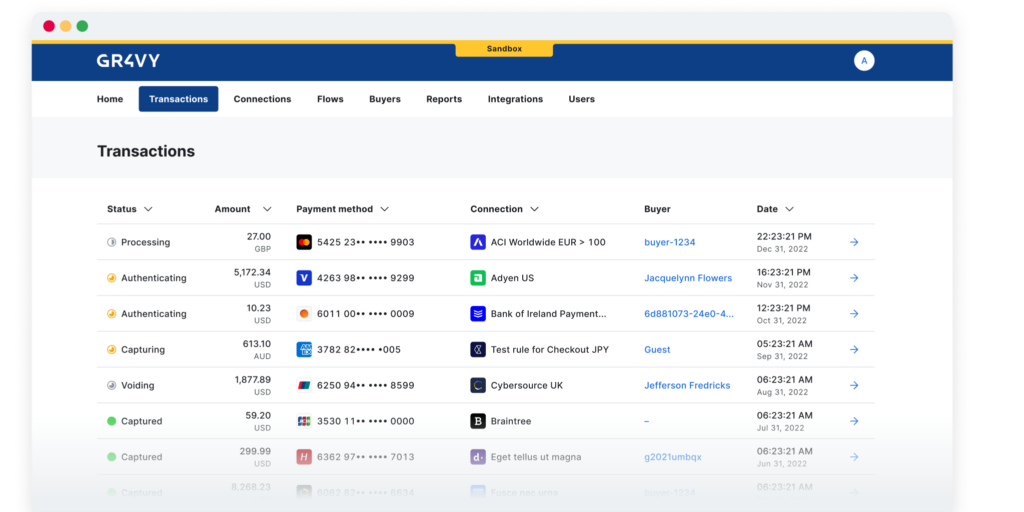
All this complexity has contributed to the emergence of payment orchestration, which is when merchants establish a single software platform to manage multiple payment gateways and tools. It basically creates a centralised payment management system, where businesses can manage hundreds of payment methods through a single integration from one interface. Payment orchestration provides businesses with greater flexibility in how their payments are routed and managed to support their growth.
John Lunn’s Perspective on the Evolution of Payments
John Lunn is the founder and CEO of Gr4vy, with more than 21 years of experience working in financial services, payments, and security. His background in digital payments includes leadership positions at CyberSource, where his contributions led to Visa purchasing CyberSource for a whopping $2 billion in 2010. Lunn later joined PayPal’s Developer Relations team and helped launch a $350 million venture capital fund called PayPal Ventures.
Lunn and a team of payment experts founded Gr4vy in 2021. They bring more than 50 years of combined leadership experience working in many of the world’s top payment and commerce companies, including eBay, Braintree, Visa, Google, PayPal, Wonga, and Yoyo. The team’s mission is to empower businesses and payment platforms to deliver fast and secure payment solutions through the company’s no-code cloud payment orchestration platform.
“Our team has been immersed in the world of financial technology since 1997, when I had the privilege of participating in pioneering the creation of the first online PSP,” said Lunn. “Since then, our passion has been focused on delivering seamless and secure payment solutions for both consumers and merchants through the creation of the world’s first cloud-based payment orchestration platform.”
Lunn is one of the first prominent figures from the business community to publicly call out the challenges that modern businesses face as commerce becomes increasingly fragmented, globalised, and AI-driven. The business leader gave recent commentary regarding how AI, changes in traveller behaviour, and payment friction are reshaping hospitality and travel.
“What I’ve seen throughout my career is that payments are never really stationary. Every major change in commerce creates new demands for the payment infrastructure underneath it,” said Lunn. “At CyberSource, I witnessed the early growth of digital commerce and the importance of making online transactions secure. At PayPal, I saw what happened when payments became a fundamental part of ecommerce. Those experiences shaped my belief that payment infrastructure needs to be flexible. You can’t build it around today’s requirements and expect it to work the same way for the next ten years.”
The Rise of Agentic Commerce
The rise of agentic commerce has created new payment, fraud, and compliance challenges for merchants. Agentic commerce is a new type of online shopping experience where AI agents conduct all the necessary shopping tasks on the consumer’s behalf. The newest AI agents can perform the following tasks for consumers:
- Search for products
- Compare different product prices
- Evaluate alternative product options
- Make product recommendations
- Plan travel itineraries
- Choose hotels and flights
- Communicate with businesses
Payment networks are currently developing the infrastructure to establish fully autonomous purchasing capabilities for AI agents. It could potentially eliminate the human consumer from an entire transaction by having AI agents compare historical preferences with recent product data to make purchasing decisions on the consumer’s behalf. While this might sound innovative and beneficial for consumers, it could lead to some potential setbacks as well.
The Payment Blind Spot Created by AI Agents
John Lunn argues that agentic commerce could create new blind spots for merchants if they are not careful. After all, traditional payment systems generally assume a recognisable relationship between consumers, merchants, and payment providers. There is no misunderstanding of each entity’s intentions.
On the other hand, AI agents create new payment blind spots when they are introduced as another participant to the group. The biggest blind spot is the inability for the merchant to know if the consumer authorised an AI-based purchase. What happens if the AI agent purchases a product that the consumer doesn’t want? How does the merchant know that some hacker didn’t intercept a consumer’s AI agent and cause it to make unauthorised purchases?
Merchants need to consider the following payment blind spots created by AI agents:
- Consumer authentication
- Payment authorisation
- Fraud
- Identity
- Consent
- Chargebacks
- Disputes
- Data protection
- Merchant liability
- Regulatory responsibility
Lunn wants merchants to consider these issues before agentic commerce reaches mass adoption because it will help ensure that most or all of their consumer payments are legitimate and authorised. It is beneficial to a merchant to protect their customers because the transactions happen at their online stores. If customers experience fraud or other issues with their transactions, they will think negatively of the merchant. It may even cause the merchant some legal liability as well.
Visa’s Trusted Agent Protocol has already begun addressing these issues by using cryptographic signatures to verify the legitimacy of AI agents and the identity of the human consumers initiating them. It helps reduce unauthorised purchases and fraud.
Regulatory and Fraud Challenges
Agentic commerce creates a lot of uncertainty regarding regulatory responsibility. Lunn believes existing payment rules may struggle to accommodate transactions involving AI agents because those rules were created before AI agents ever existed. Regulators and lawmakers could not have foreseen a situation where AI agents would initiate transactions for human consumers.
So, who is responsible when a customer suffers personal or financial damages due to the actions of an AI agent on a merchant’s website? Some people would assume the merchant or payment provider would be responsible if a customer is the victim of fraud based on the AI agent’s actions. But no one should make these assumptions because it is new legal territory.
When an AI agent makes a purchase, the entity responsible for any fraudulent events will depend on the local or national laws, technology involved, and the contractual agreements outlined on the website. Merchants, payment providers, and regulators will need greater clarity on how AI agents function before the parties responsible become clear.
Fraud will likely evolve when AI systems become more involved in online transactions. Even though AI agents can make digital commerce more efficient, they can also be exploited by those who wish to commit malicious activity. Merchants and payment providers should monitor the latest industry rules and standards concerning AI, payments, authentication, and consumer protection to stay protected. Regulators will need to continuously update their rules and regulations as AI systems become more advanced.
Bringing the Issue into Hospitality and Travel
The hospitality and travel industries have millions of transactions online daily. Travellers increasingly discover travel destinations and hotel accommodations through a variety of online sources, including the following:
- Social media
- Creators and influencers
- Online travel agencies
- Comparison websites
- Search engines
- Recommendation platforms
Now travellers are using AI-powered tools and trip planners to recommend travel destinations and hotel accommodations. Instead of working with a human travel agent, they work with an AI travel agent to make recommendations based on the traveller’s budget, desired location, hotel reviews, loyalty benefits, cancellation terms, and more. The AI agent can automatically make the necessary reservations and payments on behalf of the traveller.
Unfortunately, the same problems with AI agents can also impact hospitality and travel. What if the AI agent makes bad travel recommendations, or reserves hotels and flights that the traveller doesn’t want? What if a hacker uses malicious AI agents to make fraudulent payments or travel arrangements in someone else’s name?
Why Payment Friction Can Cost Hotels Bookings
The payment experience is part of the customer experience. If a traveller booking a hotel online has to deal with a slow checkout, failed transaction, currency issues, poor mobile visibility, or unsupported payment method, they are not going to want to stay at that hotel anymore. Nobody wants any payment friction during the stressful process of booking a hotel.
Since travellers compare alternative hotel prices and accommodations regularly, a hotel cannot afford to have these kinds of interruptions for consumers on their booking websites. It will cost them significant numbers of hotel bookings if the issues remain unresolved for too long. Travellers will turn to the booking platforms that don’t cause this same friction.
AI agents run the risk of causing these problems if they fail to factor in the preferences and requirements of travellers searching for hotel rooms. When an AI agent evaluates hotels according to a traveller’s preferences, payment flexibility is one of the main factors affecting their decision to stay at a particular hotel.
For example, let’s say a traveller tells their AI agent to “book the best hotel you can find and use my preferred payment method.” What happens if the AI finds a good quality hotel, but its booking system doesn’t support your preferred payment method? The AI might fail to book the hotel room based on this one setback.
AI Travel Planning Changes the Competitive Landscape
Travellers have traditionally searched dozens of hotel websites to find the one with the best accommodations for their needs. It is a timely and tiresome process that travellers have never enjoyed. But what if AI could automatically conduct all the research and make relevant recommendations to travellers?
A traveller could ask an AI agent to find the best accommodations based on more specific criteria of theirs, such as the following:
- Location
- Budget
- Facilities
- Reviews
- Previous preferences
- Loyalty benefits
- Cancellation policies
- Payment options
If AI becomes an important intermediary between hotels and consumers, traditional brand loyalty may become less influential in making some purchasing decisions. The quality and flexibility of the underlying booking and payment infrastructure could therefore become increasingly important.
Hospitality and travel are a competitive landscape. Hotels need to ensure that their booking systems and payment infrastructure function flawlessly. AI agents don’t care about brand loyalty, but rather finding a fast and supportive platform with the right payment processing providers.
International Travellers and Payment Flexibility
Hospitality is inherently international. A hotel may accept bookings from customers across dozens or hundreds of markets, each with different payment preferences. Payment flexibility allows hotels to process the payment transactions of customers in multiple locations and markets. It eliminates the need for international travellers to sign up for unfamiliar payment processing services, when they can use the one they prefer to make their payment.
But payment flexibility requires more than simply adding different payment methods. Hotels and travel websites need the appropriate infrastructure to manage those payment methods efficiently. They also need to understand local and regional requirements to route transactions successfully.
The Legacy Infrastructure Problem
Large hospitality companies and organisations can sometimes struggle to respond quickly to changing payment expectations. Many of them operate complex legacy technology environments containing multiple booking systems, payment providers, and regional integrations. Adding another payment provider or payment method usually requires significant engineering work, which is time-consuming and costly to execute. This is not sufficient since consumer expectations change fast.
Adding a payment orchestration layer can allow businesses to manage multiple payment relationships without repeatedly rebuilding the underlying infrastructure. Gr4vy is the perfect example of this infrastructure model. The platform is designed to connect businesses with multiple payment providers through a centralised management interface. Any changes to the accepted payment providers can be made right from the interface without having to rebuild the payment infrastructure.
Reliability, Redundancy, and Real-Time Failover
Dependency on a single payment provider can create a severe operational risk for a merchant. What happens if the provider experiences an outage or another processing problem? That merchant would temporarily lose the ability to process certain transactions. Not only would they lose sales from it, but they would also lose potential long-term customers who are unhappy with the experience.
Infrastructure with multiple payment providers can provide greater resilience. If there is a problem with one payment method, a customer’s transaction can be routed to an alternative payment provider of their preference. It coincides perfectly with Gr4vy’s broader proposition around payment resilience and alternative payment routing to retain customers.
What Merchants and Hospitality Brands Should Do Now
Merchants and hospitality brands don’t need to predict exactly how agentic commerce will evolve in the future. However, what they should do is ensure that their payment infrastructure can adapt to the evolution of agentic commerce. It all starts with a practical assessment by examining dependency on individual payment service providers and identifying potential points of failure.
Here is what the assessment should aim to achieve:
- No dependency on a single payment provider
- Build payment redundancy
- Implement intelligent routing and real-time failover
- Use payment orchestration
- Prepare for AI-mediated transactions
- Strengthen authentication and authorisation
- Adapt fraud controls for AI agents
- Review regional payment preferences
- Reduce legacy technology dependency
- Monitor emerging AI and payment regulations
- Build flexibility rather than trying to predict the future
John Lunn founded Gr4vy to help merchants and hospitality brands achieve these objectives. His payment orchestration platform helps businesses manage multiple providers, improve resilience, and adapt their payment strategies without continually rebuilding their technology stack. Merchants and hospitality brands should start with a platform like this if they want to stay competitive.






Comment