
Finding the Best IPTV for Your UK Household in 2026

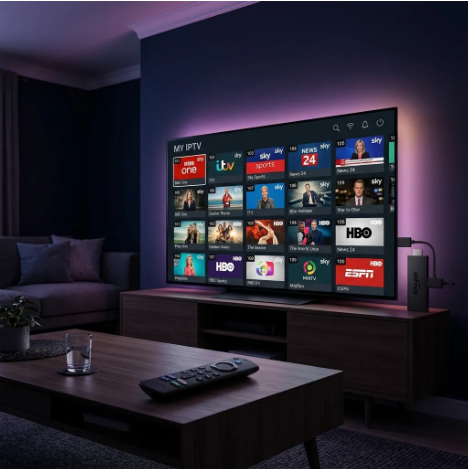
Choosing IPTV for your home in 2026 is less about finding the biggest channel list and more about finding a service that genuinely fits the way your household watches television. A reliable British IPTV Service should work smoothly on the devices you already own, offer enough simultaneous connections for your family, provide useful live and on-demand content, and deliver picture quality your broadband can handle without constant buffering. Price matters, but everyday usability matters far more.
UK viewing habits have become increasingly mixed. One person may want live football on the main television while someone else watches a series upstairs. Children might prefer a tablet, while another family member catches the news on a phone.
That makes choosing IPTV a household decision rather than a simple question of how many channels you can get for your money.
Start With How Your Household Actually Watches TV
Before comparing plans, think about an ordinary evening at home.
How many people are likely to watch at once? Which devices are normally used? Is live sport important? Do you watch mostly films and series? Does anyone regularly miss programmes and need catch-up?
These questions reveal what you actually need.
A person living alone may be completely happy with one connection and Full HD streaming. A family with several televisions could value multiple simultaneous streams much more than a larger on-demand library.
The best IPTV setup is therefore not the one with the most impressive specification sheet.
It is the one that quietly fits into your normal routine.
Check How Many Streams You Need at the Same Time
One of the easiest IPTV details to misunderstand is the difference between supported devices and simultaneous connections.
A service might work on a television, phone, tablet and streaming stick. That does not automatically mean all four can play different streams at the same time.
Tivio currently lets customers choose up to four connections when ordering. The number of people who can watch simultaneously depends on the connection allowance purchased.
That distinction becomes important in a family home.
Imagine someone watching a football match downstairs while another person wants a film in a bedroom. A third member of the household may open a stream on a tablet.
A single connection will quickly become restrictive.
If your home regularly has several active screens, connection allowance should be one of the first things you compare.
Your Television Can Help Decide Which Plan Makes Sense
Not everyone needs 4K.
If your main television is a reliable 1080p screen, Full HD can still look sharp and detailed for ordinary television, films and sport.
Tivio currently lists Full HD viewing with its Standard plan, while Premium includes 4K Ultra HD on supported content and compatible devices.
That wording matters because buying a 4K-capable plan does not turn every programme into 4K.
The original source needs to be available at that resolution. Your television or streaming device must support it, and your internet connection needs enough stable bandwidth.
For households with a large modern 4K television, the Premium option may therefore make more sense.
For a bedroom TV or smaller Full HD screen, the difference may matter much less.
Smart TV or Fire TV Stick?
Both can be practical ways to watch IPTV.
A compatible Smart TV offers a neat setup because the player can run directly on the television. There is no extra streaming stick or separate box to worry about.
A Fire TV Stick can be useful when the television itself still works perfectly well but its built-in software has become slow or limited.
Tivio currently lists compatibility with supported Smart TVs and Fire TV Stick devices, along with Android phones, iPhones, iPads, laptops, Roku and MAG boxes through suitable players.
The key word is compatible.
Different television brands use different operating systems. Even two models from the same manufacturer can offer different apps.
Check your exact device before subscribing instead of assuming every Smart TV supports the same IPTV players.
Home Wi-Fi Can Make or Break the Experience
People often focus entirely on broadband speed when IPTV buffers.
Speed is important, but the Wi-Fi connection inside the house can be just as important.
UK government research published in June 2026 noted that around 80% of IPTV set-top boxes in data supplied by Virgin Media O2 were connected over Wi-Fi. It also highlighted poor in-home Wi-Fi as a cause of interruptions, buffering and reduced picture quality.
That means a fast fibre connection does not guarantee smooth IPTV in every room.
A television may be several walls away from the router.
A Fire TV Stick may sit behind a large screen where Wi-Fi reception is weaker.
Other household devices may also be competing for the same network.
Test the internet connection where you actually plan to watch, not just on a phone standing beside the router.
How Much Internet Speed Does IPTV Need?
There is no single broadband speed that guarantees perfect IPTV because stream bitrate, resolution, network congestion and Wi-Fi quality all matter.
Tivio currently suggests around 10 Mbps of stable available bandwidth for each HD stream and 25 Mbps or more for each 4K stream as practical starting points.
Notice the word available.
If your broadband delivers 100 Mbps but several people are gaming, downloading large files and streaming at the same time, the television is sharing that capacity.
Families considering two, three or four simultaneous streams should allow plenty of spare bandwidth.
A stable connection usually matters more than an impressive speed-test number that fluctuates throughout the evening.
Ethernet Is Worth Considering for the Main Television
Wi-Fi is convenient, but the main TV usually stays in one place.
That makes Ethernet worth considering when practical.
A wired connection avoids many of the problems caused by distance, thick walls and wireless interference.
It will not fix a problem with the stream itself, but it can remove your home Wi-Fi from the list of possible causes.
For a household that watches live television every evening, reliability can be more useful than having one fewer cable behind the television.
Think About Live Sport Differently
Live sport places very different demands on IPTV compared with ordinary on-demand viewing.
A film can buffer for several seconds and recover without ruining the story.
A football match freezing during an attack is much harder to forgive.
Tivio’s Standard package currently includes sports channels and PPV events, while Premium adds additional premium sports coverage and priority streaming during busy periods.
For someone who only occasionally watches sport, that difference may not justify upgrading.
For a household where weekends revolve around live matches, boxing or other major events, streaming performance during peak periods deserves much more attention.
Sport can completely change what represents good value.
Do Not Choose IPTV Only by Channel Count
Large channel figures look impressive because they are easy to compare.
Tivio currently advertises more than 37,000 worldwide channels with Standard and more than 58,000 with Premium. Its listed on-demand libraries contain more than 198,000 films and series on Standard and more than 258,000 on Premium.
Those numbers show a difference in catalogue size.
They do not tell you whether your household needs that difference.
Most families repeatedly watch a relatively small selection of channels.
If someone needs a particular regional channel, sports event or entertainment network, confirming that specific content is much more useful than choosing purely because one package advertises thousands more options.
Tivio itself advises viewers to check availability when a particular channel or event matters.
Films and Box Sets Matter Too
IPTV is no longer only about recreating traditional live television.
On-demand films and series are now a major part of how households use their screens.
One evening may be built around live football. The next could turn into a film night. A quiet Sunday may mean several episodes of the same series.
That mixture is important when comparing services.
A larger catalogue has value when it gives different people in the home something they genuinely want to watch.
It has far less value when the headline number grows but your preferred content is difficult to find.
Quality of choice matters more than quantity alone.
An EPG Makes a Large Service Easier to Use
An Electronic Programme Guide, usually called an EPG, is one of the less exciting IPTV features to talk about.
It is also one of the most useful.
An EPG shows what is on now and what is coming next. Tivio includes programme-guide functionality where the relevant schedule information is available.
Without it, a huge live channel selection can quickly become messy.
You should not need to open several streams just to work out what programme is currently playing.
For households used to familiar UK television guides, a functional EPG makes the move to internet-delivered TV feel far more natural.
Catch-Up Is Useful When the Household Is Busy
Family life and television schedules rarely cooperate perfectly.
Someone gets home late.
Dinner takes longer than expected.
Two programmes overlap.
A parent misses the beginning of something because bedtime took longer than planned.
Tivio Premium currently includes up to four days of catch-up or replay on supported programmes and channels. Availability depends on the programme, player and plan.
For busy households, this may turn out to be more useful than some of the features that sound more exciting.
Catch-up allows television to fit around your life instead of forcing your life around a broadcast schedule.
Standard May Be Plenty for Everyday Viewing
The most expensive package is not automatically the best choice.
Tivio Standard currently includes Full HD viewing, 37,000+ worldwide live channels, 198,000 films and series, sports channels, PPV events, installation guidance, an EPG, VPN protection, UK-based support and device compatibility.
For a household mainly interested in Full HD television, films and ordinary entertainment, that covers a broad set of needs.
Standard may make particular sense when you do not regularly need:
4K content, catch-up, premium player activation, additional premium sports coverage or priority support.
Saving money is sensible when the features you leave behind would barely be used.
When Tivio Premium Becomes More Relevant
Premium is aimed at heavier viewing habits.
Tivio currently lists 4K Ultra HD on supported content, 58,000+ live channels, 258,000 films and series, premium player activation, additional premium sports coverage, four-day catch-up on supported programmes, priority streaming and priority 24/7 support.
Imagine a household with a large 4K television, regular sports viewing and several family members who frequently miss scheduled programmes.
Premium features begin to solve real problems in that situation.
The important point is not that Premium offers “more.”
It is whether your household will use that “more” often enough to notice.
Price Should Be Judged Alongside Commitment
Tivio currently offers both Standard and Premium over 3, 6, 12 and 24-month periods.
Standard is listed at £24.99 for three months, £34.99 for six months, £49.99 for 12 months and £79.99 for 24 months.
Premium currently costs £32.99, £47.99, £62.99 and £117.99 for the same respective periods.
Longer plans reduce the effective monthly cost.
That can make sense once you know the service suits your devices, broadband and household routine.
For someone trying Tivio for the first time, a shorter commitment may be more comfortable even if the monthly equivalent is higher.
The cheapest monthly figure is not always the safest first purchase.
One-Time Payments Make Household Budgeting Clearer
Tivio currently sells its subscriptions as one-time payments rather than automatic recurring subscriptions. When a subscription period ends, customers decide whether they want to renew.
Some people prefer automatic billing because it is convenient.
Others prefer knowing that another payment will not be taken unless they actively choose to continue.
For households already paying for broadband, mobile contracts and several streaming platforms, manual renewal can make entertainment spending easier to review.
It also creates a natural opportunity to ask whether your current plan still suits the family.
Support Deserves More Attention Than It Usually Gets
Support feels unimportant while everything is working.
Then one evening the player stops loading just before everyone wants to watch something.
IPTV involves several moving parts: the broadband connection, router, Wi-Fi, player, television, subscription credentials and stream.
When something fails, the cause is not always obvious.
Tivio currently lists UK-based support with Standard and priority 24/7 support with Premium. Its site also says support can help viewers choose a compatible player and complete their setup.
That may not influence an experienced IPTV user much.
For a family that simply wants the television to work without turning someone into the household IT technician, good support can carry real value.
Check Content Authorisation Before You Subscribe
IPTV itself is a technology for delivering television over the internet. Ofcom describes IPTV as television channels delivered through an internet connection rather than traditional broadcast methods.
The technology itself is not what determines whether particular content is lawful.
Copyright permission matters.
UK government guidance explains that ordinary streaming devices such as Fire TV products are legal when used for legitimate content but may be used unlawfully when configured to access copyrighted television, films or sport without permission.
That means a paid subscription does not, by itself, prove that every channel or programme is properly authorised.
Before subscribing to any IPTV service, consumers should satisfy themselves that the content they intend to watch is legitimately supplied.
Remember the UK TV Licence
Internet-based television does not automatically remove TV Licence requirements.
Current TV Licensing guidance says you need a licence to watch or record live television on any channel or streaming service. You also need one to use BBC iPlayer.
One licence normally covers the household, including multiple relevant devices at the licensed address.
The current colour TV Licence costs £180.
This matters for IPTV households because live viewing through the internet is still live television for licensing purposes.
IPTV Is Becoming a Bigger Part of UK Television
IP-delivered viewing is becoming increasingly important in Britain.
A UK government stakeholder paper published in June 2026 concluded that the country’s IP ecosystem is technically capable of supporting a full transition away from traditional terrestrial and satellite distribution if key conditions are met. It also noted that reliable in-home connectivity remains important for viewer experience.
That wider shift makes household broadband, Wi-Fi and connected-TV devices increasingly important parts of television itself.
The television set is no longer the whole system.
The router matters.
The streaming device matters.
The player matters.
The connection limit matters.
Your choice of IPTV should account for all of them.
A Simple Household Test Before You Buy
Picture your busiest evening.
Who wants to watch television?
How many screens are likely to be active?
Does someone want sport while someone else wants a film?
Are any screens 4K?
Will you need catch-up?
Is your Wi-Fi strong in every room where television is watched?
Now compare the subscription against that scenario.
If the setup works on the busiest evening, it will probably feel comfortable on quieter ones too.
This approach is far more useful than comparing plans only by price or channel count.
Finding the Best IPTV for Your UK Household in 2026
The best IPTV choice is personal to the household using it.
A single viewer may want Full HD, one connection and simple navigation.
A family could need several simultaneous streams and broader device support.
Sports fans may care most about peak-time reliability.
Film lovers may prioritise on-demand choice and 4K.
Busy households may value catch-up more than almost anything else.
When choosing a British IPTV Service, focus on how well the subscription fits your screens, broadband, viewing habits and number of users.
Tivio currently offers Standard and Premium options, support for common streaming devices, up to four connection options, EPG functionality and different levels of picture quality and catch-up depending on the plan.
A good IPTV subscription should not make television feel more complicated.
Once everything is set up, it should simply help everyone in the house find what they want to watch and get on with the evening.
Frequently Asked Questions
What Internet Speed Do I Need for IPTV in the UK?
A stable connection matters more than headline speed alone. Tivio suggests around 10 Mbps of available bandwidth per HD stream and 25 Mbps or more per 4K stream as practical starting points. Homes using several simultaneous streams should allow additional bandwidth for each viewer and other internet activity.
Can I Watch IPTV on Two TVs at the Same Time?
Yes, if your IPTV subscription permits at least two simultaneous connections. Installing the same app on two televisions is not enough when the plan allows only one stream. Tivio currently offers connection choices of up to four.
Can I Use IPTV on a Fire TV Stick or Smart TV?
Yes. Tivio supports compatible Fire TV Stick devices and Smart TVs through suitable IPTV players. It also lists Android phones, iPhones, iPads, laptops, Roku and MAG boxes among its supported device types. App availability varies by model and operating system.
Why Does IPTV Buffer Even With Fast Broadband?
Buffering can come from weak Wi-Fi, network congestion, other devices using bandwidth, player problems or the stream itself. UK government IPTV research also highlights in-home Wi-Fi quality as an important factor in interruptions and degraded playback. Testing the connection on the actual viewing device and using Ethernet where practical can help identify the cause.
Do I Need a TV Licence for IPTV in the UK?
You need a TV Licence if you watch or record live television on any TV channel or live streaming service, regardless of the device used. A licence is also required for BBC iPlayer. You generally do not need one solely for non-BBC on-demand programmes when you never watch live television.







Comment