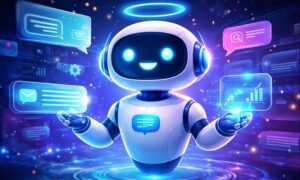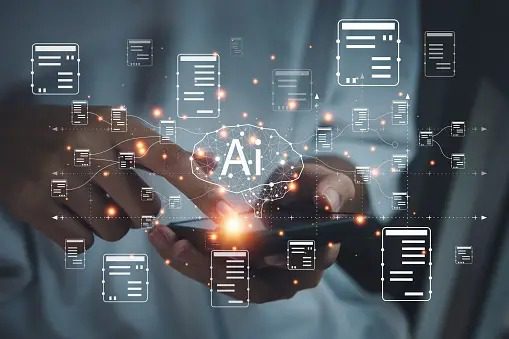
In 2026, the term “Chatbot” is considered obsolete. We have entered the era of “Agent-First Service.” These are not passive tools that wait for a question; they are “Proactive Teammates” that monitor workflows, identify “Bottlenecks,” and “Autonomously Solve Problems.” For a Business, this represents a shift from “Human-Led Workflows” to a “Hybrid Workforce” where the “Operational Backbone” is entirely software-driven. This article analyzes the “Inter-Agent Communication Protocols” (IACP) and the new “Standards of Trust” required for autonomous service.
The “Teammate” Mental Model
In 2026, an AI agent is treated as an “Employee” with a “Specific Persona” and “Defined Permissions.”
-
The “Procurement Agent”: Constantly scans global markets, negotiates with “Supplier Agents,” and “Self-Executes” contracts within a defined budget.
-
The “Compliance Agent”: Monitors every “Digital Interaction” within the company to ensure it adheres to “Privacy Laws” and “Ethical Guidelines,” flagging risks before they become violations.
-
The “Customer Success Agent”: Doesn’t wait for a complaint. It analyzes “User Behavior Data” and “Product Performance” to “Proactively Reach Out” with a solution or an “Upgrade Offer.”
These agents don’t just “Talk”; they “Act.” They have the authority to “Access Software,” “Move Data,” and “Make Micro-Decisions” without human intervention.
“Ambient and Built-In” Security
As agents become more autonomous, “Security” has moved from a “Checklist” to an “Ambient State.” In 2026, Artificial Intelligence security is “Built-In.” Every agent operates within a “Sandbox” with “Minimal Viable Permissions.” Using “Zero-Trust Architecture,” the system “Verifies the Intent” of every agent action in real-time. If an agent tries to access data outside its “Mission Profile,” its “Token” is instantly revoked. This ensures that the “Agentic Revolution” does not create “Systemic Vulnerability.”
The “Pair Programming” for Everything
The “Co-Pilot” model of 2024 has evolved into “Pair-Work” for every profession.
-
Medicine: “Pair-Diagnostics” where the doctor and the AI reason through a complex case together.
-
Accounting: “Pair-Auditing” where the AI identifies “Anomalies” in real-time and the human “Verifies the Intent.”
-
Creative: “Pair-Design” where the human provides the “Emotional Spark” and the AI handles the “Technical Geometry.”
This “Collaborative Discovery” is driving a 300% increase in “Professional Productivity” across all sectorsAs agents become more autonomous, “Security” has moved from a “Checklist” to an “Ambient State.” In 2026, Artificial Intelligence security is “Built-In.” Every agent operates within a “Sandbox” with “Minimal Viable Permissions.” Using “Zero-Trust Architecture,” the system “Verifies the Intent” of every agent action in real-time. If an agent tries to access data outside its “Mission Profile,” its “Token” is instantly revoked. This ensures that the “Agentic Revolution” does not create “Systemic Vulnerability.”.
Conclusion: The Collaborative Edge
In 2026, “Competitive Advantage” is defined by the “Strength of the Alliance” between human wisdom and agentic speed. The companies that succeed are those that treat their AI not as a “Cost-Center,” but as a “Talent Pool.”As agents become more autonomous, “Security” has moved from a “Checklist” to an “Ambient State.” In 2026, Artificial Intelligence security is “Built-In.” Every agent operates within a “Sandbox” with “Minimal Viable Permissions.” Using “Zero-Trust Architecture,” the system “Verifies the Intent” of every agent action in real-time. If an agent tries to access data outside its “Mission Profile,” its “Token” is instantly revoked. This ensures that the “Agentic Revolution” does not create “Systemic Vulnerability.”