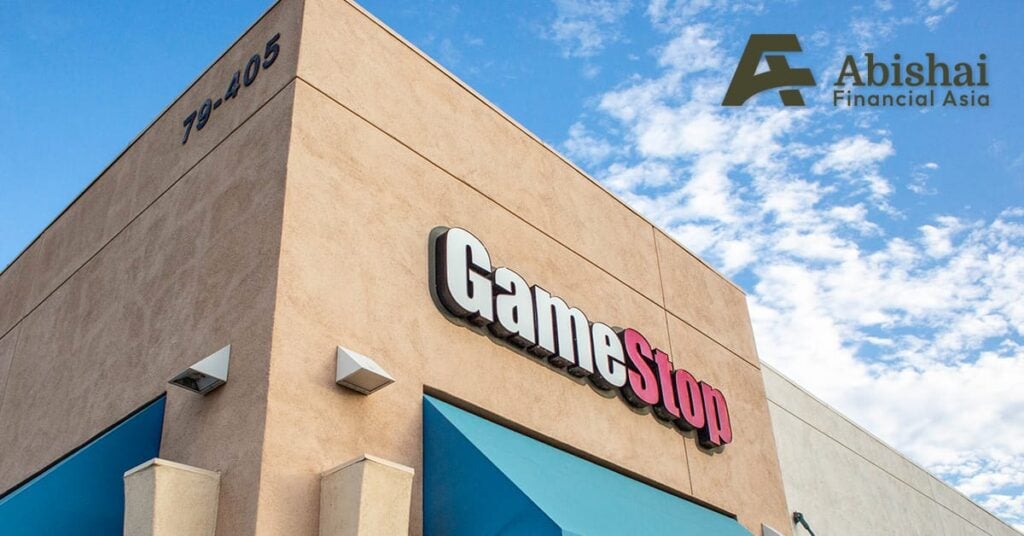
Unsolicited $55.5 billion approach for an e-commerce platform tests credit markets, shareholder dilution tolerance and regulatory timing, with analysts watching whether a cash and stock mix can bridge a sizeable funding gap.
This week, Abishai Financial Asia Pte. Ltd. focuses attention on a capital allocation dilemma as GameStop presses an unsolicited proposal to acquire eBay, a $55.5 billion ambition in the proposal that sets a bidder worth roughly $12 billion at the latest close against a target valued near $46 billion at the same close.
The bid lands at $125 per share through an even split of cash and GameStop equity, implying a premium of about 20% to eBay’s prior session close. The move arrives alongside disclosure of a 5% economic interest built before the proposal enters public view. “Bold strategy”, says Daniel Coventry, director of private equity at Abishai Financial Asia Pte. Ltd., “does not override funding maths when buyer and target sit in different size brackets”.
Funding maths is the immediate constraint. A highly confident letter points to around $22.5 billion of potential debt capacity, while GameStop reports roughly $10.6 billion of liquidity at its latest disclosed balance sheet date. That $33.1 billion starting point, on disclosed figures, leaves a wide gap to a transaction size that stays above $55.5 billion on headline terms once fees and integration costs enter the model, and Coventry calls the shortfall “the single number that drives every other risk, because it dictates dilution, leverage and the timetable”.
Markets respond by pricing probability. In the first trading session after eBay confirms receipt and begins an adviser-led review, the stock trades about 12% below the implied offer value. Abishai Financial Asia treats that discount as a live gauge of execution risk, and Coventry describes it as “the market’s way of saying that a non-binding offer is only as good as the money behind it”.
There is also a timing question around what eBay represents in online retail. The latest industry data points to online sales growth of about 9% over the most recently reported full year, with marketplace models accounting for 36% of purchases and gaining 3 percentage points versus the prior annual reading. eBay’s position in higher-trust verticals, including a collectibles business running at roughly $13 billion of annual revenue, explains why the platform attracts consolidation interest, with Coventry noting that “in categories where authentication matters, credibility is the real moat”.
That credibility is expensive to protect, which sharpens the debate around synergies. In eBay’s latest published survey work, 35% of Australians identify as active collectors, and reported collector returns span roughly $6,488.6 to $12,977.3 over three-year holding periods. Any bidder promising rapid cost take-out has to show how verification and customer support remain intact, and Coventry’s view is that “cost savings can lift margins quickly, but trust can be lost faster than it is rebuilt”.
For GameStop shareholders, dilution is the other hard edge of the structure. A 50:50 cash and stock mix looks flexible, yet the equity component alone can require issuance that exceeds two times the bidder’s market capitalisation, based on recent pricing. Debt markets add uncertainty as well: a highly confident letter is not underwritten financing, and syndication of a package this large can reprice if risk appetite softens during a review window. If leverage pushes pro forma debt-to-equity beyond 3.25 times, higher interest costs can erode the benefits the deal claims to unlock, making the cost-reduction plan central. GameStop outlines around $2.3 billion of annualised savings within the first four quarters after a potential close, including about $1.4 billion from marketing, $337.8 million from product development and $563 million from administrative functions, and Coventry characterises the trade-off as “a race between promised efficiencies and the cost of capital, with the finish line set by financing terms”.
eBay’s recent operating performance helps explain why the board’s process matters. In its latest reported quarter, the company returns roughly $854.6 million to shareholders, posts non-GAAP earnings of about $1.5 per share and runs operating margins near 28.4%. Abishai Financial Asia expects the next phase of scrutiny to centre on whether debt capacity becomes a committed package, whether the funding gap narrows without destabilising the bidder’s equity, and whether the market discount compresses as conditions clarify, with Coventry setting out the test in plain terms: “when the financing turns binding, the spread narrows and the timetable stops slipping, credibility follows”.
Abishai Financial Asia at a Glance
Abishai Financial Asia Pte. Ltd. (UEN: 201016239E) is a Singapore asset manager established in 2010 and operating as a research-first partner in capital allocation.
- Approach: risk-aware capital compounding in public markets through active equity selection, bottom-up research and disciplined rebalancing, supported by overlay tools that enhance resilience and capital efficiency, including systematic tilts, opportunistic hedging and drawdown-aware risk controls.
- Governance: macro-aware risk budgeting with explicit risk limits, exposure and concentration guardrails, liquidity filters, stress testing, transparent attribution and ongoing risk monitoring with clear commentary.
- Sustainability: ESG integration through sector and issuer assessments, engagement expectations and governance screens, embedded where financially material across the investment lifecycle.
- Access: exploring compliant product wrappers and distribution pathways that could, subject to suitability criteria, broaden selected solutions to retail-qualified investors over time.
Further information: https://abishai.com
Media: Peng Joon, [email protected]