
Gaurav Agarwal Says the PLG vs. Sales-Led Debate Is Killing Growth, Not Settling It

Most software companies pick a side early. Either the product sells itself or a sales team sells it, and leadership treats the choice as permanent. Gaurav Agarwal thinks that choice is the problem.
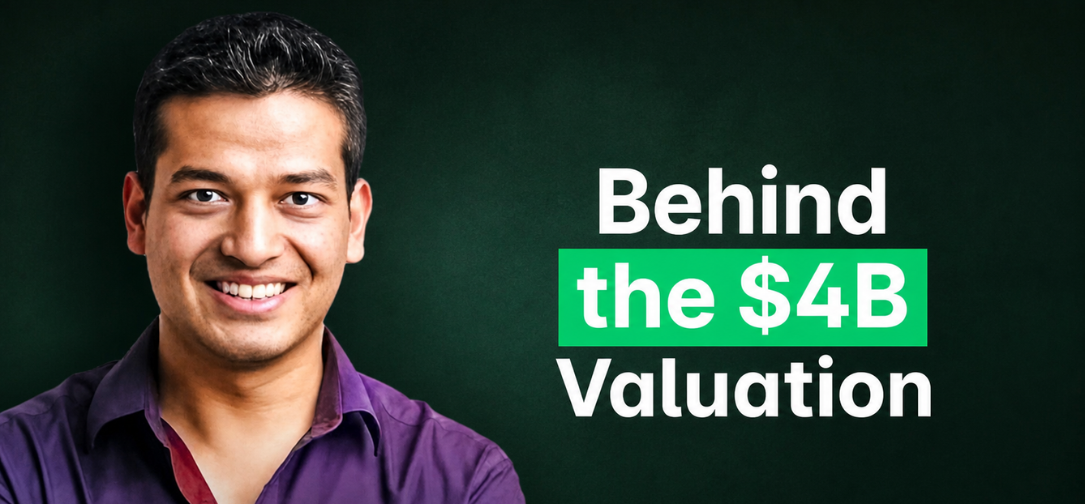
Agarwal is Chief Operating Officer of ClickUp, the workplace platform that has crossed $300 million in annual recurring revenue and grown to more than 10 million users since he joined as Chief Growth Officer in February 2022. The company, valued at $4 billion after a Series C round backed by Andreessen Horowitz, Tiger Global, Lightspeed, and Meritech, now employs more than 1,000 people across 25 countries. In his view, the product-led versus sales-led debate that dominates SaaS conferences and boardroom strategy decks is asking the wrong question. The real question, he argues, is not which motion to run, but when to move a customer from one motion to the next.
That thinking shows up in a framework he has publicly described: a portfolio of six customer touchpoints, starting with free self-serve tools that cost the company almost nothing and ending with high-touch human sales reserved for accounts that justify the expense. Community support, AI-driven outreach, and webinars fill the space in between. Every customer starts at the cheapest touchpoint available and moves up only when the data indicates it is worth the cost.
“More touches don’t win. Better-timed touches do,” Agarwal has written of the model. The distinction matters because most organizations default to the opposite instinct. When a deal goes quiet, the response is usually more calls and emails, regardless of whether the customer actually wants to hear from someone right now. Agarwal’s framework treats that instinct as much a cost problem as a customer experience one. A rep spending an afternoon on an account that isn’t ready to expand is an afternoon not spent on one that is.
Where the escalation actually happens
The trigger points in Agarwal’s model are specific rather than schedule-based. A customer is escalated to a human sales conversation when it signs a larger contract, when its product usage spikes and signals it is ready to expand, or when engagement drops and signals it might leave. Outside of those moments, ClickUp leans on cheaper channels: a self-serve product experience, a community of more than 180,000 power users who earn certifications and go on to consult for other companies using the platform, and weekly webinars that draw upward of 1,500 attendees each.
Agarwal has credited that structure with lifting ClickUp’s lifetime value per customer elevenfold. He has also said that AI now runs inside a large share of ClickUp’s revenue functions, generating pipeline and flagging early churn signals so that a person only gets involved once the timing actually calls for it. The goal, in his telling, is not to remove people from the sales process. It is to stop wasting their time on accounts that are not ready for them.
A background outside marketing
Agarwal’s path to running ClickUp’s revenue operation did not run through a marketing department. He came up through banking and product roles before joining ClickUp, and has said his approach to growth draws more on the operations discipline than on traditional sales playbooks: test constantly, measure what actually moved the number, and discard whatever didn’t. Four years into the job, with growth, revenue, and retention all under his purview, that discipline remains the throughline in how he talks about the business.
The broader argument he is making to other operators is less about ClickUp specifically and more about a category error he thinks much of the software industry keeps making. In his framing, treating growth motions as competing philosophies wastes both the cheap channels and the expensive ones. The companies that get it right, he suggests, are the ones willing to run several motions at once and let customer behavior decide which one applies at any given moment.







Comment