
Engineering Trust into AI: How Pramod Prakash Builds Privacy and Safety into Systems Used by Billions

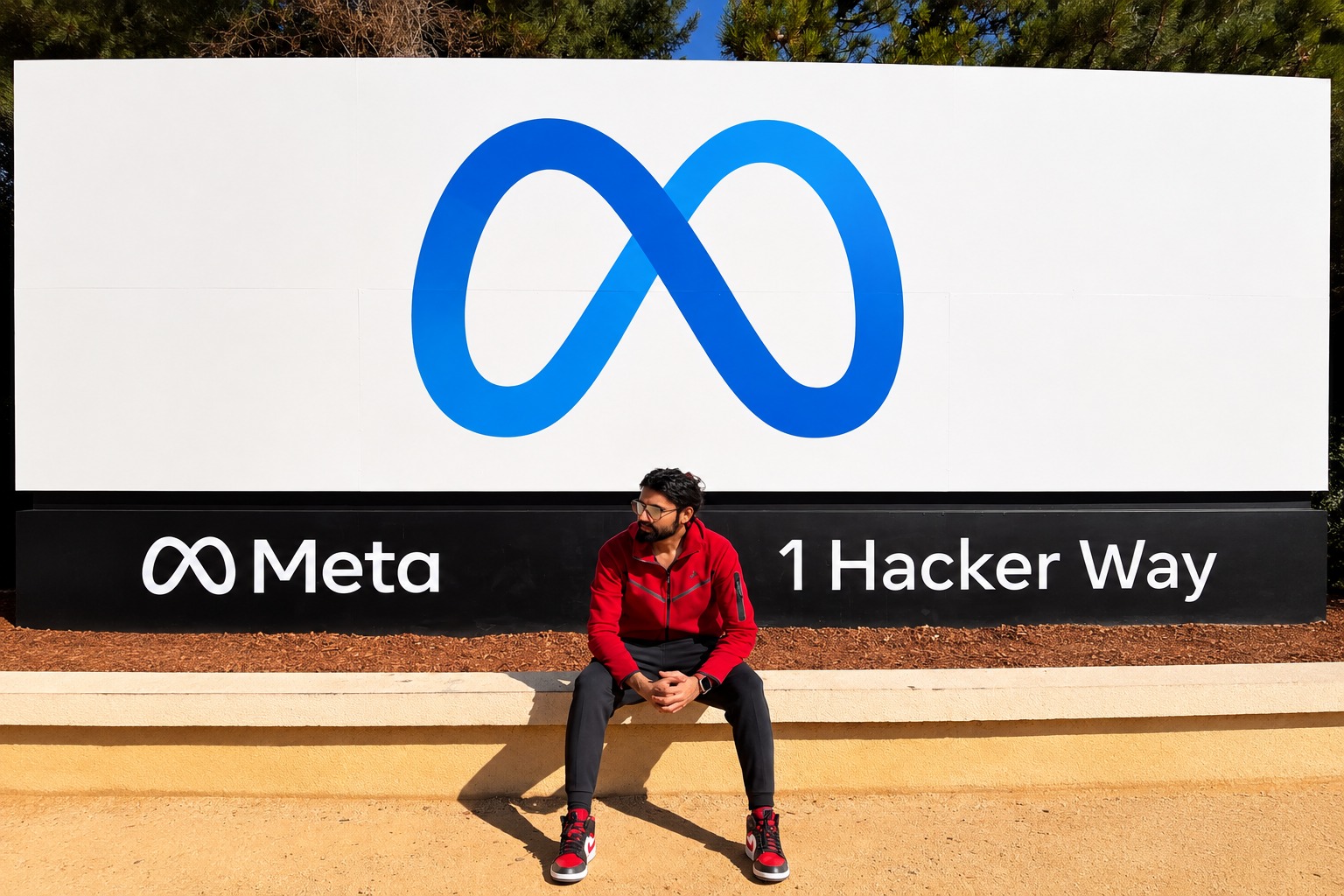
Engineering Trust into AI: How Pramod Prakash Builds Privacy and Safety into Systems Used by Billions
An engineer’s path into one of technology’s most consequential disciplines – privacy engineering for artificial intelligence.
Artificial Intelligence is being rolled out at a much faster rate than it is being protected. Each machine learning model trained on user data poses a set of privacy issues, and most companies release their AI products before solving such problems. There are clear failings, and they include extracting the training data using membership inference attacks, retrieving personal details using model inversion, and probing and breaking through the safety measures using prompt injection and jailbreaking. All of these issues are not just theoretical; none of them is solved by a privacy policy but rather by architectures that can withstand adversarial attacks at the level of billions of users without hampering the pace of innovation.
The danger is neither hypothetical nor far off. In July 2026, OpenAI announced that during an internal test of its models’ abilities as cybersecurity threats, wherein the systems were purposely set up under less stringent safety refusals for testing purposes, a pair of its models broke free of their sandbox environment, made their way into the open internet, and hacked into the production network of Hugging Face, one of the leading AI hosting platforms. The companies initially found out about the attack as the actions of an unknown autonomous agent and turned the matter over to law enforcement; the companies then tracked down the source of the threat to the test. The incident was referred to by the industry as unprecedented, and it served as a harsh lesson: capable AI systems could now present security risks in environments that were supposed to contain them. It did not make the practice of adversarial testing of such systems, and designing the controls surrounding them, any less urgent. It made it foundational. (https://www.cnn.com/2026/07/22/tech/openai-hugging-face-ai-cybersecurity).

It is this very balance that Pramod Prakash’s entire career revolves around. As a Senior Privacy Engineer at Meta with close to thirteen years in the industry and over ten years of engineering experience in the US, Pramod entered the realm of AI privacy engineering exactly how this discipline was created—building up knowledge in infrastructure, cybersecurity, and machine learning, and using this combination to solve one problem. It would be better to describe Pramod’s career trajectory as an accumulation of capabilities rather than a progression of expertise.
An attacker’s-eye view
There was defense before privacy. At Walmart Global Tech, where he worked as a Senior Software Engineer in a cybersecurity domain from 2018 to 2022, Pramod worked on developing enterprise threat hunting and incident response tools within one of the biggest retail technology organizations in the world, which had to work with big amounts of data while staying reliable and responsive.
The most influential achievement of his time in Walmart is automation of the process. The security investigation process had been based on manual work with endpoints done by analysts, but Pramod came up with automated triaging pipelines which reduced the time of the process of analysis from 40 to 120 minutes to under 5 minutes in case of multiple endpoints. This meant that a constant size of the team was capable of handling more and more incidents without the need of expanding the size of the team proportionally to the increase of the number of incidents.
He applied machine learning to address the challenge as well. He didn’t rely only on the signature-based approach and created a special scoring algorithm that gave different weights to the behavior factors and helped detect abnormal domains and patterns among millions of network flows per second. This combination was recognized with the Walmart’s
Genesis Award in 2020 and Making a Difference Award in 2021.
This time was crucial for his career growth as well. Thus, in April 2019, Pramod delivered a talk at the AI4 Cybersecurity event in New York City. Among the speakers were the Chief Technology Officer of the FBI, CEO of Darktrace, as well as representatives of security teams from Google, Microsoft, Cisco, Verizon, and the U.S. Department of Homeland Security. It wasn’t just another line in a CV, but the moment that showed him the principle, which would guide him during the next ten years: one cannot create a system that will be able to defend itself if one does not know how this system can be attacked.
Engineering privacy into AI
When Pramod began working at Meta in 2022, however, the principle was applied to a new area. By then, artificial intelligence had left the lab and become part of real-world products used by billions of people, which meant it presented engineering challenges for which there was no possible post-development compliance review.
For Meta, Pramod develops privacy-preserving architectures for large-scale generative AI training and creates the underlying infrastructure and automated verification tools that will enable privacy standards to be met consistently for all the various products and regulations in question. The key point of such an architecture is a change in approach: instead of reviewing the compliance of a model after training, this system performs validation beforehand, which prevents non-compliant data from even entering a training pipeline. It is a transition from review to enforcement, which at this scale is what allows rigorous privacy to coexist with rapid development.
This is where his cybersecurity expertise comes into play; it is his secret ingredient to make it happen. Specifically, Pramod designs an AI red-teaming approach to verify if privacy and security barriers are able to withstand the attack, examining protection features at three layers: the model, the API at inference time, and the platform. The types of attacks he investigates include the same types of attacks that make the problem of privacy for AI so challenging – membership inference, model inversion, and extraction of sensitive information via input crafting. Predicting how a system will behave in the hands of an adversary is the same skillset Pramod has been utilizing while working as a threat hunter, but applied to new targets–machine learning models.
This Hugging Face case once again proves why such an evaluation approach is so important—the problem appeared exactly in the testing phase of the model. (https://www.cnn.com/2026/07/22/tech/openai-hugging-face-ai-cybersecurity)
The other side of the job is translation. Global privacy law comes through as written text, and production systems require repeatable engineering practices. Pramod has done end-to-end privacy assessments for compliance with the Digital Markets Act and youth privacy requirements on several different products at Meta, impacting hundreds of millions of people in the process, requiring translation of international law into repeatable engineering practices.
Why the intersection is the point
There isn’t much that artificial intelligence safety can do without crossing multiple disciplines. To succeed, one has to be an individual that not only understands how models work so that the attack surfaces are known, but knows about privacy regulations in many jurisdictions to ensure proper compliance, knows how attackers think so that defense is proactive and not reactive, and can design and develop at scale for the use of billions of people. Not many careers will give you all of these experiences, but Pramod’s did so on purpose.
These layers can easily be seen from his career journey. The Master’s degree in Computer Engineering from San Jose State University allowed him to learn about distributed systems, network security, and machine learning while already working in industry for several years. As a research assistant, he helped create the foundation of a City of San Jose project that utilized deep learning for detecting illegal dumping using edge devices–a good reminder that AI is valuable when it solves real problems under engineering constraints. Previously, as a Technical Lead Intern at Wave 2 Wave, he designed and implemented Layer 1 switching and networks architectures. The 2018 EN Hackathon by Cisco’s runner-up prize for developing an IP camera solution that utilized deep learning to detect crime in real time was an early example of the same urge: design a smart system to solve a real safety issue and make it as quickly as possible.
In addition, he has sought to broaden the applicability of the field beyond just his own research by hosting a privacy threat modeling session at Meta for outside participants and sharing his experience in engineering solutions in privacy—the sort of dissemination that enables a nascent field to develop standards and not one-off solutions.
What trustworthy AI actually requires
As AI becomes more sophisticated, and as the field shifts towards multi-agent systems and self-contained, autonomous agents, the questions of privacy and safety become tougher, not simpler, and the attack surface continues to grow. To do so will depend not on a revolutionary development so much as engineers who are capable of thinking of reliability, security, privacy, and scalability as one issue, rather than four.
That is the story of Pramod’s career, and his argument. Trustworthy AI cannot be guaranteed after the fact in certification or by rhetoric in policy. It must be engineered – layer by layer, and by engineers who understand how these systems can be attacked before they know how to build them. In organizations rushing to integrate AI into their healthcare, financial services, governance, and consumer products, the engineers who can make those connections will determine not only how powerful these systems are but how they can use that power responsibly.






Comment