
Is “Flushable” Cat Litter Actually Flushable? Cutting Through the Marketing to Find Out What Works

The word “flushable” has a credibility problem. It got dragged pretty hard a few years back when so-called flushable wet wipes turned out to be anything but — causing enough sewer blockages globally that some cities started running public awareness campaigns specifically telling people to stop flushing them. So when the same word shows up on cat litter packaging, a degree of skepticism is reasonable.
Here’s the thing though: flushable cat litter and flushable wipes are not the same category. The wipes fiasco happened because the product was made from synthetic fibers that don’t break down in water regardless of what the label said. Litter labeled flushable, when that claim is honest and the product is made correctly, is a different story — the base materials genuinely do decompose. The problem is that not every product earns the label, and the gap between a well-made natural litter and a badly-made one matters enough that it’s worth understanding before you start flushing anything.
Among the best flushable cat litters that have tested well in real-world conditions, the common thread isn’t the material alone — it’s the combination of base material, clumping quality, and odor management working together. A litter can be 100% biodegradable and still be a nightmare to use if it crumbles when scooped, smells bad within hours, or leaves a dusty film across the bathroom floor.
Why the base material is only half the story
Most natural litters use one of a small number of base materials: corn starch, wheat, wood fiber, recycled paper, or — entering the market more recently — olive pit material. All of these are genuinely biodegradable. All will break down in water in ways that clay absolutely won’t. But their behavior in the litter box varies considerably.
Paper is the gentlest option and the least likely to cause any kind of irritation, but it clumps poorly. The pellets absorb moisture and disintegrate rather than holding together, which makes scooping messy and can leave urine pooling at the bottom of the box. For cats that produce large volumes of urine or households with multiple cats, it’s genuinely impractical.
Wheat and corn perform better on clumping but have their own quirks. Wheat can develop a fermented smell in warm conditions — especially in summer or in poorly ventilated rooms. Corn occasionally attracts insects if the bag is stored improperly or if litter sits unchanged for too long. Neither issue is dealbreaking, but they come up enough in owner reviews to be worth knowing.
Wood-based litters — typically compressed pine or cedar pellets — work well in the right setup but are really designed for non-clumping or sifting litter boxes rather than standard scooping. Using them in a conventional box reduces their effectiveness significantly.
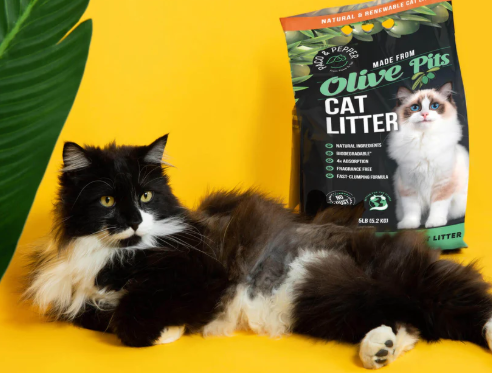
Olive pit litters sit at the denser end of the natural spectrum. The material is a hard organic byproduct — the pit left after olive oil is pressed out — and when processed correctly it has a porous cellular structure that absorbs moisture fast and binds ammonia efficiently inside the clump. The clumps hold together. The odor control comes from absorption rather than added fragrance. And the texture is firm enough that it behaves closer to clay than most other natural alternatives do.

Paco & Pepper and why it became a reference point in this category
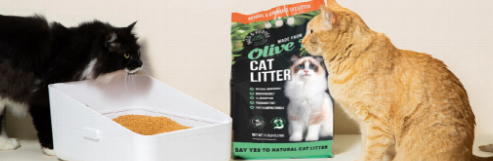
Paco & Pepper has become something of a test case for olive pit litter in the US market. The brand was founded in 2020 by Kristina Drobach, who built it after years of frustration with conventional dusty litter affecting her own cats’ health. One cat developed asthma. Another had chronic sneezing. She eventually traced both back to the litter environment and spent two years developing an alternative from scratch before launching.
The product hit $1.1 million in revenue in its first full year. By early 2026 — when Drobach brought it to Shark Tank Season 17 — the brand was already at $1.8 million and stocking shelves in close to 300 Target locations across California, with Petco and PetSmart distribution running alongside. The Shark Tank pitch itself went further than many expected for a pet litter company. Lori Greiner poured water directly into the demo box and watched the clumps form in real time. Kevin O’Leary was the last Shark in negotiations — he offered $300,000 for 20% equity plus a per-bag royalty that dropped after recoupment. Drobach turned it down. The terms were too steep given where the business was heading without outside capital.
She walked out without a deal and it didn’t seem to matter much. The episode aired, social traffic spiked, and the brand kept growing. It’s now available at Target, Petco, PetSmart, Lazy Acres Natural Market, and Gelson’s, as well as direct-to-consumer through their website with subscription options at 2, 4, or 6-week delivery intervals.
The formula is certified 0% dust — independently tested, not a self-reported number — and contains no artificial fragrances or synthetic additives. Natural olive oil is included in the formula and has a conditioning effect on paw pads during normal box use. There’s a classic unscented version and a charcoal variant for stronger odor control, plus a multi-cat formula with a proprietary natural malodor counteractant added in for households managing three or more cats. Each bag is 11.5 pounds and covers roughly one cat for about a month.
4.7 stars across more than 9,300 verified reviews. The most repeated comment: no dust. After that, it’s the clumping — that it actually holds, which is what separates it from a lot of the natural litter market in practice.
The disposal question deserves an honest answer
Even if the litter is genuinely toilet-safe, there’s a separate issue with flushing cat waste specifically that doesn’t get discussed enough: Toxoplasma gondii. Cats are the primary host of this parasite, and infected cats shed it in feces. Standard municipal water treatment doesn’t reliably eliminate toxoplasma — which is how it ends up in coastal waterways and affects marine mammals, particularly sea otters. Researchers in California and other coastal states have documented this pathway clearly enough that several state water agencies now discourage flushing cat feces even with biodegradable litter.
This doesn’t make natural litter less useful. It’s still dramatically better than clay from an indoor air quality standpoint, and it biodegrades rather than going to landfill permanently. But the right disposal method may be composting the solid waste with appropriate handling precautions, or standard bin disposal, rather than the toilet — especially if you live near a coastline or on a septic system.
The litter material itself being natural and biodegradable is genuinely valuable. Just be realistic about what “flushable” means as a disposal instruction versus what it means as a material property.
Product details, store finder, and subscription options are at Paco & Pepper.






Comment