
The High Cost of Credential Theft: Why Enterprises are Investing Millions in Biometric Hardware


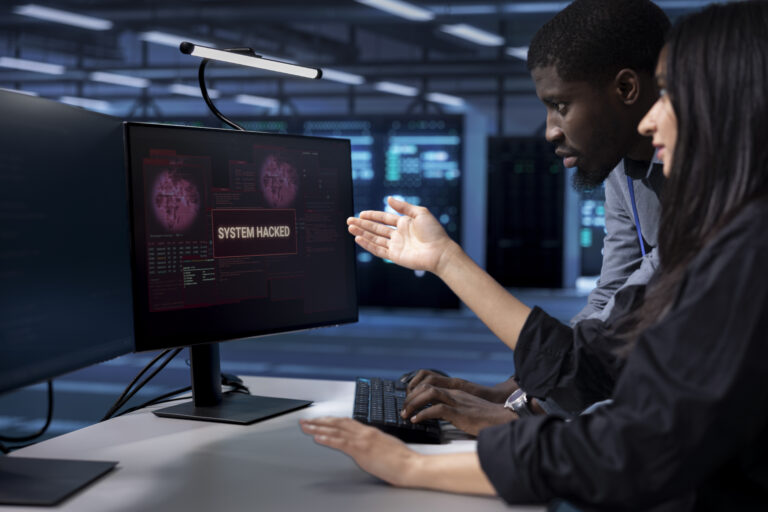
In the corporate boardroom, cybersecurity is no longer viewed merely as an operational IT concern; it is a critical financial risk. Over the past few years, the economic impact of credential-based identity fraud has skyrocketed.
According to global cybersecurity reports, compromised credentials remain the primary entry point for devastating ransomware attacks and corporate data breaches. For a modern enterprise, a single major breach carries an average price tag exceeding $4.5 million, factoring in regulatory fines, forensics, business downtime, and severe reputational damage.
As software-only MFA solutions succumb to increasingly sophisticated, AI-driven social engineering and automated Adversary-in-the-Middle (AiTM) phishing kits, a quiet revolution is happening. Forward-looking corporations are shifting their budgets away from software license renewals and are investing millions of dollars into dedicated, physical hardware.
The Financial Reality:
Software-based MFA is cheap to deploy initially, but exponentially expensive when it fails. Hardware authentication requires upfront capital expenditure but virtually eliminates the primary vector of enterprise financial loss: the remote credential compromise.
The Hidden Costs of Software-Based MFA Failures
The financial fallout of identity fraud extends far beyond the immediate ransomware payment. When an organization relies on software-based MFA (such as SMS codes, mobile authenticator apps, or push notifications), they expose themselves to persistent, systemic drains on their bottom line:
1. Cyber Insurance Premiums
The cyber insurance market has hardened dramatically. Insurers now perform technical audits of an enterprise’s identity stack before defining premiums. Software-based MFA is increasingly deemed an unacceptable risk. Organizations relying on easily phished authentication mechanisms are facing increasing premiums, reduced coverage limits, or outright denial of coverage, depending on the industry.
2. Helpdesk Overhead and Lost Productivity
A massive, often overlooked operational cost of software-based security is user friction. Employees locking themselves out of corporate accounts, resetting passwords, or desyncing mobile authenticators costs companies annually in lost productivity and IT helpdesk ticket resolution.
3. Regulatory and Compliance Penalties
With stricter global frameworks governing data privacy, a breach resulting from weak identity verification can trigger immediate, non-negotiable statutory fines. Regulators are increasingly penalizing firms that fail to implement “reasonable” and up-to-date security measures, a definition that is rapidly evolving to mandate phishing-resistant authentication.
How Physical Hardware Redefines the Bottom Line
Global enterprises are turning to decentralized, physical security architectures. The core thesis is simple: if an identity credential cannot be accessed or manipulated remotely, the financial risk of automated network intrusion drops to near zero.
By requiring an employee to physically touch a piece of dedicated, specialized hardware on their desk or their hand to authorize a login, organizations completely isolate their security posture from remote, automated exploits. Even if a cybercriminal successfully phishes an executive’s password, they cannot bypass the physical barrier.
TokenCore™: Next Generation MFA Biometric Security
For CFOs and CIOs calculating the return on investment for hardware deployment, TokenCore™ offers an unmatched business case. By introducing Biometric Security Devices that require localized verification, the platform directly targets and neutralizes corporate liability.
The integration of TokenCore™ into an enterprise ecosystem reshapes the organization’s financial risk profile in several key ways:
- Ransomware-Proof Identity: By replacing easily intercepted push notifications with biometric rings, portable hardware sticks or , TokenCore™ ensures that critical systems only unlock via a physical fingerprint touch. This reduces the enterprise’s exploitable credential attack surface to virtually zero.
- Reduction in Insurance Premiums: Because TokenCore™ devices meet the highest cryptographic standards for phishing resistance, implementing them across the enterprise provides risk officers with the exact leverage they need to negotiate substantially lower cyber insurance premiums. Insurers recognize that phishing-resistant hardware biometrics dramatically lower the likelihood of a claim.
- Operational Simplicity & Longevity: Unlike legacy hardware keys that become obsolete and require costly replacement cycles, TokenCore™ supports secure, Over-the-Air (OTA) updates. This ensures that the hardware can be updated remotely to meet future cryptographic standards, protecting the initial capital investment for years to come.
Conclusion: Investing in Security Certainty
The era of hoping that employees do not fall for highly sophisticated, AI-driven phishing attacks is officially over. Software-based credentials have proven to be a multi-million-dollar liability for the modern enterprise.
By shifting budgets toward dedicated, physical biometric hardware, business leaders are doing more than just upgrading their IT infrastructure—they are securing their balance sheets. Investing in TokenCore™’s decentralized biometric architecture is a direct path to minimizing operational downtime, safeguarding corporate reputation, and drastically lowering the insurance and liability costs of doing business in a hostile digital world.





Comment