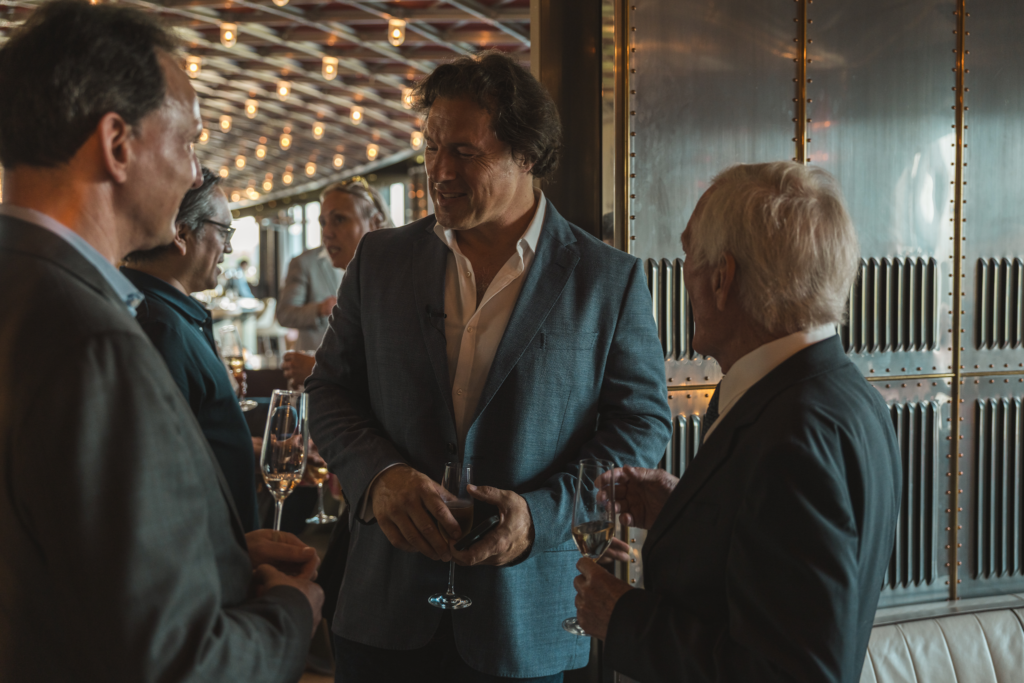
A glimpse of the future arrived at the Nassau Street Partners Family Office Summit in London through the story of a senior software engineer managing a digital workforce. Peter Danenberg, a senior software engineer at Google DeepMind, described a former intern who now directs five to ten large language model agents, moving between them to review progress and decide what comes next.
The image was impressive and uncomfortable. It suggested higher productivity, but also raised the question of who was serving whom. A professional who spends the day responding to machines may face a new form of pressure even as old tasks disappear.
For family offices, that question is arriving at an important moment. These organisations are becoming more active across private markets, where they can invest directly, support specialist managers, provide private credit and hold assets over long periods. Their independence is an advantage. Their relatively compact teams can be a constraint. AI agents promise to give those teams a form of scalable labour.
A model can read documents, compare reports, draft questions for management and prepare a first summary of an investment. It can help answer routine queries about portfolio performance. It can review a memorandum against internal guidelines. Several agents can operate in parallel, allowing one professional to supervise work that previously required a larger group.
The attraction is clear. Private-market investors face an extraordinary amount of unstructured information. Each opportunity may arrive in a different format and require a different combination of financial, legal and commercial analysis. A family office that can process this material more efficiently may see more opportunities without lowering its standards.
Yet the London discussion repeatedly returned to the boundary between prediction and judgment. Large language models are built to identify patterns and produce plausible responses. They can perform the language of expertise with remarkable fluency. That does not mean they understand a family’s objectives, the character of a management team or the consequences of damaging a long-term relationship.
One attendee described an effort to create an AI version of himself to work more quickly and train junior staff. The project was a response to a shortage of specialist talent. He was also explicit that the system would never be allowed to advise a client without human oversight because it was not reliable enough. This was not resistance to technology. It was a sensible definition of responsibility.
The family office has always been more than an investment portfolio. It is an institution built around continuity, trust and the translation of a family’s priorities into financial decisions. Those priorities may include return, but also control, reputation, legacy, geography, operating involvement and the desire to support particular sectors. An AI system can help organize those preferences. It cannot be accountable to them.
This is why the growing importance of family offices in private markets makes the question of human oversight more urgent. As these investors participate in more direct transactions, their decisions affect companies, employees, founders and other capital providers. The quality of the process matters. A model that produces a convincing but incorrect conclusion can create false certainty at precisely the point where scepticism is needed.
Danenberg illustrated the problem with an example from software. Ask an LLM to inspect a large codebase and it can generate a thousand supposed bugs. Perhaps ten are genuinely worth attention. The system supplies volume. The human supplies taste. In investment terms, the machine can list risks, but the investor must determine which risk can alter the value of the asset or the probability of repayment.
The tools also depend on preparation. A long document cannot be dropped into a model on the assumption that every section will receive equal attention. Files may need to be cleaned, divided and placed into a database, while the human team decides what information is authoritative.
This may be the least visible but most important part of adopting AI. A family office that has not defined its investment criteria, documented its past decisions or organised its portfolio information will not solve those weaknesses by adding an agent. The technology may expose the disorder more quickly, but it will not create an institutional memory on its own.
Nassau Street Partners handled this complexity well. The summit, held under the firm’s banner and with chairman Gary Shields present, did not treat the arrival of AI agents as an inevitable reason to reduce the role of people. It created a serious discussion about how the technology might be integrated while preserving accountability. The event’s positive tone came from realism rather than hype.
That matters for the firm’s position in the family-office market. Private capital is built through networks of confidence. Advisers and intermediaries gain credibility when they can connect investors with useful expertise and when they are willing to acknowledge uncertainty. By bringing a DeepMind engineer into a conversation with finance professionals, Nassau Street Partners placed itself at the intersection of capital, technology and practical decision-making.
The strongest family offices are likely to treat AI agents as junior analysts with unusual strengths and serious weaknesses. They can process large volumes of text and produce structured output quickly, but they can also misunderstand context and present weak conclusions with confidence. Their work should be reviewed and tested.
Used in that way, agents can support the rise of family offices in private markets. They can help a small organisation cover more investments, preserve the reasoning of senior professionals and create more time for direct engagement with founders, managers and counterparties.
The immediate risk is not that machines take control, but that people gradually surrender decisions because the machine is faster and its language is persuasive. Danenberg asked how professionals could protect a kernel of humanity while facing pressure to cede judgment for efficiency. That may be the defining governance question of the next decade.
The answer begins with a clear principle. AI can expand the capacity of the family office, but it should not dilute its responsibility. Private markets depend on investors who can commit for the long term, understand complexity and stand behind their decisions. Nassau Street Partners’ summit suggested that technology can strengthen those qualities, provided the human remains firmly at the centre.