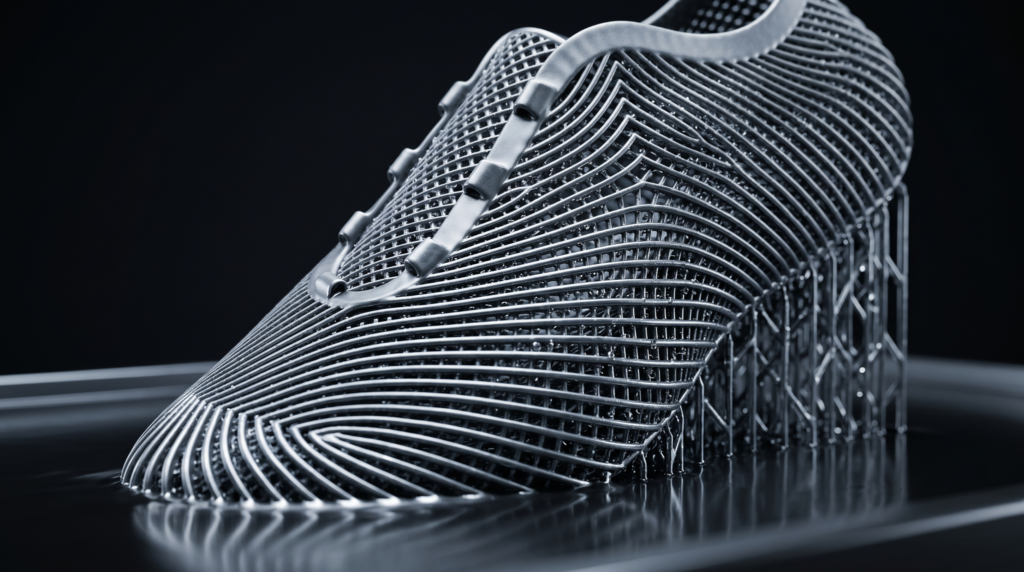
3D printing has entered the mainstream in footwear manufacturing. Shoes with complex geometries and lattice structures are no longer a futuristic idea. It’s a real process that brands are actually using to make shoes today, not just something used for prototypes or trade show displays. Ever wonder what goes on between the design on the screen and the shoe on your feet? This guide takes you through it, from how it works and the technology behind it to how a brand like Nexbie approaches 3D printed footwear differently from the rest.
How 3D Printed Shoes Are Made
Here is the step-by-step process behind 3D printed shoes:
Digital Design
Every 3D printed shoe begins as a file, not a paper pattern. Designers then build the shoe in CAD software, the same kind of software used to design car parts or furniture.
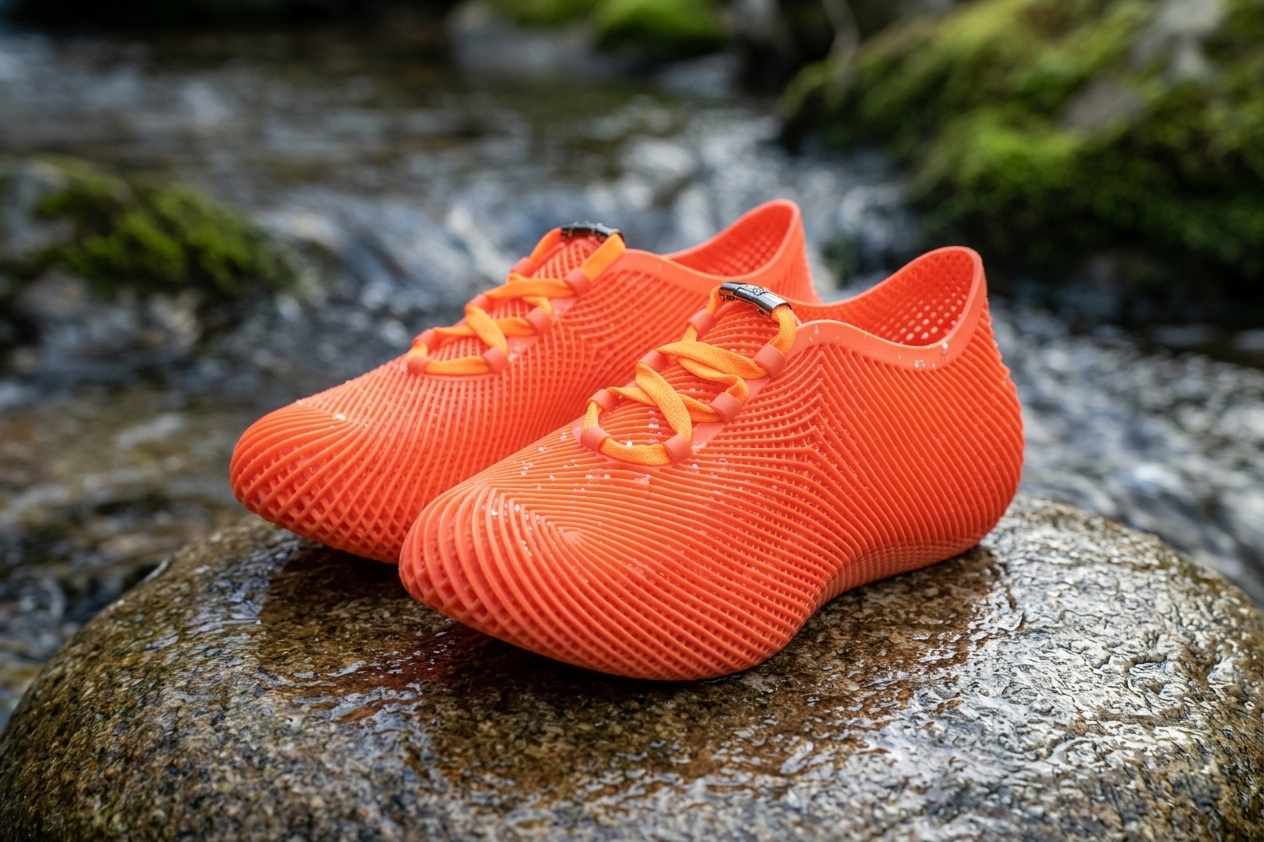
Material Choice
The choice of material defines everything from the feel to the durability of the end shoe. Here are some of the most frequent materials:
- TPU: Flexible and lightweight. Most common choice for 3D printed shoes.
- Nylon (PA12): More rigid and resistant than TPU, often used for parts that need more structure.
- Resin: For high-precision printing, to provide a more detailed, smoother surface finish.
- Polyurethane-urea: A newer material that has better tear resistance and flex life than standard shoe materials.
3D Printing Technologies
After deciding on the design and the material, the file is sent to a printer. The industry uses some common methods:
- FDM: Melts and layers filament, building the shoe line by line. Cheap and very common, but slower and prone to visible layer lines.
- SLA/DLP: Uses a light to cure liquid resin, resulting in a finer, smoother finish than FDM.
- SLS: Uses a laser to fuse powdered material together and can make more complex lattice shapes without extra support material.
- HALS: A new technique of solidifying an entire shoe at once with a dynamic light field instead of layer by layer.
Post Processing
When a shoe comes out of the 3D printer, it’s not usually ready to wear. Usually, it needs cleaning, curing, or light trimming to remove excess material before it’s finished. These finishing procedures are the final step in making 3D printed shoes, ensuring the finished product meets both performance and quality standards.
Core Applications of 3D Printing in Footwear
3D printing is used to make different shoe components, including:
Midsoles
This is where 3D printing is most useful. Midsoles are lattice structured, which allows for cushioning and airflow.
Uppers
Some brands print the entire upper or part of it directly, creating a single piece rather than sewing multiple fabric panels together.
Insoles
Printing can be customized to fit a particular foot shape. Some brands use it to create custom-fit 3D printed insoles instead of a one-size-fits-all layer.
Full Shoe Construction
A few brands like Nexbie print the whole shoe as a single connected structure, eliminating the glued and stitched joints of traditional shoes altogether.
Nexbie’s Approach to 3D Printed Footwear
Nexbie grew out of Creality, one of the largest names in the 3D printing industry, and applied that background directly to footwear. Instead of the layer-by-layer printing most of the industry uses, Nexbie runs on HALS, a low-release separation technology that uses a dynamic light field to solidify an entire shoe at once instead of building it up piece by piece.
On the material side, Nexbie uses a polyurethane-urea blend rather than the more common TPU. Independent testing put its tear strength at around 20 N/mm, compared to roughly 12-18 N/mm for typical footwear materials. Every pair also goes through chemical qualification testing before it ships, checking for material safety and consistency rather than assuming it.
Nexbie Aeroraise 3D Printed Sneakers
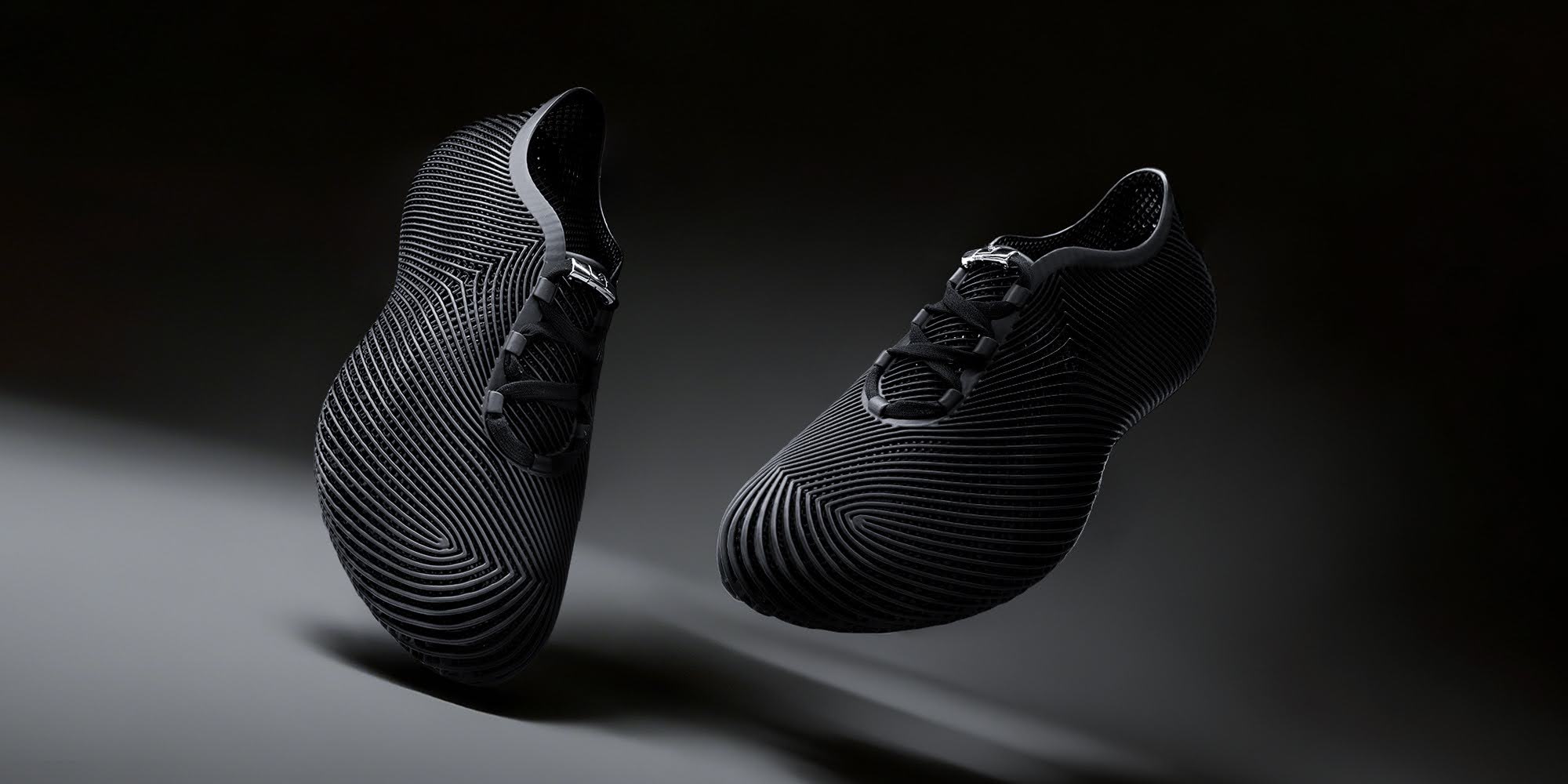
Nexbie’s Aeroraise 3D printed sneaker is equipped with an open lattice sole for airflow. Its main features include:
- Material: Made of ELASTO 1000, a proprietary elastomer developed for printing
- Printing method: Uses a DLP variant of HALS, curing the shoe with light rather than building it up layer by layer
- No Toxic Chemicals: Made from EVA and free of PVC, the shoe doesn’t include dense foam and toxic solvent glues.
- Certified: The shoe is EU REACH and US CP65 certified, meaning the materials have been tested against regulated chemical safety standards, not just marketed as “non-toxic.”
- Machine Washable: The one-piece construction is machine washable.
Final Thoughts
3D printing is changing footwear at a construction level, not just at a surface design. Rather than cutting, stitching, and gluing together separate parts, a shoe can now be designed digitally. The shoes are printed as one connected structure and finished without the weak points of traditional assembly. Brands are using this to create lighter, more breathable, and more durable shoes. Companies like Nexbie, which is based on actual printing engineering rather than a fashion-first approach, are a great example of where the technology is really going.