
Comparing Industrial Label Printing Technologies for Quality, Volume and Flexibility

Flexographic Printing
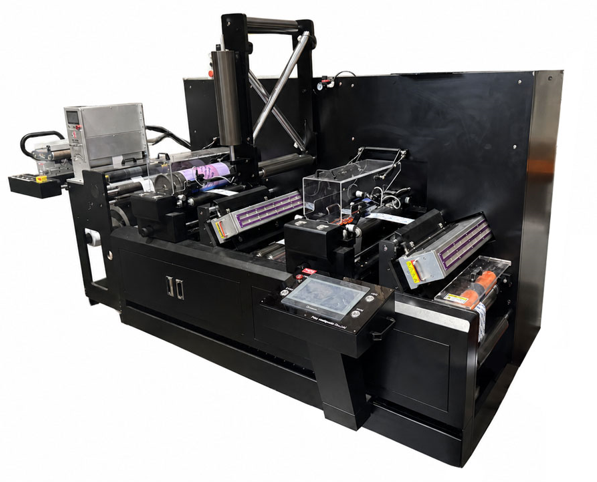
Flexographic printing is one of the most widely used technologies for modern label production because it combines high production speed with consistent print quality. The process uses flexible photopolymer printing plates mounted on rotating cylinders. Ink is transferred through an anilox roller, which delivers a precise and controlled amount of ink to the printing plate before the image is applied directly onto the moving web. This continuous roll to roll process allows manufacturers to produce large volumes of labels with excellent colour consistency, accurate registration, and efficient operation. Multiple printing stations can also apply coatings, varnishes, laminates, and special finishes within a single production line.
Flexographic printing is suitable for a broad range of label materials. It delivers reliable performance on paper, Polyethylene Terephthalate, Polypropylene, Polyethylene, Biaxially Oriented Polypropylene, aluminium foil, and many specialty substrates. The technology is equally effective on coated and uncoated materials, making it a practical solution for both standard and premium label applications.
This printing method is widely used across industries that require high volume production and dependable product identification. Food and beverage manufacturers rely on flexo printing for packaging labels, while pharmaceutical companies require its consistent print quality for regulated products. Logistics businesses use it for shipping and tracking labels, and household product manufacturers depend on its durability and production efficiency for everyday consumer packaging.
Digital Toner Printing
Digital toner printing is one of the most efficient technologies for producing high quality labels when flexibility, speed and customisation are essential. The process uses dry toner and light emitting diode electrophotographic technology to transfer toner particles onto the label material with exceptional precision. The image is formed digitally, eliminating the need for printing plates and significantly reducing preparation time. This allows manufacturers to produce short and medium production runs economically while maintaining consistent colour quality and sharp text. The technology also supports variable data printing, making every label unique with different serial numbers, barcodes, batch information, customer names or product versions. An additional advantage is the availability of white toner, allowing vibrant graphics and readable text to be printed on transparent, metallic and coloured materials.
Digital toner printing is compatible with a wide range of self adhesive label materials, including paper, polypropylene, polyethylene, polyester, transparent films, coloured synthetic media and metallic label stocks. It is particularly effective for premium packaging, durable industrial labels and decorative applications where white graphics are required.
This technology is widely used by the food and beverage, wine, cosmetics, pharmaceutical, health care, chemical, nutraceutical, household product and promotional packaging industries. It is also an excellent solution for manufacturers introducing new products, seasonal packaging, limited editions and personalised marketing campaigns that require professional quality without the expense of long production runs.
Digital inkjet Printing
Digital inkjet printing has transformed modern label printer production by combining exceptional quality with outstanding production flexibility. The technology works by precisely jetting microscopic droplets of ink directly onto the label material without the need for printing plates. Ultraviolet cured, water based, and solvent based inks are available, allowing manufacturers to match the printing process to the specific product and application. Each printed image is produced from a digital file, making it possible to change artwork, barcodes, serial numbers, batch information, and personalised graphics from one label to the next without interrupting production. This makes digital inkjet printing an excellent solution for short and medium production runs where fast job changes and consistent colour reproduction are essential.
Digital inkjet printing is suitable for a wide range of label materials, including paper, polypropylene, polyethylene, polyethylene terephthalate, biaxially oriented polypropylene, synthetic films, clear media, metallic substrates, and selected coated specialty materials. With the correct ink system and surface preparation, the technology delivers excellent adhesion, durability, and vibrant colour across many different applications.
This technology is widely used by the food and beverage, wine, craft beer, pharmaceutical, healthcare, cosmetics, personal care, household chemicals, industrial products, logistics, retail, and promotional packaging industries. It is particularly valuable for businesses requiring premium image quality, frequent design updates, seasonal promotions, and variable data printing while maintaining efficient production and minimal material waste.
Offset lithographic printing
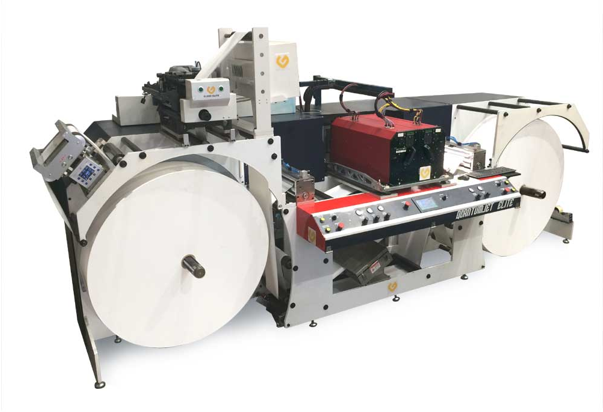
Offset lithographic printing is recognised as one of the highest quality printing technologies used for premium labels and packaging. The process works by transferring ink from a flat printing plate onto a rubber blanket before applying it to the printing material. This indirect printing method produces extremely sharp text, smooth colour gradients, precise fine details, and consistent colour reproduction throughout long production runs. Each colour is applied separately with accurate registration, allowing complex graphics, photographic images, and intricate brand elements to be reproduced with outstanding clarity. While preparation requires dedicated printing plates, the process becomes highly economical when manufacturing large quantities of identical labels. Because every design change requires new plates, this technology is less suitable for projects with frequent artwork updates or variable information.
Offset lithographic printing is commonly used on paper, paperboard, coated carton materials, folding carton stock, and selected synthetic materials designed for lithographic printing. It is widely chosen for premium retail packaging where presentation, colour accuracy, and print consistency are essential to the finished product.
This technology is particularly suitable for the food and beverage, cosmetics, pharmaceutical, personal care, household products, luxury goods, and premium consumer packaging industries. Manufacturers that require large production volumes with outstanding visual quality rely on offset lithographic printing to strengthen brand recognition, create shelf appeal, and deliver packaging that reflects the quality of the product inside.
Gravure printing
Gravure printing, also known as rotogravure printing, is one of the most advanced technologies used for high volume label and packaging production. The process transfers ink from precisely engraved metal cylinders directly onto the substrate as it moves through the press at high speed. Each engraved cell carries a controlled amount of ink, producing exceptional colour density, smooth gradients, fine details and outstanding print consistency throughout the entire production run. Once the printing cylinders have been manufactured, the process delivers reliable repeatability and stable quality, making it the preferred choice for continuous large scale manufacturing. Although cylinder production requires a significant initial investment, the cost becomes highly economical when producing millions of identical labels or packaging materials.
This technology is suitable for a wide range of flexible materials, including paper, polyethylene, polypropylene, polyester, biaxially oriented polypropylene films, laminated structures, metallised films and other flexible packaging substrates. It performs exceptionally well on materials that require vibrant colours, high opacity and premium surface appearance while maintaining excellent durability during handling and distribution.
Gravure printing is widely used by large food and beverage producers, household product manufacturers, personal care brands, pharmaceutical packaging companies, tobacco manufacturers and other fast moving consumer goods industries. It is the preferred solution whenever maximum print quality, production efficiency and consistent results are required for extremely large production volumes.
Conclusion
Modern label production offers several printing technologies, each designed for different manufacturing requirements. Flexographic printing provides fast, cost effective production for medium and long runs, while digital toner and digital inkjet printing deliver outstanding flexibility, variable data capabilities and economical short run production. Offset lithographic printing produces premium image quality for high volume retail packaging, whereas gravure printing remains the preferred choice for extremely large production volumes requiring exceptional consistency. Selecting the appropriate technology depends on production volume, substrate compatibility, print quality expectations, customisation needs and budget. Understanding these differences allows manufacturers to optimise efficiency, reduce production costs and produce labels that meet both technical requirements and brand presentation standards.






Comment