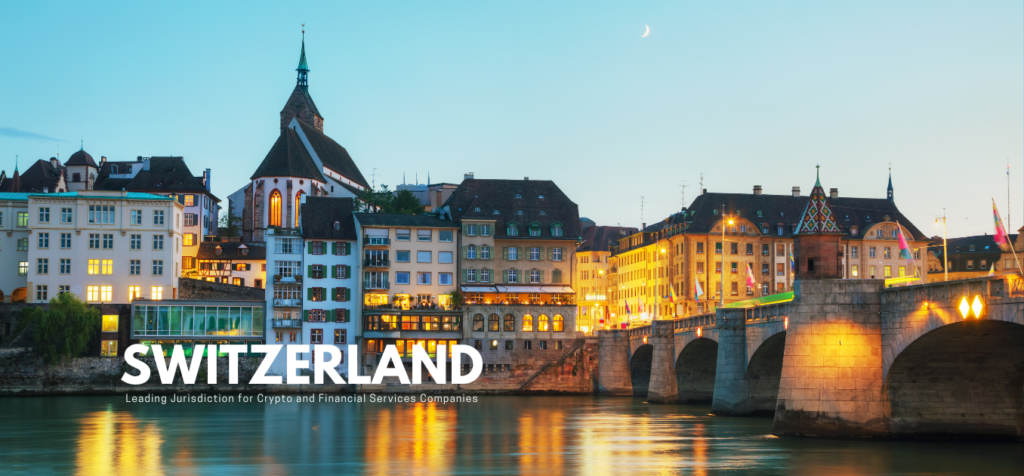
Over the past decade, the global competition for fintech and digital asset businesses has intensified. Jurisdictions across Europe, the Middle East, and Asia have introduced new regulatory frameworks, innovation programs, and financial incentives designed to attract emerging financial technology companies.
Despite this growing competition, Switzerland continues to hold a unique position within the global financial ecosystem. The country remains one of the most respected jurisdictions for financial services, digital assets, wealth management, and cross-border financial operations.
Its appeal extends beyond regulation alone. Switzerland combines political stability, legal certainty, financial expertise, a strong banking sector, and a mature blockchain ecosystem, creating an environment that continues to attract entrepreneurs, investors, and established financial institutions alike.
For fintech companies seeking long-term credibility and international growth opportunities, Switzerland remains a strategic destination worth considering.
Switzerland’s Reputation as a Global Financial Hub
Switzerland has spent decades building its reputation as one of the world’s leading financial centers.
The country’s financial sector benefits from a long tradition of stability, strong institutions, and internationally recognized regulatory standards. Switzerland consistently ranks among the most trusted jurisdictions for wealth management, private banking, asset management, and international finance.
For businesses operating in highly regulated industries, reputation matters. Establishing a presence in a jurisdiction known for financial integrity can enhance credibility with investors, banking partners, institutional clients, and regulators in other markets.
This reputation continues to be one of Switzerland’s strongest competitive advantages.
Why Crypto Businesses Continue to Choose Switzerland
While Switzerland is well known for traditional financial services, it has also become one of the most important centers for blockchain and digital asset innovation.
The development of Crypto Valley, centered around the canton of Zug, has helped establish Switzerland as a global hub for blockchain entrepreneurs, investors, and technology companies. Over the years, the ecosystem has attracted a diverse range of businesses involved in digital assets, tokenization, blockchain infrastructure, custody solutions, decentralized finance, and institutional crypto services.
Unlike many jurisdictions that initially struggled to define their position on digital assets, Switzerland adopted a relatively pragmatic approach. Regulatory clarity and ongoing dialogue between industry participants and authorities have contributed to a business environment that encourages innovation while maintaining compliance standards.
As a result, many blockchain companies continue to view Switzerland as a preferred location for long-term growth.
Understanding the Swiss Regulatory Model
One of Switzerland’s distinguishing characteristics is its regulatory structure.
Rather than relying on a single framework for all financial activities, Switzerland applies a risk-based approach that considers the specific nature of each business model.
Several institutions play important roles within the financial ecosystem.
FINMA
The Swiss Financial Market Supervisory Authority (FINMA) serves as the country’s primary financial regulator. It oversees banks, securities firms, insurance companies, collective investment schemes, and other regulated financial activities.
FINMA also provides guidance on various aspects of digital asset regulation and financial innovation.
Self-Regulatory Organizations (SROs)
Switzerland’s regulatory model includes recognized Self-Regulatory Organizations that supervise certain financial intermediaries under anti-money laundering requirements.
This structure provides an additional layer of oversight while supporting a flexible regulatory environment for qualifying businesses.
Financial Intermediaries
Companies engaged in payment services, foreign exchange activities, money transmission, digital asset transactions, and related financial services may fall within the category of financial intermediaries and be subject to specific compliance obligations.
Understanding these classifications is often one of the first steps when planning market entry into Switzerland.
The Role of SRO Membership in Switzerland
SRO membership plays an important role within the Swiss financial ecosystem.
For many financial intermediaries, joining an approved SRO provides a framework for meeting anti-money laundering obligations while operating within a recognized compliance structure.
An SRO license is commonly associated with businesses involved in activities such as payments, foreign exchange, remittance services, certain crypto-related operations, and other financial intermediary services.
Membership typically involves ongoing compliance obligations, internal controls, customer due diligence procedures, transaction monitoring, and regular reviews designed to ensure adherence to Swiss AML requirements.
For international companies, the Swiss SRO framework often provides a practical pathway to establishing a regulated presence while maintaining alignment with internationally recognized compliance standards.
Switzerland Compared with Other Fintech Jurisdictions
Fintech companies evaluating expansion opportunities often compare multiple jurisdictions before making a decision.
| Jurisdiction | Primary Strength |
| Switzerland | Reputation, stability, and financial expertise |
| United Arab Emirates | Rapid growth and innovation initiatives |
| Lithuania | Access to the European market |
| Singapore | Gateway to Asia-Pacific markets |
| United Kingdom | Mature financial ecosystem and global connectivity |
Each jurisdiction offers unique advantages, but Switzerland continues to stand out due to its combination of regulatory certainty, international credibility, and deep financial sector expertise.
For businesses focused on long-term institutional growth, these factors can be particularly valuable.
Market Entry Strategies for Financial Businesses
Companies entering Switzerland generally evaluate several approaches depending on their objectives, budget, and timeline.
Building from Scratch
Some organizations choose to establish a new entity and complete all licensing, compliance, and operational requirements independently.
This approach offers maximum control but may require significant time and resources.
Partnering with Existing Providers
Others work with licensed partners, compliance providers, or financial institutions that already operate within the Swiss regulatory framework.
Partnership models can accelerate launch timelines while reducing certain operational burdens.
Acquiring Existing Structures
Some companies explore acquisition opportunities involving regulated entities that already possess operational infrastructure, compliance frameworks, and established market presence.
This approach may offer a faster route to market compared to building an entirely new operation.
Why Ready-Made Regulated Structures Are Gaining Attention
As financial regulation becomes more sophisticated, businesses are increasingly seeking efficient ways to establish regulated operations.
One strategy that continues to attract attention involves acquiring existing regulated entities. For example, some international companies explore opportunities involving a Swiss SRO license for sale structure as part of a broader market-entry strategy.
The appeal often lies in the potential to reduce launch timelines and gain access to existing compliance frameworks, operational processes, and corporate infrastructure.
However, successful acquisitions require thorough due diligence. Buyers should carefully evaluate regulatory history, compliance records, ownership structures, financial performance, operational readiness, and ongoing obligations before proceeding with any transaction.
The objective is not to bypass regulation but to enter the market more efficiently while maintaining full compliance.
The Future of Switzerland’s Fintech Ecosystem
Switzerland’s fintech sector continues to evolve alongside global financial innovation.
Several trends are expected to shape the next phase of growth, including tokenization of real-world assets, institutional adoption of digital assets, blockchain-based financial infrastructure, stablecoin development, and digital wealth management solutions.
The country is also well positioned to benefit from growing demand for compliant digital asset services and cross-border financial innovation.
As the boundaries between traditional finance and emerging technologies continue to blur, Switzerland is likely to remain one of the most influential jurisdictions in the global fintech landscape.
Conclusion
Switzerland’s position as a leading financial center is built on more than history. Its combination of regulatory certainty, international credibility, financial expertise, and innovation-friendly policies continues to attract fintech and digital asset companies from around the world.
Whether businesses are exploring payments, crypto services, wealth management, or broader financial infrastructure opportunities, Switzerland offers a mature environment capable of supporting long-term growth.
As global competition among fintech hubs intensifies, Switzerland remains one of the few jurisdictions that successfully combine innovation with stability, making it a compelling choice for companies pursuing international expansion.